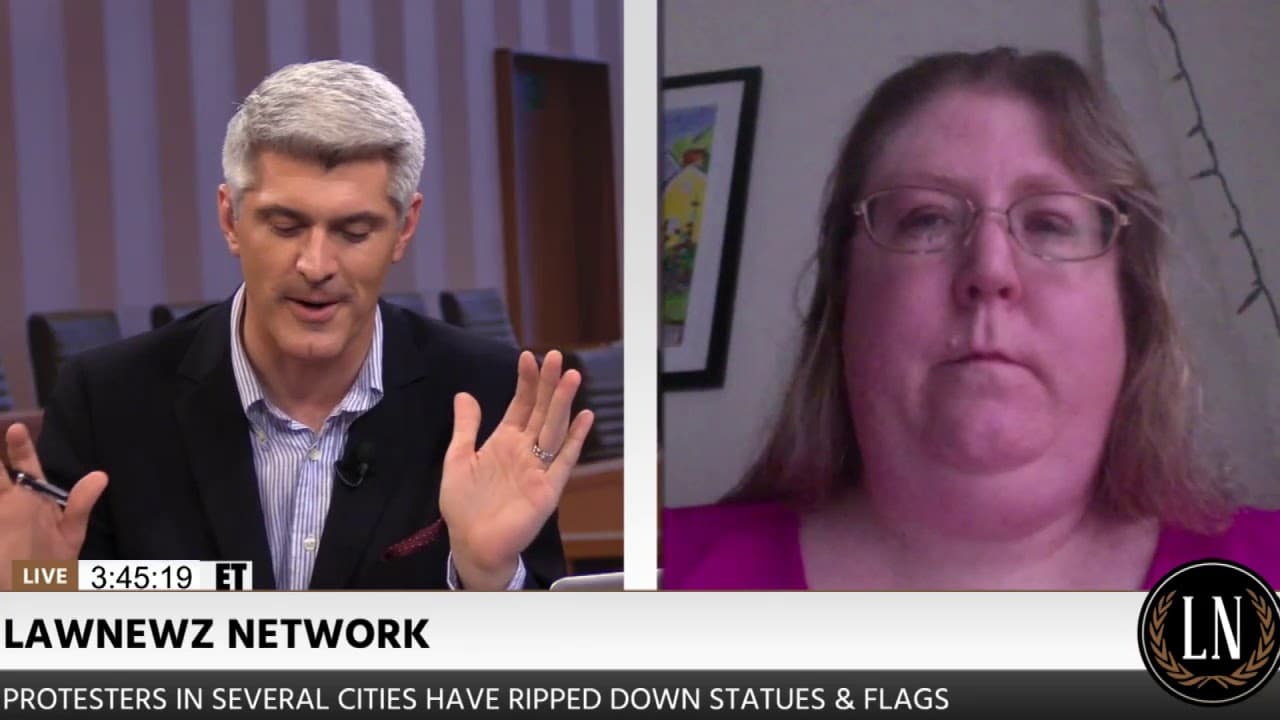
Amanda Nelson Talks Confederate Statues on LawNewz Network
TL;DR
Art law attorney Amanda Nelson discusses the legal rights of artists to protect statues and public art from being destroyed or removed, highlighting the complexities and varying laws surrounding the issue.
Transcript
okay welcome back everybody we're going to take another break from those replays from the dalia dippolito case in florida again she was convicted she was sentenced but there are a lot of appellate issues to deal with in that particular case we know that the state has filed for sanctions against the defense attorney for the way a psychological exami... Read More
Key Insights
- 🧑🎨 The federal Visual Artists Rights Act protects artists' rights to their work, but it has limitations and only applies to art created after 1991.
- 🖤 The lack of consistent federal protection for older statues and public art has led to state-specific laws being enacted.
- 👮 Municipal ordinances and state laws can either protect or leave statues vulnerable to removal or destruction.
- 🥰 The legal question of who has the authority to oversee and decide the fate of statues and public art is complex and often subject to litigation.
- 🇨🇫 Market forces and public opinion contribute to the preservation or removal of statues and public art.
- 🥋 The recognition of art as a form of expression and the association of art with the First Amendment further complicate the legal landscape.
Install to Summarize YouTube Videos and Get Transcripts
Explore YouTube Video Summarizer or Get YouTube Transcript Extractor
Questions & Answers
Q: Do artists have legal rights to protect statues from being destroyed?
Yes, artists have certain rights under the federal Visual Artists Rights Act, but it only applies to art created after 1991. Statues erected before that date are not covered by this protection.
Q: Are there any state laws that protect statues?
Some states, such as North Carolina, Alabama, Mississippi, Georgia, and Virginia, have passed laws to protect statues, which has led to legal conflicts between state and local governments.
Q: How do municipal ordinances impact the protection of public art?
Municipal ordinances play a significant role in determining the fate of public art. In some cases, municipalities have jurisdiction over public art, while in others, they have no authority, leaving decisions to the federal or state level.
Q: Can artists waive their legal rights to protect their statues?
Clever municipalities may try to get artists to waive their rights under contractual agreements. Artists should be cautious about potential consequences and carefully consider whether they want to relinquish their legal protection.
Summary & Key Takeaways
-
The federal Visual Artists Rights Act provides certain rights to artists for the protection of their work, but it only applies to art created after 1991.
-
Many statues, including Confederate monuments, were erected before 1991 and are not covered by federal protection.
-
Some states, such as North Carolina, Alabama, Mississippi, Georgia, and Virginia, have passed laws to retroactively protect statues, leading to legal tensions between state and local governments.
-
Municipal ordinances and state laws play a crucial role in determining the fate of statues and public art, but there is no clear-cut answer regarding legal protection.
Read in Other Languages (beta)
Share This Summary 📚
Summarize YouTube Videos and Get Video Transcripts with 1-Click
Try YouTube Summary with ChatGPT & Claude or YouTube Transcript Generator
Explore More Summaries from Law&Crime Network 📚
Summarize YouTube Videos and Get Video Transcripts with 1-Click
Try YouTube Summary with ChatGPT & Claude or YouTube Transcript Generator