Can Sponges “Think” Using Light?
TL;DR
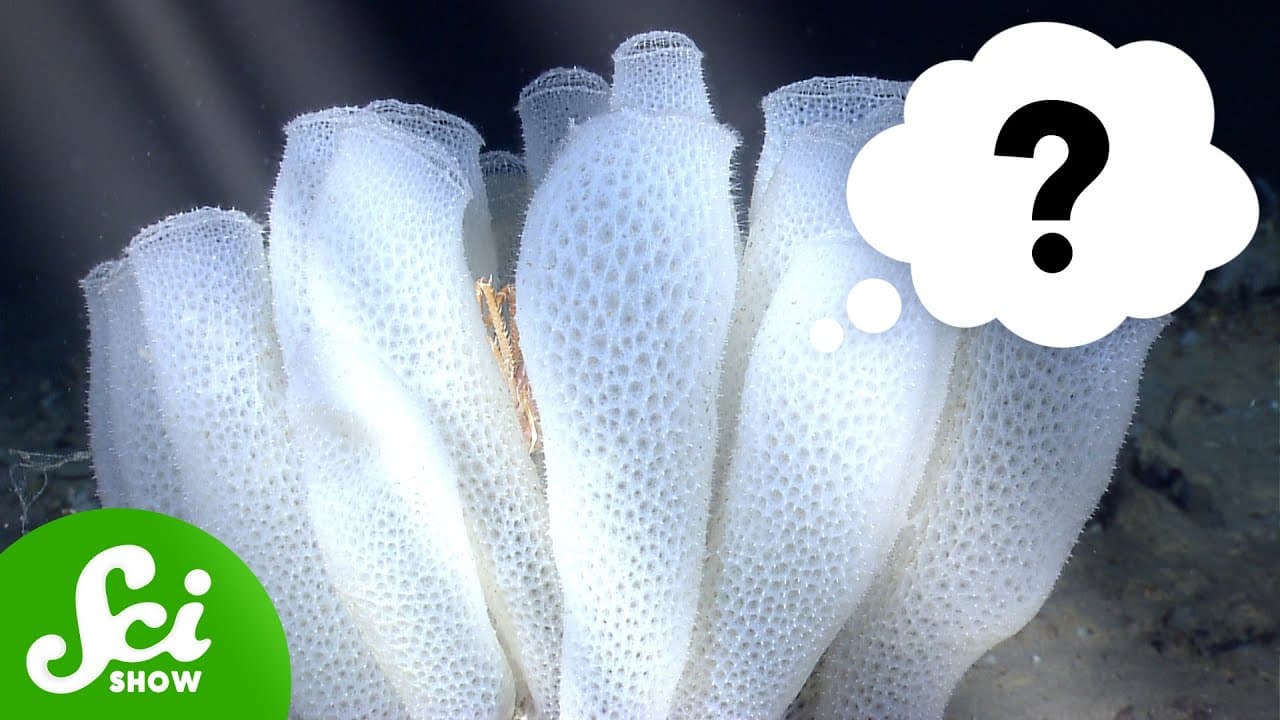
Sponges, despite being one of the simplest animals, may have evolved a unique way of transmitting information through their bodies using light.
Transcript
Thanks to Linode for supporting this SciShow video! You can get a $100 60-day credit on a new Linode account at linode.com/scishow. Most animals are rocking some wildly complex bodies, with electrical signals constantly shooting around and carrying messages to and from the brain. Not only does that information reveal the world around us, it lets ou... Read More
Key Insights
- 💨 Sponges, despite their simplicity, have evolved various ways to respond to and interact with their environment.
- 🙂 The fiber-optic-like glass fibers in sponge skeletons serve as a unique method of transmitting light signals throughout the body.
- 🔦 Bioluminescent cells found in some sponge species produce flashes of light that are channeled through the fibers.
- 🙂 Cryptochromes in sponges can be activated by light, leading to the production of molecular messengers that affect cellular behavior.
- 🙂 This light-based sensory system in sponges represents a potential alternative to a nervous system.
- 🙂 The sponge's ability to process information through light signals is a fascinating example of adaptation in the animal kingdom.
- 🙂 Further research and experimentation are needed to confirm and understand the full extent of this light-based sensory system in sponges.
Install to Summarize YouTube Videos and Get Transcripts
Explore YouTube Video Summarizer or Get YouTube Transcript Extractor
Questions & Answers
Q: How do sponges respond to light without a nervous system?
Sponges have evolved a system of light-transmitting fibers in their bodies, along with specific cells and proteins, that allow them to respond to light in their environment.
Q: What are the functions of the light-transmitting fibers in sponges?
The fibers in sponges act as natural fiber-optic cables and are used to transmit light signals throughout the body, potentially allowing groups of cells to act in sync.
Q: How do sponges create their own light?
Some sponge species have cells that create flashes of light, known as bioluminescence, and these cells are clustered around the light-transmitting fibers in the sponge's body.
Q: What is the role of cryptochromes in sponges?
Cryptochromes are special cells with proteins that get activated by light. When activated, they produce hormone-like molecules that act as chemical messengers, triggering certain behaviors in cells throughout the sponge's body.
Summary & Key Takeaways
-
Sponges, one of the simplest animals, lack a brain and nervous system but still respond to light in their environment.
-
Researchers have found that sponges have fiber-optic-like glass fibers in their skeletons that transmit light.
-
These light-transmitting fibers, along with specific cells and proteins, may be acting as a light-based sensory system for sponges.
Read in Other Languages (beta)
Share This Summary 📚
Summarize YouTube Videos and Get Video Transcripts with 1-Click
Try YouTube Summary with ChatGPT & Claude or YouTube Transcript Generator
Explore More Summaries from SciShow 📚


Summarize YouTube Videos and Get Video Transcripts with 1-Click
Try YouTube Summary with ChatGPT & Claude or YouTube Transcript Generator