Friction | Simple Science Experiments With LEGO | AD
TL;DR
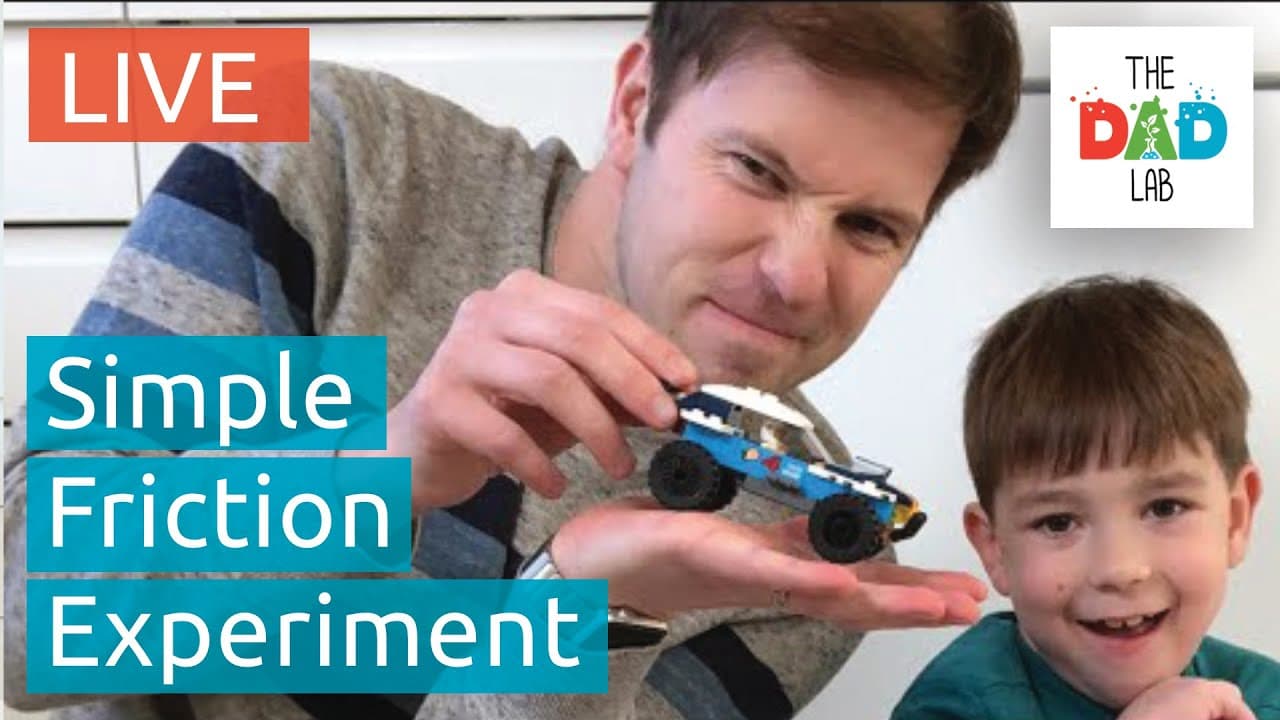
This video demonstrates experiments on friction using different materials like bubble wrap, aluminum foil, and a towel, showing how they affect the movement of a car on a slide.
Transcript
hi guys welcome to our livestream today we're going to do some experiments and they all gonna do some to do with friction I just have to say that this video is sponsored by luggage so we're gonna use some bag of products here but if you're wondering what what the friction is all about I'm going to tell you so let's say you have a book let's say it ... Read More
Key Insights
- ❓ Friction is the force that affects the movement of objects on different surfaces.
- 👁️🗨️ Materials like bubble wrap, aluminum foil, and a towel have varying levels of friction.
- 🎚️ Bubble wrap has a high level of friction, making it harder for objects to slide.
- 🎚️ Aluminum foil and cardboard have similar friction levels.
- 🎚️ A towel has a high friction level, making it difficult for objects to slide smoothly.
- 👪 Different materials can be used to replicate these experiments at home.
- 🎰 Understanding friction is crucial for designing products, machines, and systems.
Install to Summarize YouTube Videos and Get Transcripts
Explore YouTube Video Summarizer or Get YouTube Transcript Extractor
Questions & Answers
Q: What is friction, and how does it affect the movement of objects?
Friction is the resistance between two surfaces that prevents them from easily sliding against each other. It can make objects harder or easier to move, depending on the level of friction.
Q: How is friction tested in the video?
The video conducts experiments using a car on a slide made from a box. Different materials, such as bubble wrap, aluminum foil, and a towel, are placed on the slide to observe their impact on the car's movement and speed.
Q: What were the results of the experiments?
The experiments showed that the level of friction varied depending on the material used. Bubble wrap had a high level of friction, making the car move slower, while aluminum foil and cardboard had similar friction levels. The towel had the highest friction level of all the materials tested.
Q: How can viewers replicate these experiments at home?
Viewers can set up a slide using a box, place different materials on it, and test the movement of a car or a similar object. They can use materials like bubble wrap, aluminum foil, and a towel to observe the friction levels.
Summary & Key Takeaways
-
The video discusses the concept of friction and how it affects the movement of objects on different surfaces.
-
The host conducts experiments using a car and a slide made from a box to test the friction levels of various materials.
-
Different materials, such as bubble wrap, aluminum foil, and a towel, are tested to see how they impact the speed and movement of the car on the slide.
Read in Other Languages (beta)
Share This Summary 📚
Summarize YouTube Videos and Get Video Transcripts with 1-Click
Try YouTube Summary with ChatGPT & Claude or YouTube Transcript Generator
Explore More Summaries from TheDadLab 📚
Summarize YouTube Videos and Get Video Transcripts with 1-Click
Try YouTube Summary with ChatGPT & Claude or YouTube Transcript Generator