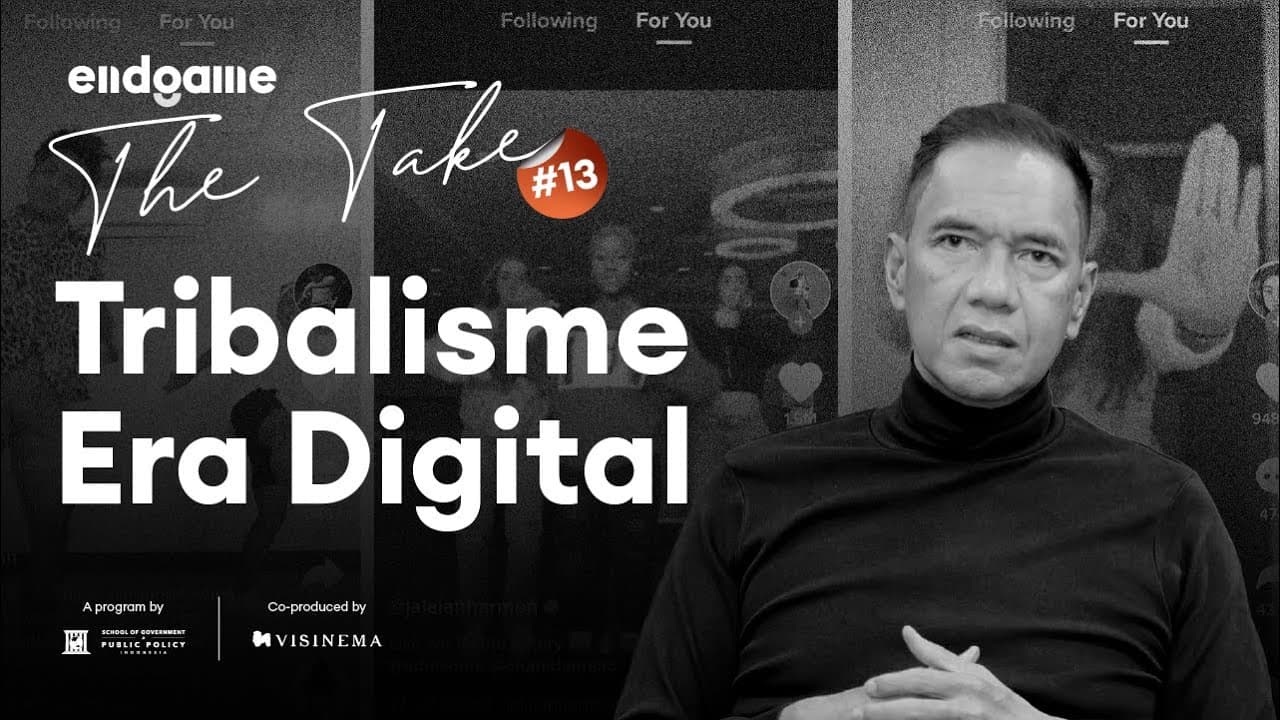
Banjir Informasi di Tengah Kolektivisme Semu | Endgame The Take #13
TL;DR
Explores the impact of social media on society and global dynamics.
Transcript
We see that today's young generation is the generation that was nurtured by TikTok and Instagram. This correlates with increasing cases of anxiety, depression, and even suicide that is increasing among young people. So it may be more difficult for us to thinking globally and acting locally. A Flood of Information in the Face of Pseudo-Collectiv... Read More
Key Insights
- Today's youth, heavily influenced by TikTok and Instagram, face increased anxiety and depression, highlighting a disconnect between global thinking and local action.
- Historically, humanity's spiritual journey sought inner peace, but modern dissatisfaction with religious leaders has led to new alternatives for comfort.
- Economic systems like socialism and capitalism aim for inclusion, yet fail to reduce inequality, causing societal anxiety.
- Post-World War II, global power shifted from a bipolar to a multilateral order, complicating international cooperation.
- Social media's impact on youth is profound, with excessive screen time and unfiltered content contributing to mental health issues.
- Polarization in conversations and academia is fueled by social media algorithms, leaving the center ground empty and increasing societal division.
- Angry and conflict-driven narratives are amplified on social media, overshadowing wise and healthy discourse, harming liberal democracy.
- Digital deluge, distractions, dementia, and deduction are challenges of the digital era, necessitating digital hygiene and content curation.
Install to Summarize YouTube Videos and Get Transcripts
Explore YouTube Video Summarizer or Get YouTube Transcript Extractor
Questions & Answers
Q: How does social media impact today's youth?
Social media, particularly platforms like TikTok and Instagram, significantly impacts today's youth by contributing to increased anxiety, depression, and even suicide rates. The uneditorialized content consumed for extensive hours daily shapes their perspectives, often negatively affecting mental health and social interactions, distancing them from previous generations.
Q: What are the historical phenomena discussed in the content?
The content discusses three historical phenomena: the spiritual journey seeking inner peace and redemption, economic systems like socialism and capitalism aiming for inclusion but failing to reduce inequality, and the shift from a bipolar to a multilateral global power structure post-World War II, complicating international cooperation.
Q: How has the global power structure evolved post-World War II?
Post-World War II, the global power structure evolved from a bipolar order dominated by the Soviet Union and the United States to a multilateral order. This shift introduced new powerful nations like China, India, and ASEAN, making international cooperation more complex with multiple stakeholders involved.
Q: What challenges does the digital era present?
The digital era presents challenges such as digital deluge, distractions, dementia, and deduction. These issues stem from information overload, distractions from meaningful content, difficulty distinguishing good from bad information, and reduced intellectual engagement, necessitating digital hygiene and content curation.
Q: What is the impact of social media algorithms on conversations?
Social media algorithms polarize conversations by pushing users towards extreme viewpoints, leaving the center ground increasingly empty. This polarization affects academic communities and societal discourse, making intellectualization less balanced and contributing to societal division and unhealthy democratic processes.
Q: How do technology companies influence narratives on social media?
Technology companies influence narratives by optimizing algorithms to amplify content rich in anger, hatred, and conflict. This prioritization of sensational narratives over wise and healthy discourse contributes to societal polarization and challenges the integrity of liberal democracy by overshadowing constructive conversations.
Q: What solutions are proposed for digital era challenges?
Proposed solutions for digital era challenges include reducing screen time, promoting narratives beneficial to mental and physical health, and encouraging the consumption of curated or editorialized content. These steps aim to improve digital hygiene, reduce exposure to negative content, and foster healthier digital interactions.
Q: Why is historical communication important for wisdom?
Historical communication is important for wisdom as it allows current generations to learn from the past, understanding both positive and negative attributes. This knowledge helps in making informed decisions, avoiding past mistakes, and fostering a more comprehensive understanding of societal dynamics, ultimately contributing to a wiser future.
Summary & Key Takeaways
-
The discussion highlights the impact of social media on youth, contributing to increased anxiety and depression. It emphasizes the historical search for spiritual and economic inclusion, while noting the persistent inequality despite economic growth.
-
Post-World War II, the world transitioned from bipolar to multilateral power, complicating global cooperation. Social media's influence polarizes conversations and amplifies conflict-driven narratives, posing a challenge to liberal democracy.
-
The digital era presents challenges such as information overload and distractions, leading to digital dementia and deduction. The need for digital hygiene and curated content is emphasized to mitigate these effects.
Read in Other Languages (beta)
Share This Summary 📚
Summarize YouTube Videos and Get Video Transcripts with 1-Click
Try YouTube Summary with ChatGPT & Claude or YouTube Transcript Generator
Explore More Summaries from Gita Wirjawan 📚





Summarize YouTube Videos and Get Video Transcripts with 1-Click
Try YouTube Summary with ChatGPT & Claude or YouTube Transcript Generator