What Are the Benefits of Working in Manufacturing?
TL;DR
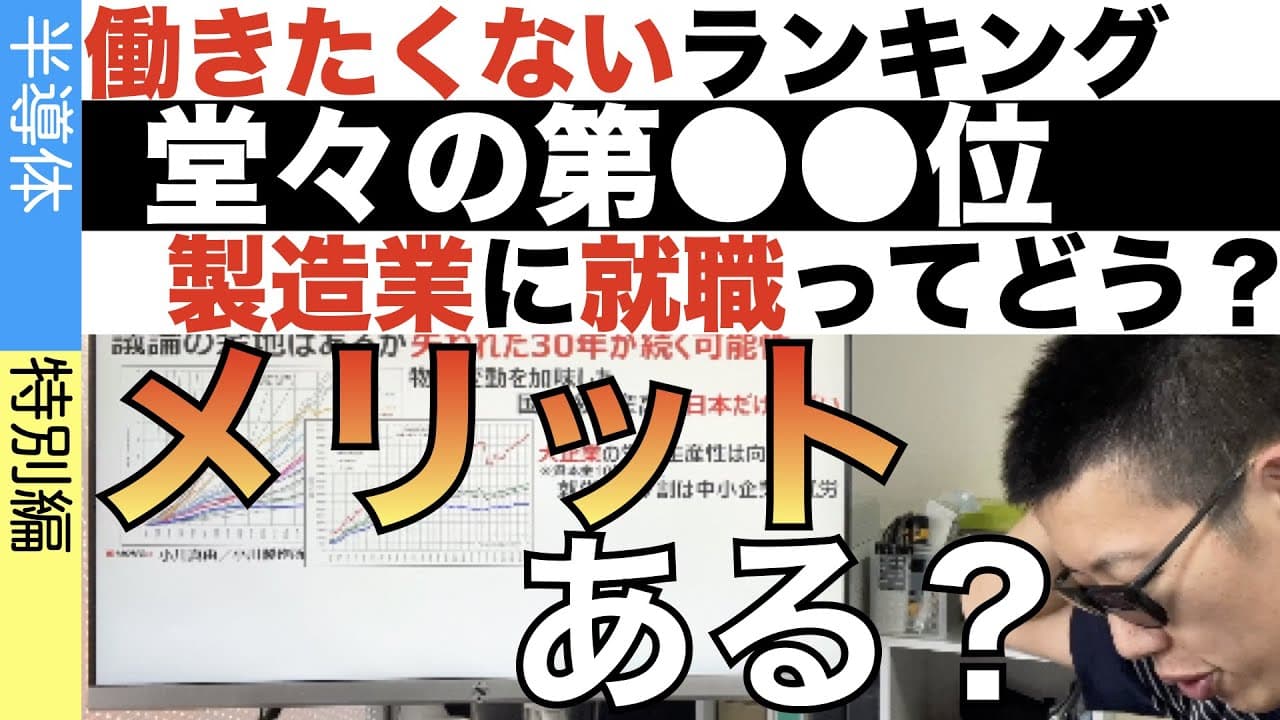
Manufacturing offers competitive salaries, ranking third in Japan after the information and communications and financial industries. Despite declining popularity among youth, manufacturing remains crucial to Japan's economy, contributing significantly to GDP and trade surplus. The industry provides opportunities for global work and skill development, especially for those with a science background.
Transcript
Hello. I'm Manufacturing man from Manufacturing man Channel . Today is a youth project with a different hair color. It focuses on manufacturing. A lot of young people watch my videos too. What are the options for working in manufacturing honestly? the reason is. Actually, I'm having a discussion at SEMICON Japan. I have almost decided to become an ... Read More
Key Insights
- Manufacturing ranks third in salary in Japan, following the information and communications and financial industries.
- The manufacturing industry is a core contributor to Japan's GDP and trade surplus.
- There is a significant shortage of science and IT professionals in the manufacturing sector.
- Manufacturing offers diverse roles, from assembly work to engineering and marketing management.
- The industry provides global opportunities, with 87 locations worldwide accepting internships.
- Despite its economic importance, manufacturing is undervalued and less popular among young job seekers.
- Japan's educational system is criticized for not adequately preparing students for the workforce.
- The demand for science-oriented human resources is high, making it a seller's market.
Install to Summarize YouTube Videos and Get Transcripts
Explore YouTube Video Summarizer or Get YouTube Transcript Extractor
Questions & Answers
Q: How does manufacturing rank in terms of salary in Japan?
Manufacturing ranks third in terms of salary in Japan, following the information and communications and financial industries. The average salary in manufacturing is competitive, making it an attractive option for those seeking financial stability. Despite this, the industry faces challenges in attracting young talent, partly due to its perception and the current educational system.
Q: What is the role of manufacturing in Japan's economy?
Manufacturing is a core industry in Japan, contributing significantly to the country's GDP and trade surplus. It encompasses various sectors, including transportation equipment, electronics, and general machinery. The industry is crucial for economic stability and growth, providing numerous employment opportunities and supporting Japan's global trade position.
Q: Why is there a shortage of science and IT professionals in manufacturing?
The shortage of science and IT professionals in manufacturing is due to several factors, including a narrow educational focus on humanities, a lack of emphasis on STEM fields, and the undervaluation of these professions among young job seekers. This gap presents an opportunity for those with a science background to secure well-paying jobs and contribute to technological advancements in the industry.
Q: What opportunities does the manufacturing industry offer for global work?
The manufacturing industry offers numerous global work opportunities, with 87 locations worldwide accepting internships. Professionals in this field can work on international projects, collaborate with overseas teams, and develop skills that are in demand globally. This international exposure enhances career prospects and allows individuals to gain valuable experience in diverse cultural and business environments.
Q: Why is manufacturing undervalued among young job seekers in Japan?
Manufacturing is undervalued among young job seekers in Japan due to its portrayal in media and a lack of understanding of the industry's potential. The educational system's focus on rote learning rather than practical skills also contributes to this perception. Improving the industry's image and highlighting its career growth opportunities could attract more young talent.
Q: How does Japan's educational system impact the manufacturing workforce?
Japan's educational system impacts the manufacturing workforce by not adequately preparing students for practical work environments. The system emphasizes rote memorization over critical thinking and problem-solving skills, leading to a workforce that may lack the necessary skills for innovation and productivity in manufacturing. Reforming education to focus on practical skills and STEM fields could improve this situation.
Q: What is the demand for science-oriented human resources in manufacturing?
The demand for science-oriented human resources in manufacturing is high, creating a seller's market for skilled professionals. This demand is driven by the industry's need for innovation and technological advancement. Companies seek individuals with strong backgrounds in science and engineering to fill roles that require specialized knowledge and skills, offering competitive salaries and career growth opportunities.
Q: How can individuals benefit from pursuing a career in manufacturing?
Individuals can benefit from pursuing a career in manufacturing by gaining access to competitive salaries, diverse roles, and global work opportunities. The industry offers a solid foundation for career growth, with the potential to develop in-demand skills and expertise. For those with a science background, manufacturing provides a seller's market, ensuring job security and the chance to contribute to technological advancements.
Summary & Key Takeaways
-
Manufacturing in Japan is a lucrative career path, ranking third in salary among industries. It plays a vital role in the economy, contributing significantly to GDP and trade surplus. Despite its importance, it faces a shortage of skilled science and IT professionals.
-
The manufacturing industry offers diverse roles and opportunities for global work, with 87 locations worldwide accepting internships. However, it is undervalued among young job seekers, partly due to an educational system that fails to prepare students adequately for the workforce.
-
Japan's manufacturing sector remains strong, with niche market leaders like THK, JSR, and Advantest. The demand for science-oriented professionals is high, offering a seller's market for skilled individuals. The industry provides a solid foundation for career growth and global opportunities.
Read in Other Languages (beta)
Share This Summary 📚
Summarize YouTube Videos and Get Video Transcripts with 1-Click
Try YouTube Summary with ChatGPT & Claude or YouTube Transcript Generator
Explore More Summaries from ものづくり太郎チャンネル 📚






Summarize YouTube Videos and Get Video Transcripts with 1-Click
Try YouTube Summary with ChatGPT & Claude or YouTube Transcript Generator