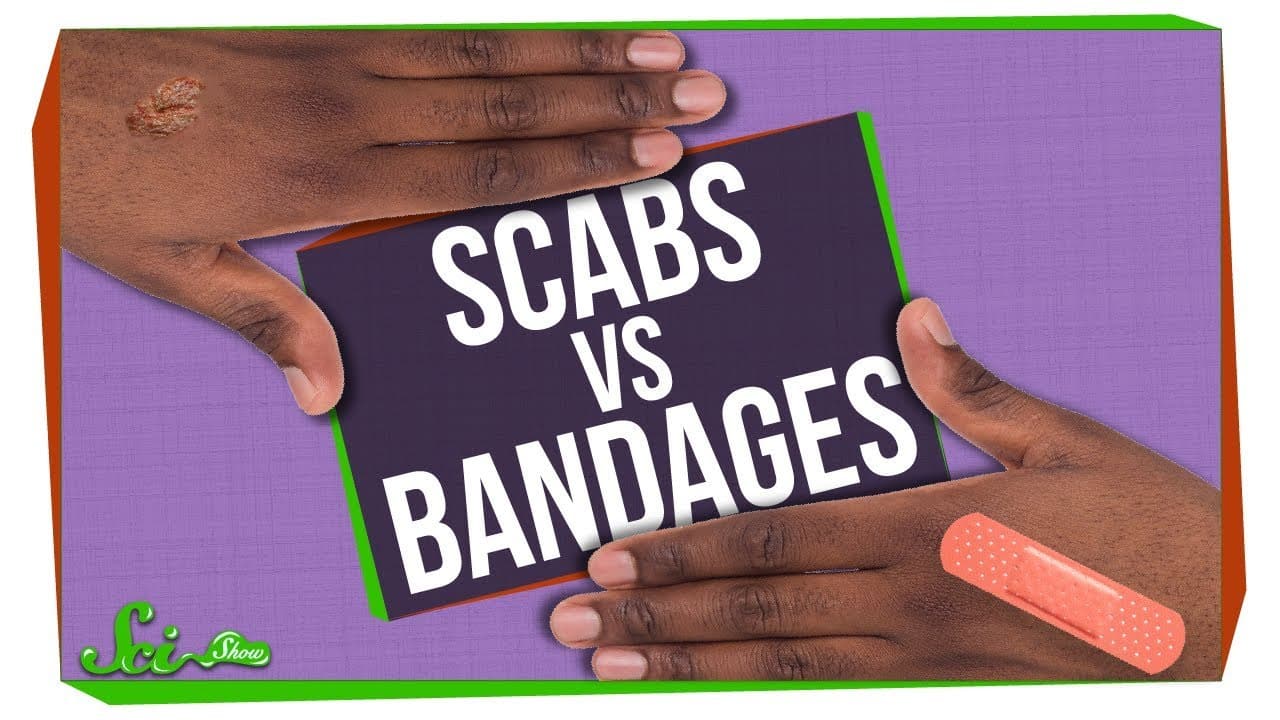
What's Better for Wounds: Scabs or Bandages?
TL;DR
Covering wounds with moist bandages can promote faster and safer healing compared to letting them dry out and form scabs.
Transcript
SciShow is supported by Brilliant.org. Go to Brilliant.org/SciShow to get 20% off an annual premium subscription. ♪ Sometimes, picking out a bandage for small wounds and scrapes can be kind of fun. I mean, falling off your bike or whatever probably stung like no one’s business, but have you seen how many cartoon-themed bandages there are? Still, wh... Read More
Key Insights
- 😨 Moist, occlusive dressings promote faster wound healing with fewer infections and less scarring.
- 🪡 Wounds do not need to breathe, as they receive all necessary oxygen from the bloodstream.
- ❓ The belief that scabs are better for wound healing is not supported by scientific evidence.
- 🤕 Modern bandages are designed to enhance the wound healing process and provide additional benefits compared to scabs alone.
- ♻️ Moist environments discourage bacterial growth and reduce the risk of infection.
- 😨 Skin heals faster and with less scarring when kept moist during the proliferation phase of healing.
- ❓ The healing process includes four phases: hemostasis, inflammation, proliferation, and maturation.
Install to Summarize YouTube Videos and Get Transcripts
Explore YouTube Video Summarizer or Get YouTube Transcript Extractor
Questions & Answers
Q: Does leaving wounds uncovered and allowing scabs to form help wounds heal faster?
No, studies have shown that wounds treated with moist bandages heal faster with less scarring compared to wounds left to dry out and form scabs. Moist environments promote faster skin growth and are less prone to infections.
Q: Do scabs need to breathe for wounds to heal?
No, scabs do not need to breathe. Wounds receive all the oxygen they need for healing from the bloodstream. Oxygen is not required to penetrate the covering (bandage) to reach the wound.
Q: Can bacteria grow in moist bandages and increase the risk of infection?
While it is possible for bacteria to grow in moist bandages, clinical studies have shown that wounds treated with moist, occlusive dressings have fewer incidents of infection compared to wounds treated with dry gauze. Moist bandages create a better barrier against pathogens and reduce the risk of colonization by harmful bacteria.
Q: Do wounds heal more quickly and with less scarring when kept moist?
Yes, evidence suggests that keeping wounds moist during the proliferation phase of healing promotes faster skin growth and results in less scarring. Moist environments enhance the process of reepithelialization, where skin cells grow from the edges of the wound towards the center.
Summary & Key Takeaways
-
There is a debate about whether wounds heal faster when covered with bandages or left to dry out and form scabs.
-
Reviews of clinical literature indicate that wounds treated with moist, occlusive dressings have fewer infections and heal faster with less scarring.
-
Keeping wounds moist during the proliferation phase of healing promotes faster skin growth and less scarring.
Read in Other Languages (beta)
Share This Summary 📚
Summarize YouTube Videos and Get Video Transcripts with 1-Click
Try YouTube Summary with ChatGPT & Claude or YouTube Transcript Generator
Explore More Summaries from SciShow 📚


Summarize YouTube Videos and Get Video Transcripts with 1-Click
Try YouTube Summary with ChatGPT & Claude or YouTube Transcript Generator