China 2015 - Briefing Session: Unexpected Discoveries - Young Scientists at AMNC

TL;DR
Scientists discuss the potential of using killer snail venom for drug therapies, the intersection of artificial intelligence and healthcare, the development of models to understand memory formation, and the integration of fab labs and entrepreneurship in Serbia.
Transcript
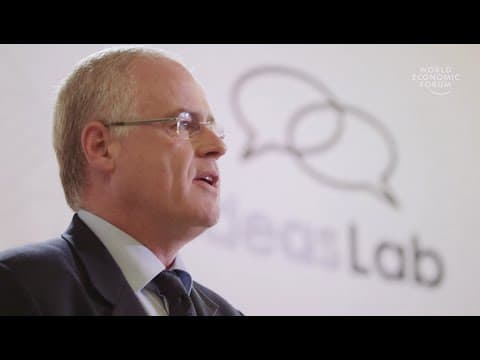
well good morning ladies and gentlemen welcome to the third and final day of the annual meeting of the new champions 2015 delighted to be here with our first issue briefing of the day we have to today where we're going to move from signs to innovation with our second one being about the shadow banking and technological disruption in the finance ind... Read More
Key Insights
- 🥹 Killer snail venom holds potential for drug therapies that are highly specific, fast-acting, and non-addictive, providing new models for pain treatment.
- 🥺 The intersection of artificial intelligence and healthcare, specifically in mental health, can provide objective measures for diagnosis and treatment, leading to more efficient and effective healthcare practices.
- 🥺 Understanding the molecular mechanisms behind memory formation can lead to advancements in treatments for memory loss and the development of smarter artificial intelligent agents.
Install to Summarize YouTube Videos and Get Transcripts
Explore YouTube Video Summarizer or Get YouTube Transcript Extractor
Questions & Answers
Q: How do killer snails venom differ from traditional painkillers on the market?
Killer snails venom targets different molecular targets and does not work on opioid receptors, making them non-addictive. They are also more potent and longer-lasting than traditional painkillers.
Q: How is artificial intelligence helping in the diagnosis and treatment of mental health disorders?
Artificial intelligence is being used to quantify nonverbal behavior and help doctors objectively measure symptoms in patients with mental health disorders, such as depression, psychosis, and autism.
Q: What is the potential impact of understanding the mechanisms behind memory formation?
Understanding the molecular mechanisms behind memory formation can lead to the development of new treatments for memory loss and the incorporation of these mechanisms into artificial intelligent agents, contributing to advancements in healthcare and technology.
Q: How can fab labs and digital fabrication contribute to entrepreneurship and scientific research?
Fab labs provide a space for rapid prototyping and collaboration between scientists and entrepreneurs. They also allow for the development of low-cost, research-grade equipment, making scientific research more accessible.
Summary & Key Takeaways
-
Mandy Holford discusses the potential of using venom from killer snails for drug therapies, highlighting their specificity, fast-acting properties, and lack of addictive qualities.
-
Louis-Philippe Morency explores the intersection of artificial intelligence and healthcare, specifically in the field of mental health, where AI can provide objective measures for diagnosis and treatment.
-
Yota Ioannidou focuses on understanding the mechanisms behind memory formation and building computational models to simulate these processes, with the aim of developing new treatments and incorporating them into artificial intelligent agents.
-
Ivana Kuzmanovic discusses her work in tissue engineering and the establishment of fab labs, which serve as workspaces for digital fabrication, encouraging entrepreneurship and providing low-cost research-grade equipment.
Read in Other Languages (beta)
Share This Summary 📚
Summarize YouTube Videos and Get Video Transcripts with 1-Click
Try YouTube Summary with ChatGPT & Claude or YouTube Transcript Generator
Explore More Summaries from World Economic Forum 📚
Summarize YouTube Videos and Get Video Transcripts with 1-Click
Try YouTube Summary with ChatGPT & Claude or YouTube Transcript Generator