The technology of translation - 6 Minute English
TL;DR
Explores the accuracy and challenges of language translation technology.
Transcript
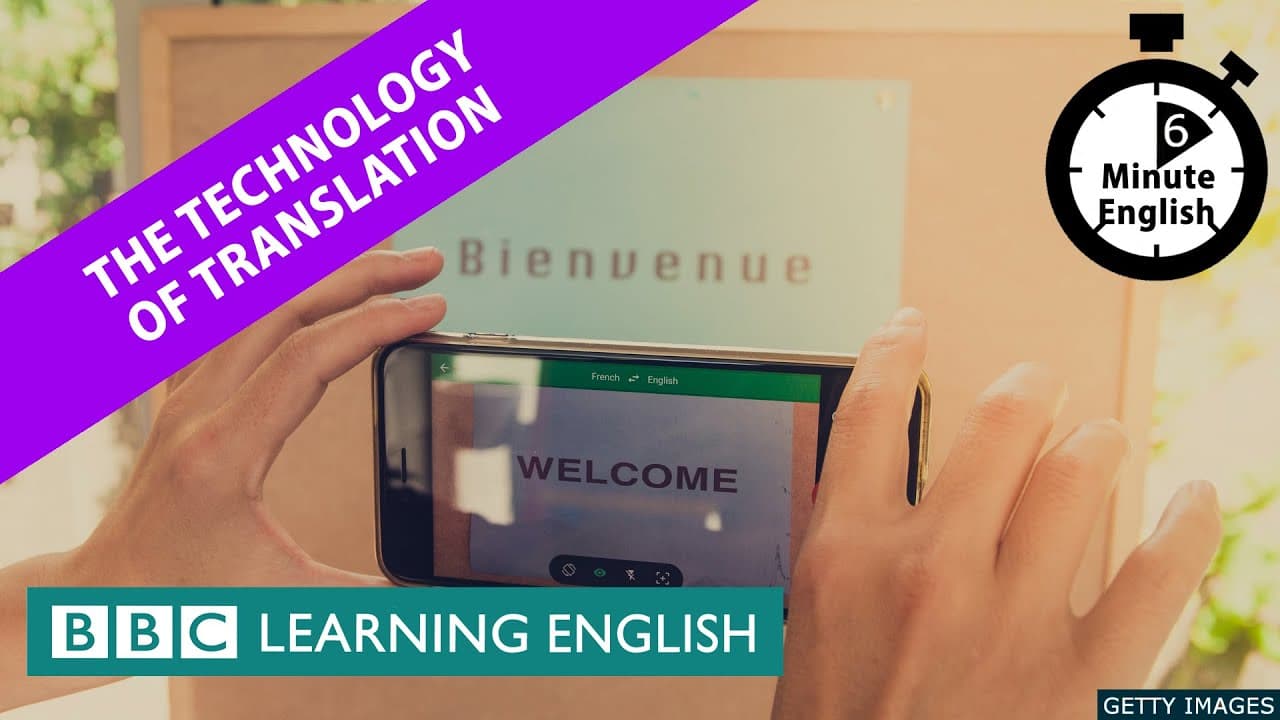
Hello. This is 6 Minute English from BBC Learning English. I’m Rob. And I’m Sam. Rob, I’m writing a letter to a friend in Spain and I need some help. Do you know the Spanish for, ‘it’s raining’? Don’t worry, I have this new app ... I just hold up my phone, scan the word I want translated, uh, 'esta lloviendo’, is the Spanish for, ‘it’s raining’. Am... Read More
Key Insights
- Modern translation apps like Google Translate have revolutionized language learning by reducing communication barriers, but they have limitations in understanding context and creativity.
- Translation software historically relied on rules-based methods, which struggled with complex language forms such as metaphors and idioms.
- Metaphors require manual translation adjustments because literal translations often lose the intended meaning in another language.
- While machines excel at rote learning, they struggle with novel and creative expressions, highlighting a gap between human and machine translation capabilities.
- Human creativity and novelty in language pose challenges for current translation software, which relies on pattern recognition from existing data.
- The mistranslation of 'fly in leather' to 'fly naked' by Braniff Airlines exemplifies the potential pitfalls of relying solely on automated translations.
- Translation technology is automated, meaning it is performed by machines rather than humans, which can lead to misunderstandings when context is not properly accounted for.
- Vocabulary such as 'metaphor,' 'idiom,' 'chunk,' 'rote,' and 'flummox' are key terms discussed in the context of translation technology and its limitations.
Install to Summarize YouTube Videos and Get Transcripts
Explore YouTube Video Summarizer or Get YouTube Transcript Extractor
Questions & Answers
Q: How has modern translation technology changed language learning?
Modern translation technology, like Google Translate, has greatly impacted language learning by making it easier to communicate across different languages. It has reduced language barriers and facilitated learning by providing instant translations. However, it still struggles with understanding context and creativity, which are essential for accurate translations.
Q: What challenges do translation apps face with metaphors?
Translation apps face significant challenges with metaphors because these expressions often do not translate literally into other languages. Metaphors require understanding of context and cultural nuances, which machines struggle with. As a result, they often need manual adjustments to ensure the intended meaning is preserved in the translation.
Q: Why is human creativity a challenge for translation software?
Human creativity presents a challenge for translation software because machines rely on rote learning and pattern recognition from existing data. Creative expressions, such as novel metaphors or idioms, often lack precedent in data, making it difficult for machines to translate them accurately. This highlights the gap between human understanding and machine capabilities in language translation.
Q: What was the mistake in Braniff Airlines' translation?
Braniff Airlines made a translation error with their slogan 'fly in leather,' which was mistranslated into Spanish as 'fly naked.' The mistake occurred because the Spanish phrase 'en cuero' sounds like a slang term for 'naked,' illustrating the risks of relying solely on automated translations without considering cultural and linguistic nuances.
Q: How do translation apps handle idioms?
Translation apps handle idioms by attempting to translate them as chunks or large parts of text rather than word-for-word. This method helps preserve the intended meaning of idioms, which often lose their sense when translated literally. However, it requires that idioms be pre-programmed into the software, which is not always possible for new or uncommon expressions.
Q: What is the difference between rote learning and human learning in translation?
Rote learning, used by machines, involves memorizing patterns and repeating information without understanding. Human learning, in contrast, involves understanding context, creativity, and cultural nuances, allowing for more accurate and meaningful translations. This difference highlights the limitations of current translation technology in capturing the full depth of human language.
Q: Why is context important in translation?
Context is crucial in translation because it provides the background and cultural nuances necessary for understanding the true meaning of words and phrases. Without context, translations can become inaccurate or misleading, as machines may not recognize subtleties or idiomatic expressions that rely on cultural knowledge and situational understanding.
Q: What role does pattern recognition play in machine translation?
Pattern recognition is central to machine translation, as it involves identifying and applying patterns from a vast amount of existing data to translate text. While effective for common phrases, this method struggles with novel or creative language uses, which require a deeper understanding beyond patterns, highlighting the limitations of machine translation in fully replicating human language comprehension.
Summary & Key Takeaways
-
The discussion focuses on how modern translation apps like Google Translate have transformed language learning by making communication across languages more accessible, despite their limitations in understanding context and creativity.
-
Challenges faced by translation software include accurately translating complex language forms like metaphors and idioms, which often require manual adjustments to maintain their intended meanings.
-
Human creativity and novelty in language continue to challenge translation technology, which relies on pattern recognition from existing data, highlighting the differences between human and machine translation capabilities.
Read in Other Languages (beta)
Share This Summary 📚
Summarize YouTube Videos and Get Video Transcripts with 1-Click
Try YouTube Summary with ChatGPT & Claude or YouTube Transcript Generator
Explore More Summaries from BBC Learning English 📚
Summarize YouTube Videos and Get Video Transcripts with 1-Click
Try YouTube Summary with ChatGPT & Claude or YouTube Transcript Generator