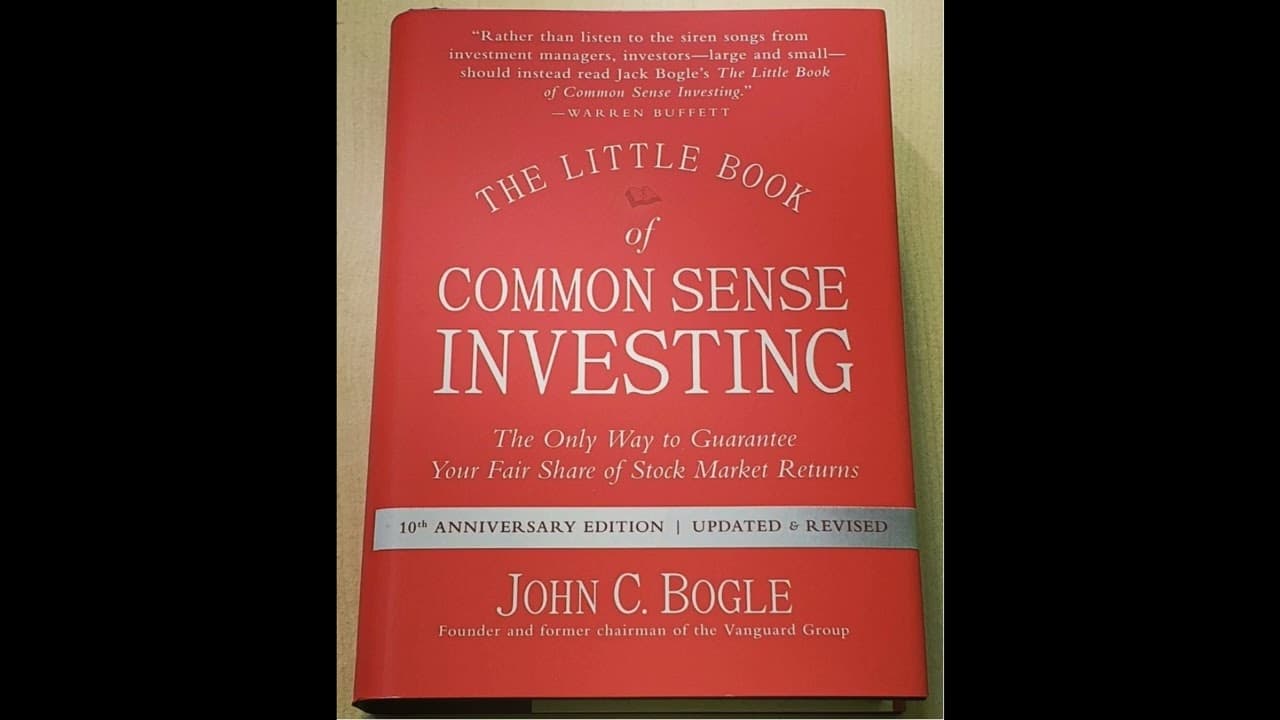
The Little Book of Common Sense Investing book summary
TL;DR
Actively managed funds are costly and underperform the market, making low-cost index funds the best choice for maximizing returns.
Transcript
the little book of common sense investing the only way to guarantee your fair share of stock market returns mutual funds are like chocolate bars there are so many different kinds and new versions are always popping up how are you supposed to decide where to invest one way is security pool your investment along with other peoples in a low risk fund ... Read More
Key Insights
- ✋ Actively managed funds have high costs and often underperform the market.
- 🍝 Only a few funds consistently outperform the market, and their past success may not repeat in the future.
- 📈 Investors underestimate the true costs of actively managed funds and are influenced by emotions and market trends.
- 🇨🇷 Low-cost index funds offer better long-term performance by tracking the overall market and minimizing operating costs.
- 😘 Choose index funds with the lowest expense ratios to maximize returns.
- 😘 Be skeptical of new investing trends and prioritize low costs.
- 😅 Investing in actively managed funds eats up profits, benefiting financial mediators more than investors.
Install to Summarize YouTube Videos and Get Transcripts
Explore YouTube Video Summarizer or Get YouTube Transcript Extractor
Questions & Answers
Q: Why do actively managed funds underperform the market?
Actively managed funds have high costs, and speculating on stock prices is not a sustainable strategy. This, combined with the fees, results in lower profits than passive index funds.
Q: How many mutual funds consistently outperform the market?
Only 24 out of 355 mutual funds that existed in 1970 have consistently outperformed the market. The majority either go bankrupt or fail to generate significant returns.
Q: Why do people keep investing in actively managed funds?
Investors often underestimate the true costs of these funds and are influenced by popular opinion and marketing. They also let emotions and current market trends guide their decisions.
Q: What is the best alternative to actively managed funds?
Low-cost index funds are the best alternative. They hold a diversified portfolio that reflects the market and have lower operating costs, resulting in better long-term performance.
Summary & Key Takeaways
-
Actively managed funds have high costs and often yield less profit than the overall stock market.
-
Only a few funds consistently outperform the market, and even those do not guarantee future performance.
-
Investors often underestimate the true costs of actively managed funds and are influenced by emotions and market trends.
Read in Other Languages (beta)
Share This Summary 📚
Summarize YouTube Videos and Get Video Transcripts with 1-Click
Try YouTube Summary with ChatGPT & Claude or YouTube Transcript Generator
Explore More Summaries from The value investing channel 📚





Summarize YouTube Videos and Get Video Transcripts with 1-Click
Try YouTube Summary with ChatGPT & Claude or YouTube Transcript Generator