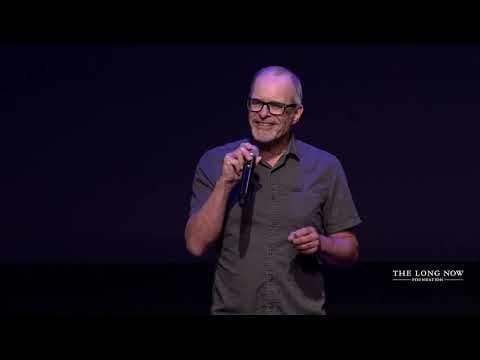
Here on Earth | Tim Flannery

TL;DR
Earth, in all its complexity and interdependence, can be seen as a global superorganism, with humans forming a newly formed global intelligence. While there are challenges and resistance, there is hope for a sustainable future.
Transcript
there good evening I'm under Stuart bran from the long now foundation looking at this film we thought well you know we could do a 400 foot high hourglass inside the mountain in Eastern Nevada and then you start thinking actually you could have a bunch of year hourglasses decade hourglasses century hourglasses and they feed and they add up and you'd... Read More
Key Insights
- 💁 Earth can be viewed as a global superorganism, with humans forming a newly formed global intelligence.
- 💦 Humans have the potential to become a global intelligence for the planet, but this requires overcoming selfishness and working towards long-term goals.
- 👻 Poverty eradication is crucial in strengthening the global superorganism and allowing individuals to have a longer-term perspective.
Install to Summarize YouTube Videos and Get Transcripts
Explore YouTube Video Summarizer or Get YouTube Transcript Extractor
Questions & Answers
Q: How does the concept of Gaia tie into the challenges humans face, such as climate change?
Gaia represents the interconnectedness of all life on Earth and the self-regulating nature of the planet. Understanding this concept is crucial in addressing environmental challenges like climate change, as it emphasizes the need for global cooperation and a long-term perspective.
Q: What role do humans play in the formation of the global superorganism?
Humans are essential in the formation of the global superorganism, as they possess intelligence and the ability to connect and share ideas. However, humans must also recognize and overcome their inherent selfishness to work towards the common goal of a sustainable future.
Q: How does Flannery view the future of Earth and the human species?
Flannery presents two possibilities for the future: one is the "Medea hypothesis," where life destroys itself, and the other is a more optimistic view, where humans become a global intelligence for the planet. Flannery leans towards the latter possibility, but emphasizes the need for making the right decisions in the coming decades.
Q: How is the concept of kin selection relevant to understanding human behavior and cooperation?
Kin selection is the idea that individuals are more likely to help those genetically similar to them. While it may explain certain behaviors, such as parental care, the concept of cooperation and love between unrelated individuals goes beyond kin selection. Love and cooperation are evolutionary outcomes that have shaped human civilization and are vital for the survival of the global superorganism.
Summary & Key Takeaways
-
Author Tim Flannery explores the concept of Gaia and the interdependence of life on Earth.
-
Flannery discusses the formation of the human superorganism and the challenges it faces, including climate change and poverty.
-
He argues that, despite our selfishness and greed, humans have the potential to become a global intelligence for the planet.
-
Flannery emphasizes the importance of eradicating poverty to give individuals a longer-term view and strengthen the global superorganism.
Read in Other Languages (beta)
Share This Summary 📚
Summarize YouTube Videos and Get Video Transcripts with 1-Click
Try YouTube Summary with ChatGPT & Claude or YouTube Transcript Generator
Explore More Summaries from Long Now Seminars 📚

Summarize YouTube Videos and Get Video Transcripts with 1-Click
Try YouTube Summary with ChatGPT & Claude or YouTube Transcript Generator