How Turtles Pee Out of Their Mouths & Other Fun Facts
TL;DR
Turtles have evolved remarkable traits that allow them to survive and thrive in different environments, teaching biologists valuable lessons about adaptation and offering insights into animal physiology.
Transcript
Thanks to KiwiCo for supporting this episode of SciShow! [♪ INTRO ] Everyone knows that the reptiles in the order Testudines, the lineage collectively known as turtles, are totally tubular. Those that don’t put on colorful masks and fight crime play important roles in the ecosystems they call home. But although they all share a recognizable body pl... Read More
Key Insights
- 🐢 Turtles have evolved unique traits such as long necks, genetic sex determination, and specialized excretion systems, providing valuable insights into adaptation.
- 🐢 Understanding turtle adaptations can inspire advancements in engineering, such as underwater machines and systems for staying submerged for longer periods.
- 🐢 Conservation efforts are crucial, as over 60% of turtle species are threatened with extinction.
- 🐢 Turtles demonstrate the importance of creative problem-solving in achieving success and thriving in diverse environments.
- 🐢 Studying turtles' abilities to camouflage, determine sex, withstand extreme temperatures, and breathe underwater offers valuable knowledge about animal physiology.
Install to Summarize YouTube Videos and Get Transcripts
Explore YouTube Video Summarizer or Get YouTube Transcript Extractor
Questions & Answers
Q: Why do mata mata turtles have such long necks?
Mata mata turtles have evolved long necks to remain motionless while sticking their noses out of the water to breathe and capture prey. This allows them to blend in as a rotting log and surprise unsuspecting fish.
Q: How do eastern long-necked turtles determine their sex?
Unlike temperature-dependent sex determination in most turtles, eastern long-necked turtles use genetic sex determination. They have an XX/XY system that helps them maintain a balanced 50/50 split of sexes, regardless of environmental changes.
Q: How do leatherback sea turtles survive in freezing water temperatures?
Leatherbacks can keep their bodies up to 18 degrees warmer than the water they swim in. Their large size and the insulation provided by their oil-rich bodies help prevent heat dispersion. Additionally, their unique network of blood vessels at the base of their limbs keeps their flippers warm.
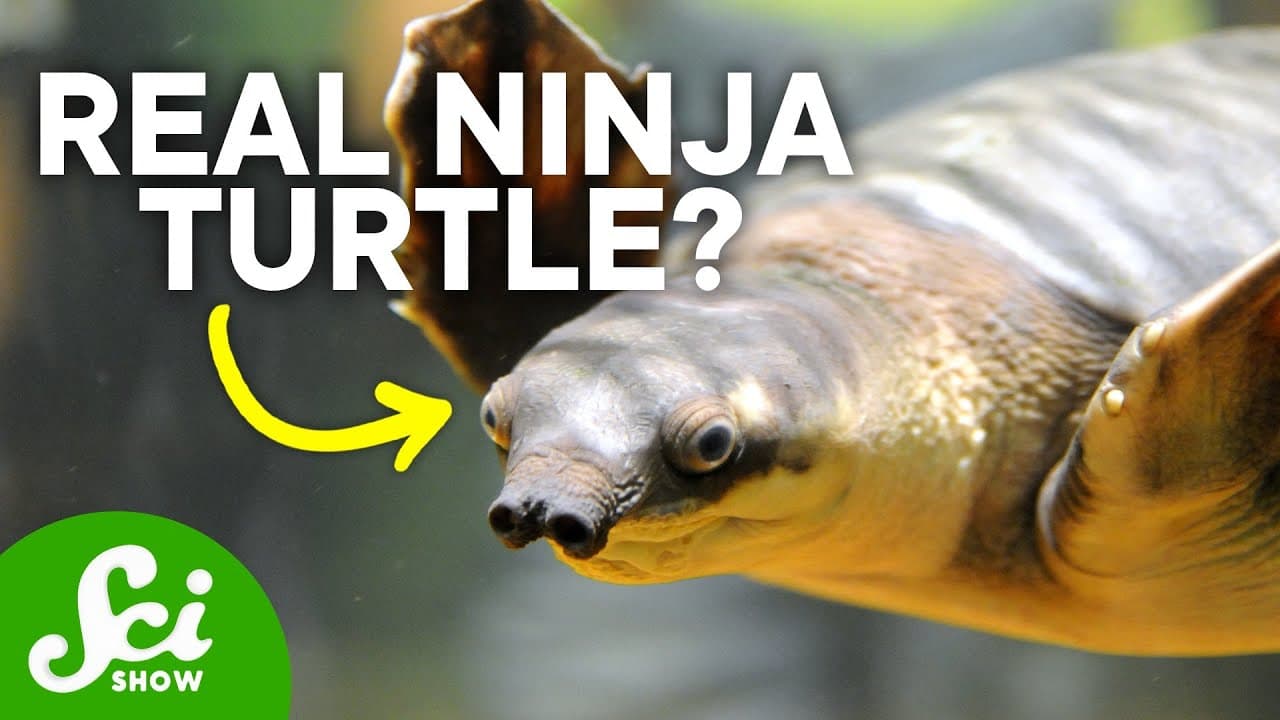
Q: Why do pig-nosed turtles have enlarged paddles for forelimbs?
Pig-nosed turtles, despite being freshwater turtles, have forelimbs that resemble those of marine turtles. While slower and less efficient than marine turtles, they use these paddles to run along the river bottom, allowing for quiet and rapid approaches to prey.
Q: How do Chinese softshell turtles excrete urea through their mouths?
Chinese softshell turtles have specialized tissues in their mouths that secrete urea, the waste product normally excreted through urine. Their saliva can have 250 times more urea than their blood. This unique adaptation helps them thrive in brackish water environments.
Q: What allows Fitzroy River turtles to stay underwater for days?
Fitzroy River turtles have bursae in their cloacas, which act like internal gills. These structures absorb oxygen from the water as it rushes in during cloacal muscle contractions. The presence of papillae on the bursae increases the area for gas exchange, enabling the turtles to stay underwater for extended periods.
Summary & Key Takeaways
-
The mata mata turtle camouflages itself as a log to catch unsuspecting prey. Its long neck allows it to stay still while it sticks its nose out of the water to breathe and capture food.
-
The eastern long-necked turtle determines its sex through genetic sex determination, using chromosomes like humans. This flexible method helps them adapt to diverse habitats.
-
Leatherback sea turtles can withstand freezing water temperatures and have a unique network of blood vessels that keeps their limbs warm, allowing them to swim long distances.
-
Pig-nosed turtles are the only freshwater turtles with enlarged paddles for forelimbs, although they are slower and less efficient than marine turtles. They use their flippers to run along the river bottom.
-
Chinese softshell turtles have a peculiar excretion system that allows them to secrete urea through their mouths. This adaptation enables them to survive in brackish water environments.
-
Fitzroy River turtles have cloacal breathing sacs with papillae that increase gas exchange, allowing them to stay underwater for days and even weeks.
Read in Other Languages (beta)
Share This Summary 📚
Summarize YouTube Videos and Get Video Transcripts with 1-Click
Try YouTube Summary with ChatGPT & Claude or YouTube Transcript Generator
Explore More Summaries from SciShow 📚


Summarize YouTube Videos and Get Video Transcripts with 1-Click
Try YouTube Summary with ChatGPT & Claude or YouTube Transcript Generator