Eleni Gabre-Madhin: Building a commodities market in Ethiopia

TL;DR
This talk discusses the importance of commodity exchanges in transforming African agriculture and empowering small farmers to have more control over their markets.
Transcript
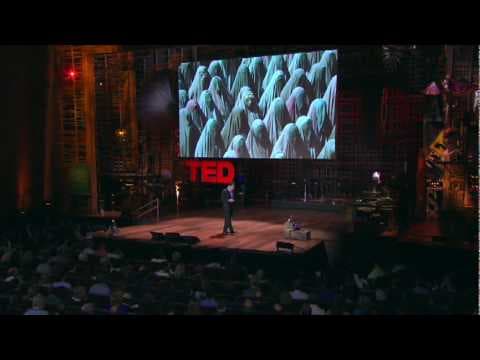
You know, there's a small country nestled in the Himalayan Mountains, far from these beautiful mountains, where the people of the Kingdom of Bhutan have decided to do something different, which is to measure their gross national happiness rather than their gross national product. And why not? After all, happiness is not just a privilege for the luc... Read More
Key Insights
- 🌍 The people of Bhutan have prioritized measuring gross national happiness over gross national product, recognizing that happiness is a fundamental human right for all.
- 💰 Well-functioning markets provide choices and the ability to pursue happiness, as demonstrated by economist Amartya Sen's Nobel prize-winning work on famine and food supply.
- 🌾 African agriculture is under-capitalized and lacks necessary infrastructure compared to other regions, resulting in limited choices and freedom for small farmers.
- 🌍 Market reforms in Africa have not led to the expected improvements in agriculture and food security, due in part to weak infrastructure and the absence of necessary market institutions.
- 🌾 Small farmers in Africa face high transaction costs, market risks, and price volatility, often bearing the brunt of these challenges.
- 📊 Commodity buyers and sellers in Africa often operate within small circles and rely on changing sacks to assess quantity and quality, leading to high costs and slower market response.
- 📉 In Ethiopia, maize prices can vary by up to 50% annually, highlighting the significant market risk faced by farmers and its implications for investment and food security.
- 🌍 Change is in the air in Africa, as the continent recognizes that markets require investment in infrastructure and institutions to unleash innovation and transform agriculture. Ethiopia is leading with the establishment of its own commodity exchange, tailored to the needs of small farmers.
Install to Summarize YouTube Videos and Get Transcripts
Explore YouTube Video Summarizer or Get YouTube Transcript Extractor
Questions & Answers
Q: How do weak market institutions impact small farmers in Africa?
Weak market institutions in Africa, such as the lack of market information and reliable connections between buyers and sellers, make it difficult for small farmers to have access to markets and negotiate better prices. This limits their choices and leaves them at the mercy of local merchants, leading to financial insecurity and reduced ability to invest in higher productive technology.
Q: What are the challenges faced by farmers in Africa regarding market risk?
Farmers in Africa face the highest price volatility of food crops in the world. This means that the prices for their crops can fluctuate dramatically from year to year, posing significant risks for their incomes. Small farmers bear the brunt of this risk, and it affects their incentive to invest in higher productivity technology and overall food security in the region.
Q: How does the Ethiopia Commodity Exchange (ECX) aim to transform African agriculture?
The ECX is designed to create a market ecosystem that addresses the challenges faced by African farmers. It operates a trading system, manages grade certification and warehouse receipts, ensures fair payment, and disseminates real-time market prices to farmers using information technology. By providing farmers with market information and the ability to trade nationally and globally, the ECX aims to empower small farmers and transform the agricultural market in Ethiopia and potentially across Africa.
Q: What is the potential impact of commodity exchanges in Africa?
Commodity exchanges, like the ECX, have the potential to significantly improve the efficiency and transparency of African agricultural markets. By creating value through market integration, upgrading infrastructure, and providing access to market information, commodity exchanges can empower small farmers and contribute to the growth of agricultural industries. Additionally, commodity exchanges can serve as a trading platform for a pan-African market in agricultural commodities, increasing economic opportunities and transforming the agricultural sector across the continent.
Summary & Key Takeaways
-
African agriculture is undercapitalized and inefficient, leading to low productivity and limited choices for small farmers.
-
The lack of market institutions, such as market information and reliable connections between buyers and sellers, contributes to weak markets.
-
The speaker introduces the concept of commodity exchanges, specifically the Ethiopia Commodity Exchange (ECX), as a solution to improve market efficiency, transparency, and risk management for farmers in Africa.
Read in Other Languages (beta)
Share This Summary 📚
Summarize YouTube Videos and Get Video Transcripts with 1-Click
Try YouTube Summary with ChatGPT & Claude or YouTube Transcript Generator
Explore More Summaries from TED 📚





Summarize YouTube Videos and Get Video Transcripts with 1-Click
Try YouTube Summary with ChatGPT & Claude or YouTube Transcript Generator