Working Kangaroo Mom | National Geographic
TL;DR
Baby kangaroos, called joeys, go through an incredible journey from being blind and deaf embryos to crawling into their mother's pouch and eventually becoming independent.
Transcript
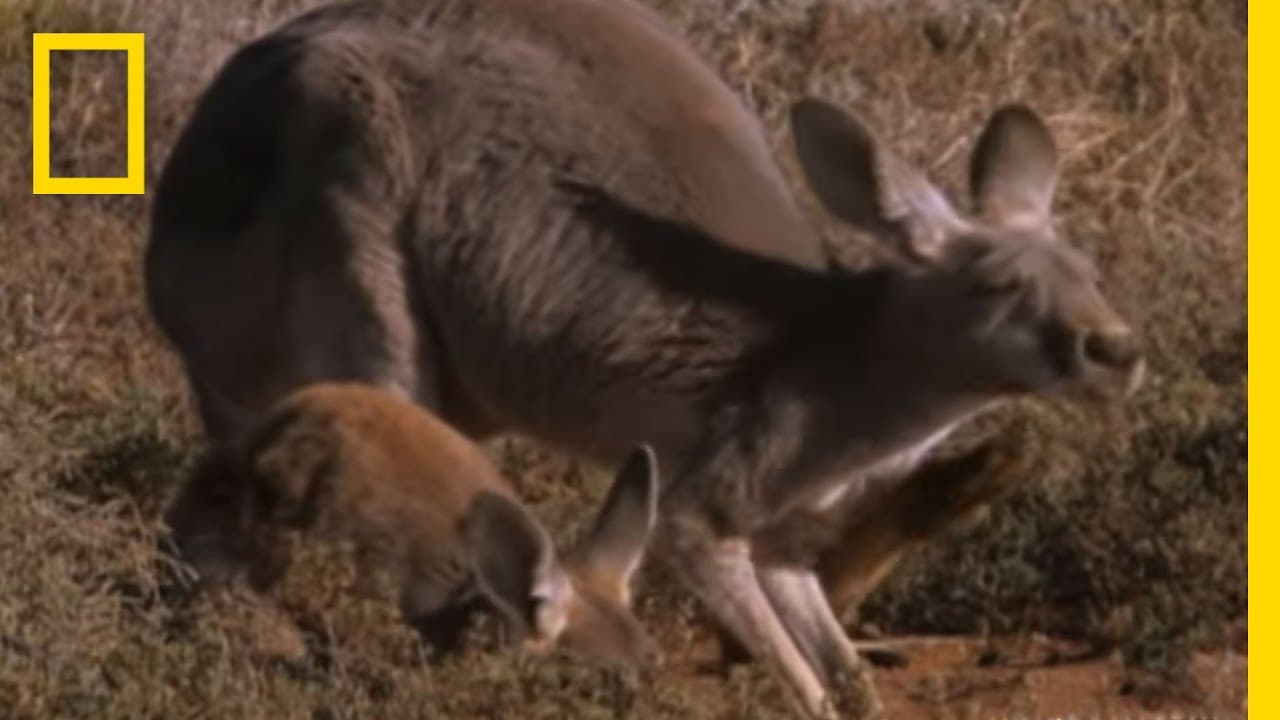
here in Australia this baby red kangaroo called a joey has been out of the pouch for Just 2 days and mom is getting ready to give birth again how does this work well let's find out a pink kangaroo embryo the size of a limma bean pops out it's blind and deaf and yet somehow it's got to find its way to the mother's pouch it's hind legs which will som... Read More
Key Insights
- 🥳 Kangaroo embryos are born blind and deaf, and have to crawl into their mother's pouch shortly after birth.
- 🦘 The mother kangaroo produces two types of milk, one for the embryo and one for the joey.
- 🕵️♀️ Kangaroo females have the ability to delay embryo development during times of drought.
- 🗯️ Dominant male kangaroos establish mating rights through physical competitions, such as kicking contests.
- 🕵️♀️ Female kangaroos can breed for 8 to 12 years, but may pause reproductive cycles during droughts.
- 🍃 Kangaroo joeys continue to suckle from their mother for several months after leaving the pouch.
- 🥶 Kangaroo embryos remain in a state of suspended animation called diapause until the oldest joey in the pouch becomes independent.
Install to Summarize YouTube Videos and Get Transcripts
Explore YouTube Video Summarizer or Get YouTube Transcript Extractor
Questions & Answers
Q: How do blind and deaf kangaroo embryos find their way to their mother's pouch?
Despite being blind and deaf, kangaroo embryos use their four limbs to crawl through their mother's fur and into the pouch, a process that takes about 3 minutes.
Q: How long does a kangaroo joey stay attached to its mother's nipple?
A kangaroo joey remains latched onto one nipple for 34 weeks while inside the pouch, receiving nourishment and growing.
Q: What is diapause, and how does it affect kangaroo reproduction?
Diapause is a state of suspended animation where a kangaroo embryo remains dormant while the mother takes care of the joeys outside the pouch. This allows the mother to tend to multiple young at different stages of development.
Q: How do dominant male kangaroos establish their mating rights?
Dominant male kangaroos win mating rights by competing with other males, often through kicking contests. The subdominant males engage in these competitions, while the dominant male claims the female as his mate.
Summary & Key Takeaways
-
Kangaroo embryos the size of a lima bean are born blind and deaf, and must crawl up their mother's fur to reach her pouch.
-
Once inside the pouch, the embryo latches onto a nipple and remains attached for 34 weeks.
-
After leaving the pouch, the joey continues to nurse from its mother for another 4 months.
Read in Other Languages (beta)
Share This Summary 📚
Summarize YouTube Videos and Get Video Transcripts with 1-Click
Try YouTube Summary with ChatGPT & Claude or YouTube Transcript Generator
Explore More Summaries from National Geographic 📚




Summarize YouTube Videos and Get Video Transcripts with 1-Click
Try YouTube Summary with ChatGPT & Claude or YouTube Transcript Generator