What Are the 6 Largest Single-Celled Organisms?
TL;DR
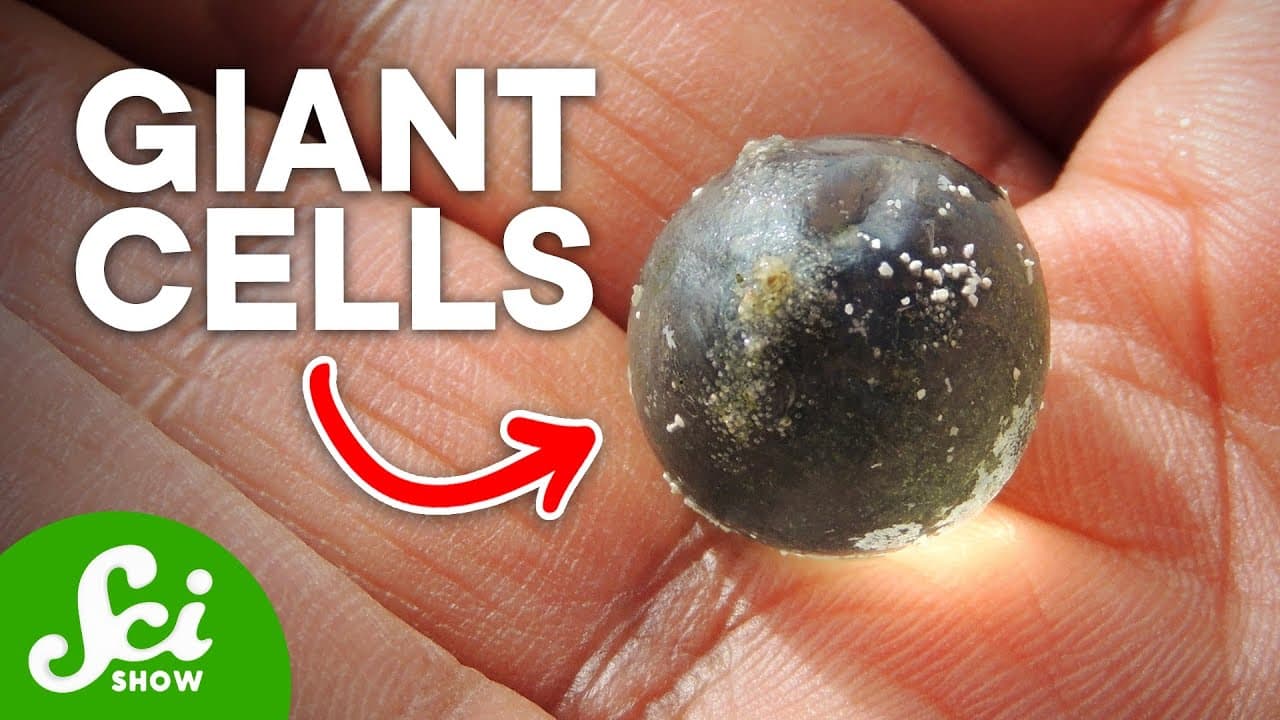
The six largest single-celled organisms include Stentor coeruleus, capable of regeneration and growing up to two millimeters, and Gromia, which leaves fossilized tracks and challenges evolutionary timelines. Other notable examples are Spiculosiphon oceana, which mimics multicellular predators, and Valonia ventricosa, a giant algae that enhances our understanding of cellular structures. These organisms primarily thrive in water, benefiting from nutrient availability and fluid pressure.
Transcript
{♫Intro♫} If I asked you to picture a single cell, I bet you’d imagine something super tiny that you had to look at through a microscope. Which is totally valid, considering the vast majority of cells on this planet are microscopic—especially if we’re talking whole organisms that consist of just one cell. But, there are some huge exceptions to ... Read More
Key Insights
- 💗 Stentor coeruleus challenges the concept of small cells by growing up to two millimeters long and regenerating.
- 👣 Gromia challenges the evolutionary timeline of multicellular life with its ability to create fossilized tracks.
- 🔂 Spiculosiphon oceana demonstrates the adaptability of single-celled organisms by mimicking multicellular predators.
- ❓ Valonia ventricosa and Acetabularia expand our understanding of cellular structures and functions.
- 🍽️ Giant single-celled organisms provide unique opportunities to study the inner workings of cells and their capabilities.
- 💦 These giant cells are mainly found in water due to the advantages it provides, such as nutrient availability and fluid pressure support.
- 🏑 The study of giant cells can contribute to advancements in various fields, including biology, materials science, and ecology.
Install to Summarize YouTube Videos and Get Transcripts
Explore YouTube Video Summarizer or Get YouTube Transcript Extractor
Questions & Answers
Q: How does Stentor coeruleus achieve its large size without losing cellular control?
Stentor coeruleus has an elongated macronucleus that distributes genetic material efficiently and numerous micronuclei for reproduction. Understanding how it maintains control and regenerates can help us learn about cellular capabilities.
Q: How does the discovery of Gromia challenge the evolutionary timeline of multicellular life?
Gromia's fossilized tracks resemble evidence of multicellular life that is believed to have originated much later. Its discovery suggests that single-celled organisms can create gouges similar to those previously thought to be produced only by multicellular organisms.
Q: How do Spiculosiphon oceana use spicules to mimic multicellular predators?
Spiculosiphon oceana collects spicules from sponges and arranges them on its structure, allowing it to capture both single- and multicellular organisms. This behavior demonstrates the adaptability and complexity of single-celled organisms.
Q: How do Valonia ventricosa and Acetabularia challenge our understanding of cellular structure and functions?
Valonia ventricosa and Acetabularia grow to large sizes and possess unique cellular features. The study of Valonia contributed to the understanding of cellulose, while Acetabularia helped establish the role of the nucleus as the control center of a cell.
Summary & Key Takeaways
-
Stentor coeruleus is a trumpet-shaped creature that challenges the idea that cells are always microscopic. It can grow up to two millimeters long, regenerate, and raise questions about cell regeneration and structure.
-
Gromia is a testate amoeba that leaves fossilized tracks similar to those believed to be evidence of multicellular life. Its discovery challenges the evolutionary timeline of multicellular life.
-
Spiculosiphon oceana, previously mistaken for a new species of sponge, is actually a single-celled organism that mimics the appearance of multicellular predators to capture prey.
-
Valonia ventricosa and Acetabularia are single-celled algae that grow to large sizes and have unique cellular structures, contributing to our understanding of cellulose and nucleus functions.
Read in Other Languages (beta)
Share This Summary 📚
Summarize YouTube Videos and Get Video Transcripts with 1-Click
Try YouTube Summary with ChatGPT & Claude or YouTube Transcript Generator
Explore More Summaries from SciShow 📚


Summarize YouTube Videos and Get Video Transcripts with 1-Click
Try YouTube Summary with ChatGPT & Claude or YouTube Transcript Generator