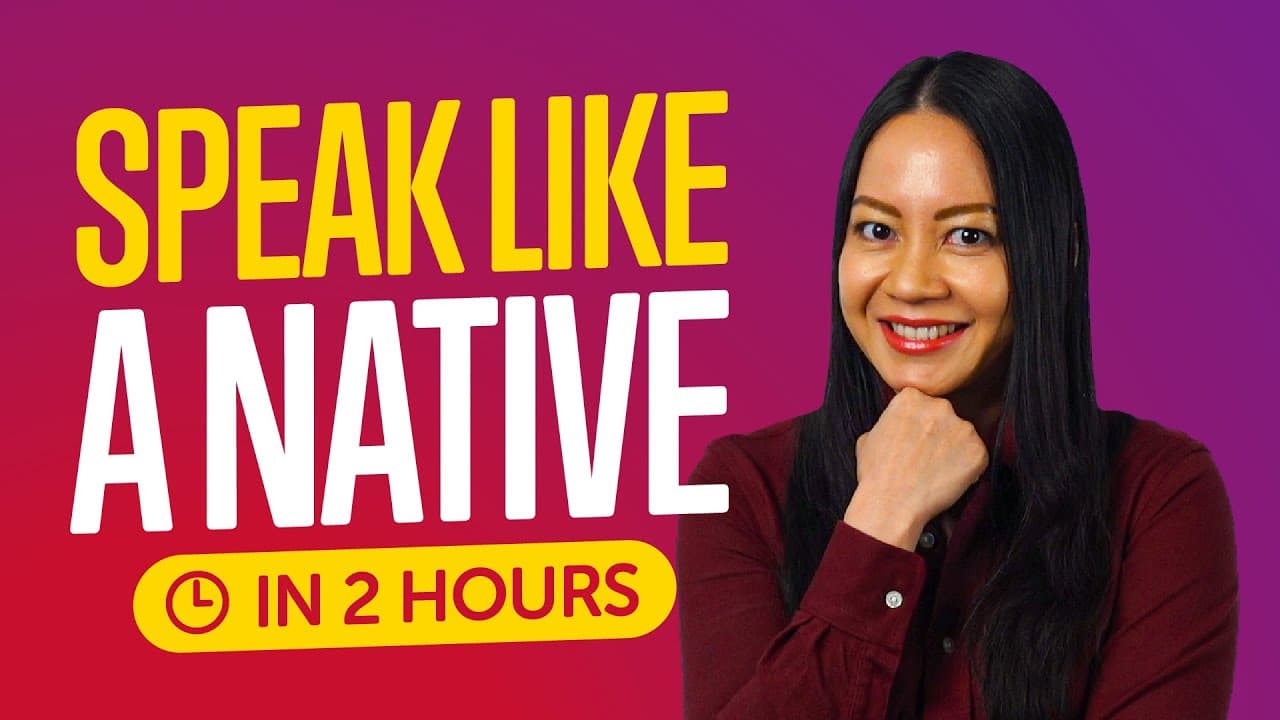
How to Speak Indonesian Like a Native in 2 Hours
TL;DR
Mastering Indonesian quickly involves learning essential phrases and cultural nuances. Start by expanding your vocabulary with key expressions used daily. Immerse yourself in the language through practical examples, such as ordering food or asking for directions. Embrace the cultural context to enhance understanding and fluency.
Transcript
expand your vocabulary with our Core 2000 Words ebook it's free and packed with essential expressions that You'll Use On A daily basis start building your vocabulary today Click the Link in the description below to download your free Indonesian ebook before it's got going to the mall yay Mall Hi everyone I'm blanka and you're watching Indonesian to... Read More
Key Insights
- Indonesian does not have distinct seasons like summer, winter, or autumn; it's summer all year round.
- Relaxing at the beach and learning to cook Indonesian food are popular activities.
- Barbecuing is more commonly done at restaurants than at home in Indonesia.
- Indonesian students often study using the 'overnight racing system' before exams.
- Common greetings include 'Halo' for informal and 'Selamat siang' for formal situations.
- The phrase 'Makasih' is an informal way to say 'thank you' in Indonesian.
- To ask if someone speaks English, say 'Apakah anda bisa berbahasa Inggris?'
- The term 'mager' is slang for being too lazy to move, often used when it's too hot or rainy.
Install to Summarize YouTube Videos and Get Transcripts
Explore YouTube Video Summarizer or Get YouTube Transcript Extractor
Questions & Answers
Q: How to ask if someone speaks English in Indonesian?
To ask if someone speaks English in Indonesian, you can say 'Apakah anda bisa berbahasa Inggris?'. This is a polite and formal way to inquire about someone's ability to speak English. For informal situations, you might simply ask 'Kamu bisa berbahasa Inggris?'.
Q: What are common greetings in Indonesian?
Common greetings in Indonesian include 'Halo' for informal situations, equivalent to 'Hi' or 'Hello'. For formal settings, you might use 'Selamat pagi' (Good morning), 'Selamat siang' (Good afternoon), 'Selamat sore' (Good evening), and 'Selamat malam' (Good night). These greetings reflect the time of day and are used accordingly.
Q: What is the Indonesian slang for being too lazy to move?
The Indonesian slang for being too lazy to move is 'mager', which is derived from 'malas gerak'. This term is often used when someone feels too lazy to go out, especially when it's too hot or rainy outside. It's a common expression reflecting a laid-back attitude.
Q: What activities are popular during the Indonesian 'summer'?
During the perpetual Indonesian 'summer', popular activities include relaxing at the beach, cooking Indonesian dishes like nasi goreng (fried rice), and attending summer school or engaging in part-time jobs. Despite the year-round summer, Indonesians enjoy various leisure and educational pursuits.
Q: How do Indonesians typically enjoy barbecues?
In Indonesia, barbecues are typically enjoyed at restaurants rather than at home. This is because street vendors often offer grilled chicken or fish, making it convenient to enjoy barbecued food without the hassle of preparation. Popular dishes include 'sate ayam', a type of grilled chicken skewer.
Q: What is the 'overnight racing system' used by Indonesian students?
The 'overnight racing system', known as 'sistem kebut semalam' (SKS), is a study method used by Indonesian students who cram all their studying into one night before an exam. This approach is common among students who need to quickly absorb a large amount of information in a short time.
Q: What is the meaning of 'sawo matang' in Indonesian?
In Indonesian, 'sawo matang' refers to a tan skin color, similar to the color of the sawo fruit, which is brownish. It's often used to describe a naturally tanned complexion, common among Indonesians. The term reflects the local perception of beauty and skin tones.
Q: What is a common informal way to say 'thank you' in Indonesian?
A common informal way to say 'thank you' in Indonesian is 'Makasih'. This is a casual expression used among friends and family. For more formal situations, 'Terima kasih' is used, which translates to 'thank you' in English and is appropriate in any setting.
Summary & Key Takeaways
-
Indonesian culture features a perpetual summer climate, influencing activities like beach outings and cooking classes. Barbecues are typically enjoyed in restaurants, reflecting local dining preferences. Students often employ last-minute study techniques before exams, indicative of a unique educational approach.
-
Greetings in Indonesian vary by formality, with 'Halo' used casually and 'Selamat siang' reserved for formal encounters. Expressing gratitude can be done informally with 'Makasih' or more formally with 'Terima kasih'. Language learning is facilitated through practical phrases and cultural immersion.
-
Indonesian slang, such as 'mager', highlights cultural attitudes towards leisure and relaxation. Understanding these nuances enhances language proficiency, allowing learners to communicate effectively and appreciate the local lifestyle. Engaging with everyday scenarios, like shopping or dining, accelerates fluency.
Read in Other Languages (beta)
Share This Summary 📚
Summarize YouTube Videos and Get Video Transcripts with 1-Click
Try YouTube Summary with ChatGPT & Claude or YouTube Transcript Generator
Explore More Summaries from Learn Indonesian with IndonesianPod101.com 📚



Summarize YouTube Videos and Get Video Transcripts with 1-Click
Try YouTube Summary with ChatGPT & Claude or YouTube Transcript Generator