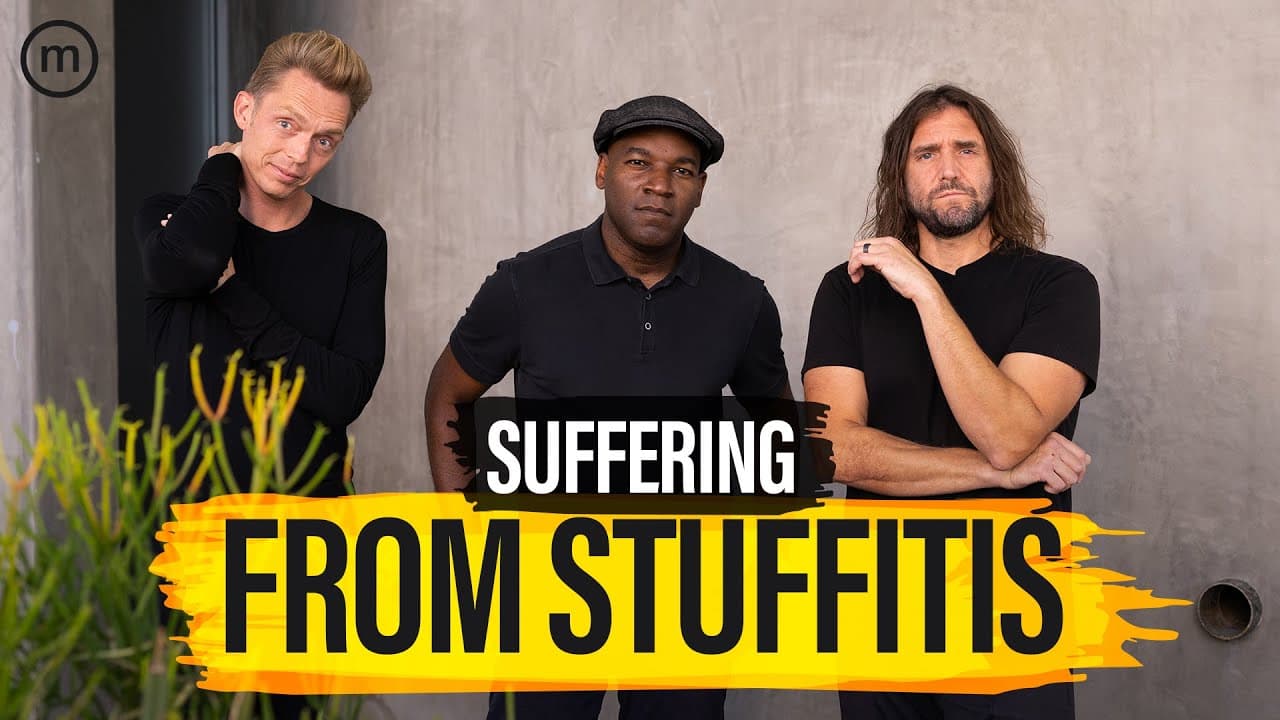
How to Overcome Stuffitis and Declutter Effectively
TL;DR
The key to overcoming 'stuffitis' is differentiating between needs, wants, and junk. Items are either essential, add value, or are clutter. By identifying what truly adds value, you can let go of the rest. This process helps alleviate the anxiety and mental clutter caused by excessive possessions.
Transcript
hello everybody Welcome to the minimalist podcast where we discuss what it means to live a meaningful life with less my name is Joshua Fields Milburn and I'm Ryan Nicodemus and together we are the minimalists we're here with TK Coleman what it is Alabama's here hi everybody got the rest of the team in the studio today and coming up today on this fr... Read More
Key Insights
- Stuffitis is an inflammation caused by excessive material possessions.
- The No Junk Rule categorizes items into needs, wants, and junk.
- Items stored away are often hypothetical future value, not current value.
- Internal clutter is a side effect of external clutter.
- One-day-itis is the procrastination of decluttering for a hypothetical future.
- The Don't Know Rule suggests letting go of items you weren't aware you owned.
- Clutter is anything that gets in the way of a meaningful life.
- Constantly question if items add value to your life to avoid clutter.
Install to Summarize YouTube Videos and Get Transcripts
Explore YouTube Video Summarizer or Get YouTube Transcript Extractor
Questions & Answers
Q: How to identify what to declutter when attached to everything?
To identify what to declutter, categorize your items into essentials, non-essentials that add value, and junk. Essentials are things you need for daily life. Non-essentials should add real value to your life, not hypothetical future value. Junk includes items that do not serve a purpose or bring joy. By clearly distinguishing these categories, you can let go of possessions that do not enhance your life.
Q: What is 'one-day-itis'?
'One-day-itis' is the procrastination of decluttering based on the belief that items will be useful in a hypothetical future. This mindset leads to holding onto unnecessary possessions, creating clutter. Overcoming one-day-itis involves recognizing that most stored items do not provide current value and letting go of them to reduce clutter and anxiety.
Q: How does clutter affect mental health?
Clutter affects mental health by creating internal clutter, which manifests as anxiety and stress. Excessive possessions can overwhelm individuals, making it difficult to focus and causing decision fatigue. By reducing clutter, individuals can improve their mental well-being, as a more organized and simplified environment leads to a clearer mind and reduced stress.
Q: What is the Don't Know Rule?
The Don't Know Rule suggests that if you weren't aware you owned an item five minutes ago, you can let it go. This rule helps in decluttering by encouraging individuals to part with items that do not have a significant impact on their lives. By letting go of such items, individuals can reduce clutter and focus on possessions that truly add value.
Q: How can the No Junk Rule help in decluttering?
The No Junk Rule helps in decluttering by categorizing items into essentials, non-essentials that add value, and junk. This clear categorization allows individuals to focus on what truly matters and let go of items that do not serve a purpose. By applying this rule, individuals can reduce clutter, making their living space more organized and their lives more meaningful.
Q: Why is it important to question the value of possessions?
Questioning the value of possessions is important because it helps prevent clutter from accumulating. By regularly assessing whether items add value to your life, you can ensure that your possessions serve a purpose and enhance your life. This practice encourages intentional living and reduces the likelihood of holding onto unnecessary items that contribute to clutter and stress.
Q: How to manage anxiety related to decluttering?
To manage anxiety related to decluttering, start by breaking the task into smaller, manageable steps. Focus on one area at a time and use rules like the No Junk Rule to guide your decisions. Prioritize items that add value and let go of those that don't. This systematic approach can help reduce overwhelm and make the decluttering process more manageable.
Q: What is the definition of clutter according to The Minimalists?
According to The Minimalists, clutter is anything that gets in the way of living a meaningful life. This includes physical items that do not serve a purpose or add value, as well as mental and emotional clutter. By identifying and removing clutter, individuals can focus on what truly matters, leading to a more intentional and fulfilling life.
Summary & Key Takeaways
-
Stuffitis is a condition where excessive possessions cause mental and physical clutter. By categorizing belongings into essentials, non-essentials that add value, and junk, individuals can identify what truly matters. This process reduces anxiety and promotes a more meaningful life.
-
The No Junk Rule helps differentiate between needs, wants, and clutter. Items stored away often have hypothetical future value but lack current utility. Letting go of such items can alleviate mental clutter and anxiety.
-
One-day-itis is the tendency to hold onto items for a hypothetical future. By adopting the Don't Know Rule and constantly questioning the value of possessions, individuals can prevent clutter from hindering a meaningful life.
Read in Other Languages (beta)
Share This Summary 📚
Summarize YouTube Videos and Get Video Transcripts with 1-Click
Try YouTube Summary with ChatGPT & Claude or YouTube Transcript Generator
Explore More Summaries from The Minimalists Podcast 📚




Summarize YouTube Videos and Get Video Transcripts with 1-Click
Try YouTube Summary with ChatGPT & Claude or YouTube Transcript Generator