Coding Challenge #142: Rubik's Cube Part 1
TL;DR
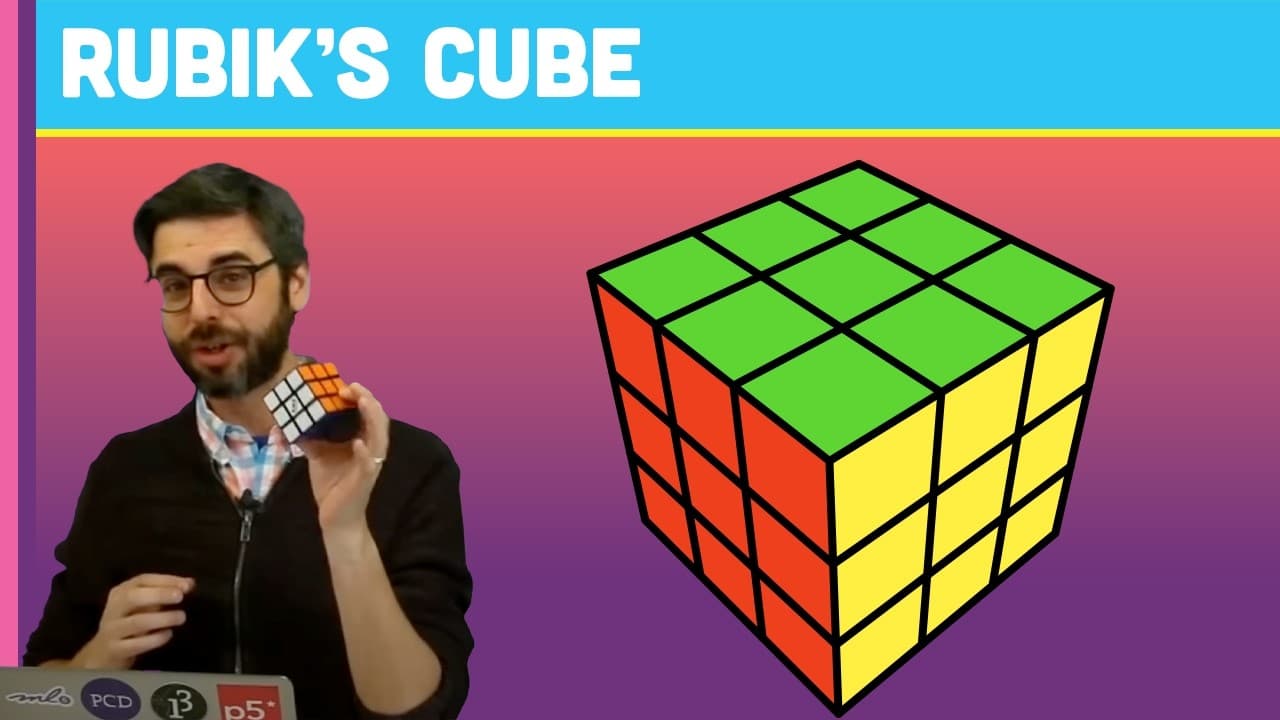
In this video, the presenter creates a simulation of a Rubik's Cube using the Processing programming language.
Transcript
- Mm-hm. Aha! So that was fake. Welcome to, it was already solved, welcome to coding challenge on the coding train. (blows train whistle) Rubik's Cube. So today, a while back in April 30, 2018, nilsweb suggested a Rubik's cube solver using a neural network. By the way, this is the green side, not the white side. See? Eh. And I'm really interested i... Read More
Key Insights
- 🎰 The presenter aims to explore the application of AI and machine learning algorithms to solve a Rubik's Cube.
- ⚾ Processing is a Java-based development environment for creative coding, including animations and simulations.
- 😒 The presenter uses the PeasyCam library to add interactive camera controls to the Rubik's Cube simulation.
- 🧘 Each cube within the Rubik's Cube is represented by the "box" class, which has a position and size.
- 😀 Colors are applied to each face of the cube using the "Cubie" class and an array of colors.
- 🧊 The cube simulation does not accurately represent the colors of a physical Rubik's Cube.
- 🌱 The presenter plans to add rotation functionality to the simulation in the next video.
Install to Summarize YouTube Videos and Get Transcripts
Explore YouTube Video Summarizer or Get YouTube Transcript Extractor
Questions & Answers
Q: How does the presenter represent each individual cube within the Rubik's Cube?
The presenter creates a class called "box" that represents each cube. Each box has a position in virtual 3D space and a side length.
Q: What library does the presenter use to add mouse-camera interaction?
The presenter uses the PeasyCam library, which allows for easy manipulation of the camera view in the 3D scene.
Q: How does the presenter apply different colors to each face of the cube?
The presenter uses the "Cubie" class to create six quads for each face of the cube. Colors are assigned to each face using an array.
Q: Are the colors of the Rubik's Cube faces accurate?
The colors may not be accurate in this simulation, as the presenter admits to making some mistakes in selecting the correct colors for each face.
Summary & Key Takeaways
-
The presenter introduces the idea of using AI and machine learning algorithms to solve a Rubik's Cube, but first starts by creating a simulation of the cube.
-
Using the Processing programming language, the presenter builds a class called "box" to represent each individual cube within the Rubik's Cube.
-
The presenter uses the PeasyCam library to add mouse-camera interaction and positions the cube in the center of the screen.
-
Finally, the presenter creates a "Cubie" class to apply different colors to each face of the cube using quads.
Read in Other Languages (beta)
Share This Summary 📚
Summarize YouTube Videos and Get Video Transcripts with 1-Click
Try YouTube Summary with ChatGPT & Claude or YouTube Transcript Generator
Explore More Summaries from The Coding Train 📚






Summarize YouTube Videos and Get Video Transcripts with 1-Click
Try YouTube Summary with ChatGPT & Claude or YouTube Transcript Generator