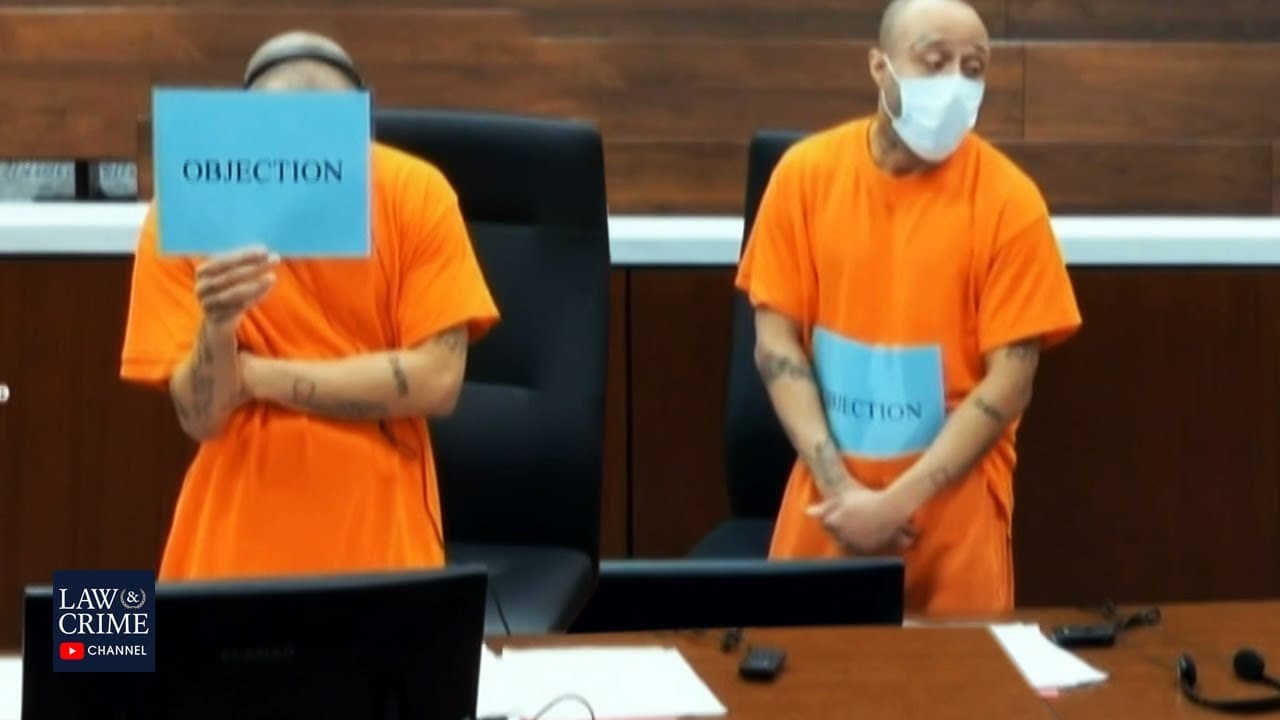
Muted Darrell Brooks Holds Up ‘Objection’ Sign, Puts It in Pants as Judge Instructs Jury
TL;DR
The analysis focuses on the formation of intent and the charges of first-degree intentional homicide in the Waukesha homicide case.
Transcript
or for even a minute there need not be any appreciable time between the formation of the intent and the ACT the intent to kill may be formed at any time before the ACT including the instant before the act and must continue to exist at the time of the ACT you cannot look into a person's mind to find intent intent to kill must be found if found at al... Read More
Key Insights
- 👍 Intent to kill must exist at the time of the act, and it can be proven based on the defendant's actions, words, and circumstances.
- 🚂 Motive is not required to establish guilt in a homicide case, although it may be presented as a circumstance.
- 😀 The defendant in the Waukesha homicide case is facing charges of first-degree intentional homicide and recklessly endangering safety with a dangerous weapon.
Install to Summarize YouTube Videos and Get Transcripts
Explore YouTube Video Summarizer or Get YouTube Transcript Extractor
Questions & Answers
Q: How can intent to kill be proven in court?
Intent to kill can be established based on the defendant's actions, words, statements, and all the facts and circumstances surrounding the case.
Q: Is motive a requirement for conviction in a homicide case?
No, motive is not necessary to prove guilt. While it may be used as a circumstance to aid in establishing the defendant's guilt, it does not, by itself, establish guilt.
Q: What is considered a dangerous weapon in Wisconsin law?
A dangerous weapon refers to any device or instrumentality that, in the manner it is used or intended to be used, is likely to cause death or great bodily harm.
Q: How are the charges in the Waukesha homicide case structured?
The defendant is charged with multiple counts of first-degree intentional homicide, each involving recklessly endangering safety with a dangerous weapon.
Summary & Key Takeaways
-
Intent to kill can be formed at any time before the act and must exist at the time of the act, with proof based on the defendant's actions, words, and circumstances.
-
While motive may be shown as a circumstance, it is not necessary to prove guilt.
-
The defendant is charged with multiple counts of first-degree intentional homicide, each involving recklessly endangering safety with a dangerous weapon.
Read in Other Languages (beta)
Share This Summary 📚
Summarize YouTube Videos and Get Video Transcripts with 1-Click
Try YouTube Summary with ChatGPT & Claude or YouTube Transcript Generator
Explore More Summaries from Law&Crime Network 📚





Summarize YouTube Videos and Get Video Transcripts with 1-Click
Try YouTube Summary with ChatGPT & Claude or YouTube Transcript Generator