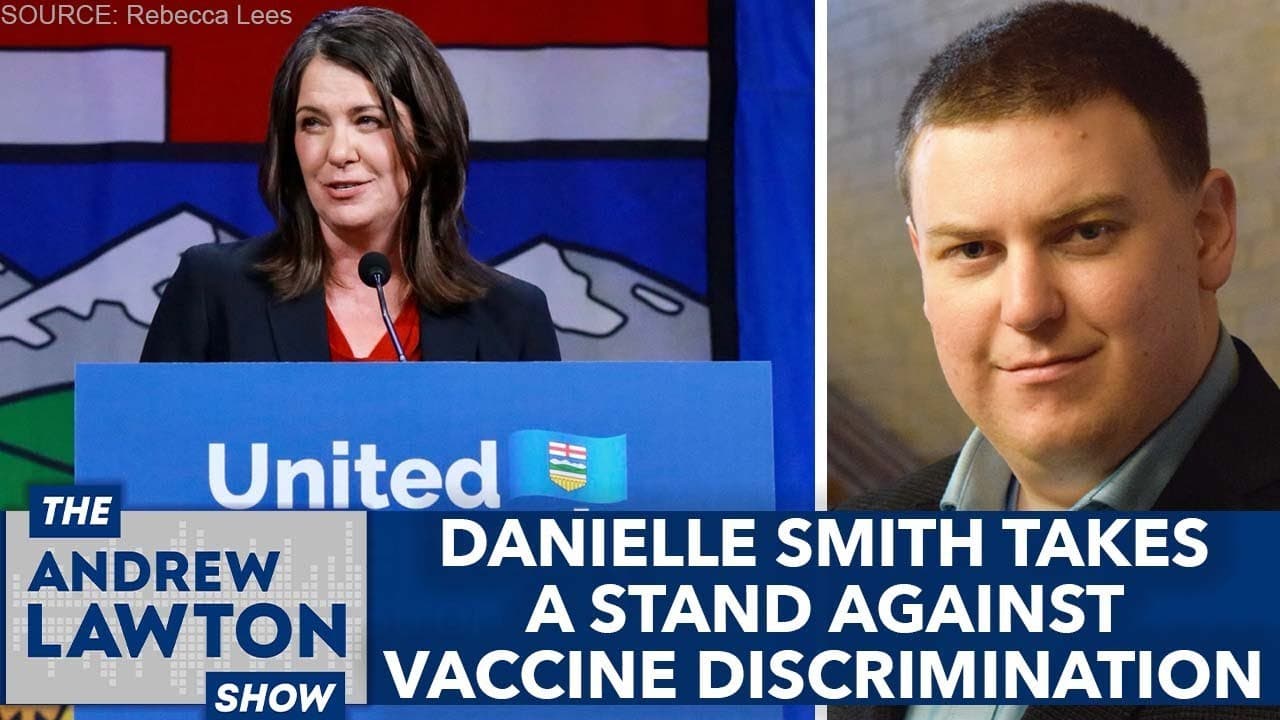
Danielle Smith takes a stand against vaccine discrimination
TL;DR
Alberta's Premier proposes to protect vaccine choice under human rights law, igniting controversy in Canadian politics.
Transcript
foreign to Canada's most irreverent talk show this is the Andrew Lawton show brought to you by True North coming up it was Alberta Premier Danielle Smith's first day on the job and she was spinning fire taking aim at vaccine discrimination plus a look ahead at the public order emergency Commission the Andrew Lawton show starts right now this is ano... Read More
Key Insights
- 💋 Danielle Smith's proposed amendments to the Alberta Human Rights Code could mark a pivotal shift in Canadian discussions surrounding public health and individual rights concerning vaccinations.
- 🗯️ The notion of vaccine choice as a protected right has gained traction, raising debates about how such protections intersect with existing civil rights frameworks.
- 🧑⚕️ The ongoing narrative around vaccine discrimination has reignited conversations about the impact of public health mandates on societal norms and personal freedoms.
- 🥡 The measures taken during the COVID-19 pandemic continue to shape political discourse, with some leaders driven to rectify perceived injustices against the unvaccinated.
- 🦻 The hearings of the Public Order Emergency Commission are positioned as critical to understanding governmental actions during the protests, but skepticism exists about their impartiality.
- 👂 Witness lists for the commission are heavily scrutinized, with notable absences prompting speculation about the government’s intentions and possible biases in narrative framing.
- 💖 The conversations sparked by Smith's comments reflect a broader global trend towards reevaluating public health policies and their implications for individual liberties.
Install to Summarize YouTube Videos and Get Transcripts
Explore YouTube Video Summarizer or Get YouTube Transcript Extractor
Questions & Answers
Q: What prompted Alberta Premier Danielle Smith to address vaccine discrimination?
Danielle Smith addressed vaccine discrimination during her inaugural press conference, where she emphasized the need to protect individuals' rights to make personal medical choices. She proposed amending the Alberta Human Rights Code to include vaccine status, identifying it as a significant area of discrimination that had not been adequately addressed in Canada.
Q: How does Smith compare vaccine discrimination to other forms of discrimination in her statements?
In her remarks, Smith argued that the unvaccinated population faced unprecedented discrimination during the pandemic, comparable to that faced by traditionally marginalized groups. However, she acknowledged the sensitivity of comparing discriminative experiences, suggesting a need for collective acknowledgment of all forms of discrimination without undermining any specific group's struggles.
Q: What are the implications of implementing Smith's proposed changes to the Human Rights Code?
Implementing Smith's proposals could lead to significant legal protections for the unvaccinated, preventing discrimination based on vaccine status in various sectors including employment and public access. It would fundamentally alter the legal landscape surrounding individual choice and public health policy in Alberta, with potential ripple effects across Canada.
Q: What are the key concerns regarding the Public Order Emergency Commission hearings?
Key concerns include the credibility of witness testimonies, the nature of questions posed during the hearings, and whether a genuine effort will be made to uncover the truth about the government's invocation of the Emergencies Act. Critics worry that the hearings may be biased, aiming to reinforce predetermined narratives rather than facilitate objective inquiries.
Q: How has the public reacted to Smith's comments about vaccine discrimination?
Public reactions have been mixed; supporters praise her bold stance as a champion for personal freedoms, while detractors criticize her for seemingly trivializing historical forms of discrimination. The controversy stems from the polarized views on vaccine mandates and individual rights during the pandemic.
Q: Will the Public Order Emergency Commission effectively address the grievances presented by the Convoy organizers?
While the commission promises representation for various stakeholders, including Convoy organizers, many feel doubts about the effectiveness of addressing their grievances. The focus will likely depend on the line of questioning and whether those on the ground are given an opportunity to share their experiences versus higher-level officials.
Summary & Key Takeaways
-
Alberta Premier Danielle Smith's recent press conference highlighted her plan to amend the Alberta Human Rights Code to include protections against vaccine status discrimination, asserting that the unvaccinated faced the highest level of discrimination in recent years.
-
Smith's comments on vaccine discrimination have sparked significant debate, with supporters lauding her approach while critics argue it diminishes other historical forms of discrimination, emphasizing the need for separate recognition of various discrimination types.
-
The anticipated Public Order Emergency Commission hearings involve numerous government and law enforcement officials, as well as Convoy organizers, aiming to uncover truths surrounding the invocation of the Emergencies Act during the protests.
Read in Other Languages (beta)
Share This Summary 📚
Summarize YouTube Videos and Get Video Transcripts with 1-Click
Try YouTube Summary with ChatGPT & Claude or YouTube Transcript Generator
Explore More Summaries from True North 📚



Summarize YouTube Videos and Get Video Transcripts with 1-Click
Try YouTube Summary with ChatGPT & Claude or YouTube Transcript Generator