Are We Stuck Between Hyperinflation And A Recession? | Economics Explained
TL;DR
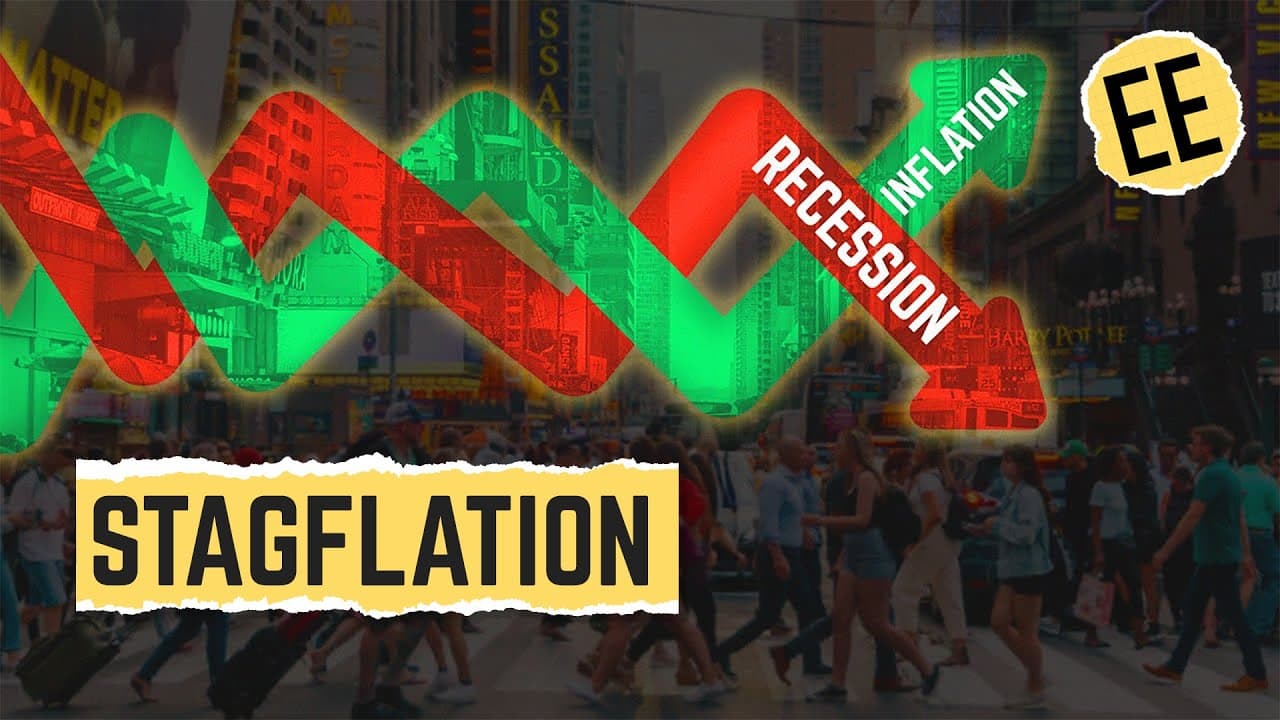
The economy faces a choice between high inflation and recession.
Transcript
- Interest rates are on the rise. The stock market has had its worst first six months in over half a century. Prices for everyday goods are remaining stubbornly high and government support programs designed to help people through the pandemic are getting canceled faster than sitcoms from the 1980s. A lot of people are in a more precarious financial... Read More
Key Insights
- Interest rates are rising while the stock market struggles, leading to financial instability for many people.
- Government spending on economic stimulus during the pandemic matched World War II expenditure, raising concerns about fiscal sustainability.
- Stagflation, a mix of high inflation and low growth, is becoming a significant economic concern.
- Inflation is driven by both increased money supply and supply chain disruptions, with the Federal Reserve acknowledging its role.
- Corporate profits have surged as companies raise prices under the guise of inflation, impacting consumer costs.
- Labor costs are rising due to low unemployment, giving workers leverage to demand higher wages, contributing to inflation.
- Higher interest rates and government rhetoric are tools to combat inflation, but must be balanced to avoid recession.
- New government stimulus aims to increase supply, not demand, to address inflation without exacerbating the recession risk.
Install to Summarize YouTube Videos and Get Transcripts
Explore YouTube Video Summarizer or Get YouTube Transcript Extractor
Questions & Answers
Q: What is causing the current high inflation?
Current high inflation is primarily caused by an increase in the money supply due to pandemic-related stimulus efforts and supply chain disruptions resulting from lockdowns, trade tensions, and geopolitical conflicts. These factors have led to increased prices for goods and services, impacting the overall cost of living and economic stability.
Q: How does stagflation differ from normal economic conditions?
Stagflation is a unique economic condition where high inflation occurs alongside low economic growth and high unemployment. Unlike typical economic cycles where inflation and growth are inversely related, stagflation presents a challenging scenario where traditional policy measures to combat inflation can exacerbate unemployment and vice versa, complicating economic recovery efforts.
Q: What role does the Federal Reserve play in managing inflation?
The Federal Reserve plays a crucial role in managing inflation by adjusting interest rates and controlling the money supply. By raising interest rates, the Fed aims to reduce consumer and business spending, thereby curbing inflation. However, this approach must be balanced to avoid triggering a recession, as higher rates can also slow economic growth.
Q: Why are corporate profits rising despite economic challenges?
Corporate profits are rising as companies take advantage of inflationary expectations to increase prices, often beyond what is necessary to cover costs. This strategy allows businesses to maintain or even boost profit margins, as consumers anticipate and accept higher prices. Additionally, low unemployment gives workers leverage to demand higher wages, further driving up costs and prices.
Q: What is the impact of rising labor costs on inflation?
Rising labor costs contribute to inflation by increasing the overall expenses for businesses, which are often passed on to consumers through higher prices for goods and services. As unemployment remains low, workers have more negotiating power to demand wage increases, which, while beneficial for individual incomes, can perpetuate the inflationary cycle if not managed carefully.
Q: How can higher interest rates help combat inflation?
Higher interest rates help combat inflation by making borrowing more expensive, which reduces consumer and business spending. This decreased demand can help stabilize or lower prices, curbing inflation. However, raising rates too aggressively can also slow economic growth, leading to potential recessionary pressures, necessitating a delicate balance in policy implementation.
Q: What are the potential risks of government stimulus measures?
Government stimulus measures, if not carefully targeted, can exacerbate inflation by increasing demand without corresponding increases in supply. However, recent proposals aim to boost supply through infrastructure development, oil reserve releases, and housing construction, which could stabilize prices and support economic growth without fueling further inflationary pressures.
Q: Why might the current economic situation not be as dire as predicted?
The current economic situation might not be as dire due to proactive measures by central banks and governments acknowledging and addressing inflation concerns. Employment remains strong, providing income stability, and the anticipated correction in overvalued asset classes like tech stocks and housing may lead to a more balanced economic environment, reducing the risk of severe downturns.
Summary & Key Takeaways
-
The economy is caught between the challenges of high inflation and the threat of a recession. Rising interest rates and stock market declines have created financial instability, while government spending during the pandemic has reached unprecedented levels, raising concerns about fiscal responsibility.
-
Stagflation, characterized by high inflation and low economic growth, is becoming a significant concern. Inflation is driven by increased money supply and supply chain disruptions, with corporate profits rising as companies raise prices under the guise of inflation.
-
Higher interest rates and government rhetoric are tools to combat inflation, but balancing them to avoid recession is crucial. New government stimulus efforts focus on increasing supply rather than demand to address inflation without exacerbating the recession risk.
Read in Other Languages (beta)
Share This Summary 📚
Summarize YouTube Videos and Get Video Transcripts with 1-Click
Try YouTube Summary with ChatGPT & Claude or YouTube Transcript Generator
Explore More Summaries from Economics Explained 📚





Summarize YouTube Videos and Get Video Transcripts with 1-Click
Try YouTube Summary with ChatGPT & Claude or YouTube Transcript Generator