Biology Ecosystem part 1 (Introduction) class 12 XII
TL;DR
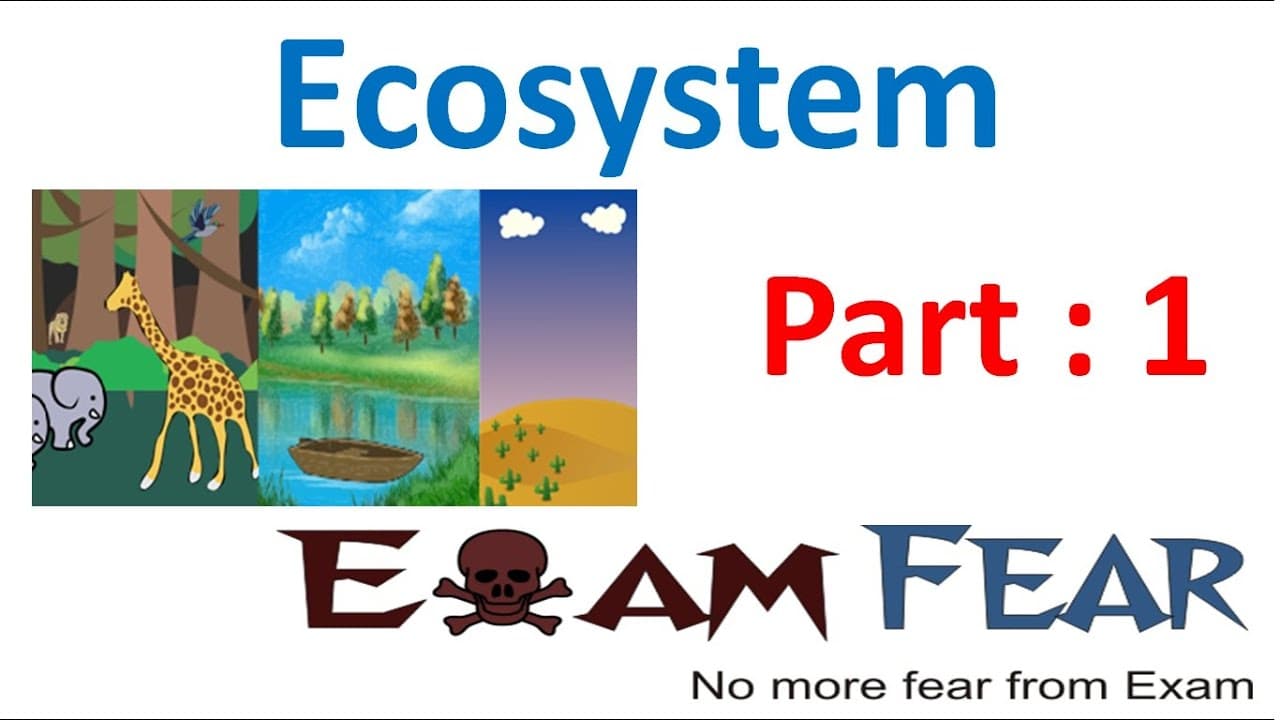
An ecosystem is a system where living and non-living organisms interact, and it includes forests, ponds, and oceans.
Transcript
hello friends this video on ecosystem part 1 is brought to you by exam few calm no more fear from exam targets to be covered in this lesson our ecosystem structure and function productivity decomposition energy flow ecological pyramids ecological succession nutrient cycling and ecosystem services so what does ecosystem so ecosystem is the name of t... Read More
Key Insights
- 🚱 Ecosystems consist of both living and non-living organisms, and they interact with each other for survival.
- 🌊 Examples of ecosystems include ponds, forests, and oceans.
- 🚱 Living organisms in an ecosystem rely on non-living components such as soil, water, and oxygen for their needs.
- 🤳 Ecosystems are self-sufficient and provide all the necessary resources for the organisms living within them.
- 🏙️ Different ecosystems exist in various areas, just like different colonies in a city.
- 🫒 Ecology is the branch of science that studies the interaction between living and non-living organisms.
- 🖐️ Ecosystems play a vital role in the sustenance of life on Earth.
Install to Summarize YouTube Videos and Get Transcripts
Explore YouTube Video Summarizer or Get YouTube Transcript Extractor
Questions & Answers
Q: What is the definition of an ecosystem?
An ecosystem is a system where living organisms and non-living components interact with each other for survival.
Q: Give examples of ecosystems.
Some examples of ecosystems include ponds, forests, and oceans.
Q: How do living and non-living organisms interact in an ecosystem?
Living organisms in an ecosystem depend on non-living components such as soil, water, and oxygen for survival, and they constantly interact with these components.
Q: Why are living and non-living organisms equally important in an ecosystem?
Both living and non-living organisms are crucial for the sustenance of life in an ecosystem. Living organisms depend on non-living components for their survival, and non-living components provide the necessary environment for the living organisms.
Summary & Key Takeaways
-
An ecosystem consists of both living and non-living organisms that interact with each other for survival.
-
Examples of ecosystems include ponds, forests, and oceans, where organisms get their needs fulfilled.
-
Living organisms and non-living components of an ecosystem constantly interact with each other.
Read in Other Languages (beta)
Share This Summary 📚
Summarize YouTube Videos and Get Video Transcripts with 1-Click
Try YouTube Summary with ChatGPT & Claude or YouTube Transcript Generator
Explore More Summaries from LearnoHub - Class 11, 12 📚

Summarize YouTube Videos and Get Video Transcripts with 1-Click
Try YouTube Summary with ChatGPT & Claude or YouTube Transcript Generator