Why Raise More Money Than You Need? With Minted’s Mariam Naficy
TL;DR
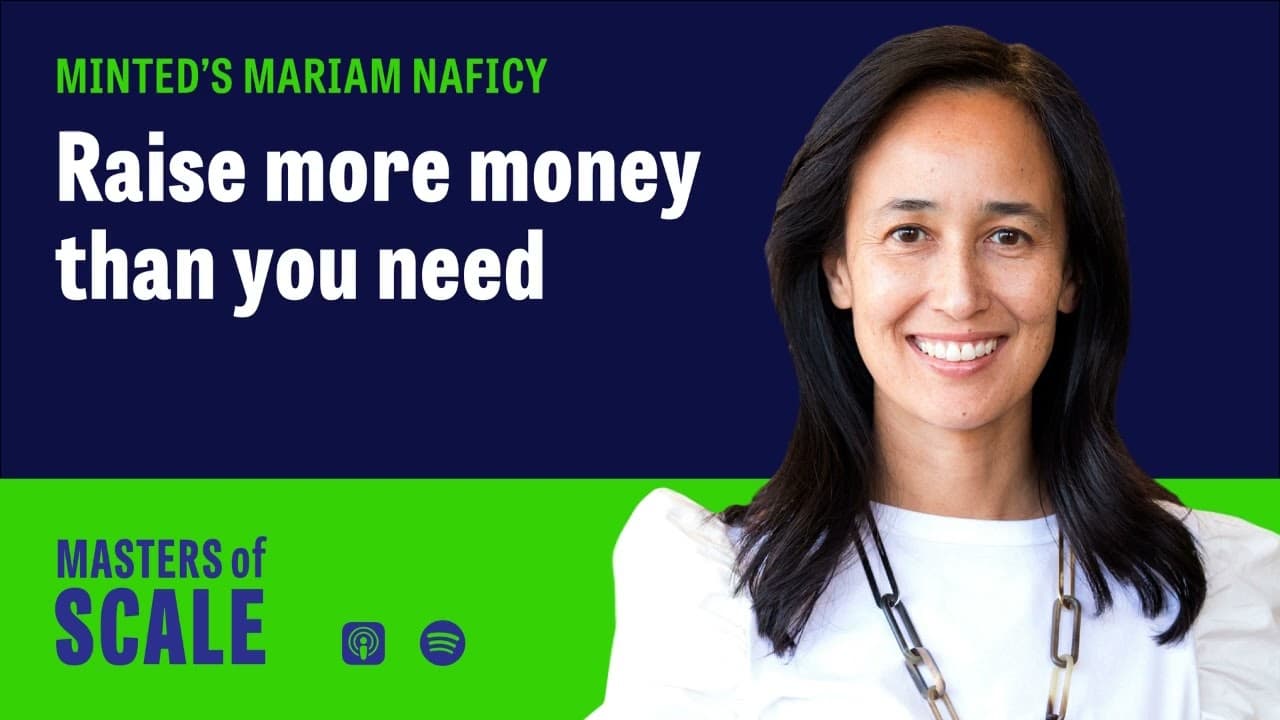
Entrepreneurs should raise more money than they expect to need because unforeseen costs, opportunities, and competition can quickly change their plans. Mariam Naficy spent more than $50,000 plus Disneyland trips to acquire eve.com, while Eve.com raised $26 million in its first year and grew from zero to 120 people in six months. Read on to see how extra capital supported rapid scaling, resilience, and Minted’s later journey.
Transcript
it's 1998 at the height of the first.com Boom Silicon Valley is on fire nothing bad can happen my friend Miriam nafisi is CEO of a startup called Eve and she had to have the domain name eve.com only problem she has to convince the owner to sell it to her and she was facing a negotiation that I do not envy hello who's this it is a five-year-old girl... Read More
Key Insights
- Entrepreneurs often face unexpected expenses and opportunities, requiring more capital than initially anticipated.
- Mariam Naficy's experience with Eve.com illustrates the need for flexibility and readiness to adapt to unforeseen challenges.
- Raising additional funds can provide a competitive edge and ensure survival during economic downturns.
- Crowdsourcing can be a powerful tool for innovation, as demonstrated by Minted's success.
- Planning fallacy often leads to underestimating the resources needed for a project, especially in unfamiliar ventures.
- Silicon Valley's fast-paced environment necessitates rapid scaling and adaptability, often requiring significant funding.
- Reputation and investor relations are crucial in securing funding and maintaining trust in business ventures.
- Entrepreneurial success requires balancing risk-taking with strategic planning and resource management.
Install to Summarize YouTube Videos and Get Transcripts
Explore YouTube Video Summarizer or Get YouTube Transcript Extractor
Questions & Answers
Q: Why should entrepreneurs raise more money than they think they need?
Unexpected expenses and opportunities frequently fall outside a startup’s original budget, so entrepreneurs must plan for the unknown. Additional capital also provides flexibility to scale quickly, compete effectively, and survive economic downturns.
Q: How much did Mariam Naficy spend to acquire the eve.com domain?
The agreement involved more than $50,000 and trips to Disneyland, along with equity in Eve.com and an observer board seat for the owner’s daughter. Naficy’s unexpected negotiation illustrates why startup budgets need room for unusual expenses.
Q: How quickly did Eve.com raise funding and expand its team?
Eve.com raised $26 million in its first year. The company then grew from zero to 120 people in six months and hired its executive team within that period.
Q: Why did Eve.com need to raise and spend capital so quickly?
The online beauty market had become a land grab, with venture capital firms backing competing businesses. Raising substantial capital helped Eve.com move ahead of five venture-backed beauty companies that launched after it and reach the number-one position.
Q: Why can conservative startup fundraising create a serious risk?
Raising and spending too little can leave a startup unable to keep pace when competitors are well funded. The account argues that investors are rewarded by the creation of a successful company, not simply by minimizing capital use.
Q: How did the 2008 economic downturn affect Minted’s funding strategy?
Mariam Naficy raised venture capital shortly before the financial crisis and the collapse of Lehman Brothers. That funding helped sustain Minted when changing economic conditions threatened to make capital harder to obtain.
Q: What role did crowdsourcing play in Minted’s success?
Minted used competitions that invited unknown artists to submit designs, allowing the company to draw on community creativity. This approach created a meritocracy, supported innovation, and differentiated Minted from traditional stationery brands.
Q: What does Mariam Naficy’s experience teach founders about planning?
Founders often underestimate the resources required for unfamiliar ventures because unexpected costs, risks, and opportunities are difficult to predict. Naficy’s experiences with Eve.com and Minted show the value of combining strategic planning with enough capital to remain flexible.
Summary & Key Takeaways
-
Mariam Naficy's journey with Eve.com and Minted demonstrates the importance of raising more capital than anticipated to navigate unexpected expenses and opportunities. Her experiences highlight the need for flexibility and readiness to adapt to unforeseen challenges, emphasizing the crucial role of additional funding in gaining a competitive edge and ensuring survival during economic downturns.
-
Crowdsourcing emerged as a powerful tool for innovation in Minted's success, showcasing the potential of leveraging community creativity. The planning fallacy often leads to underestimating resources needed for projects, particularly in unfamiliar ventures, underscoring the necessity of strategic planning and resource management in entrepreneurial endeavors.
-
Silicon Valley's fast-paced environment demands rapid scaling and adaptability, necessitating substantial funding. Reputation and investor relations are vital in securing funding and maintaining trust, while entrepreneurial success requires balancing risk-taking with strategic planning and resource management to effectively leverage opportunities and navigate challenges.
Read in Other Languages (beta)
Share This Summary 📚
Summarize YouTube Videos and Get Video Transcripts with 1-Click
Try YouTube Summary with ChatGPT & Claude or YouTube Transcript Generator