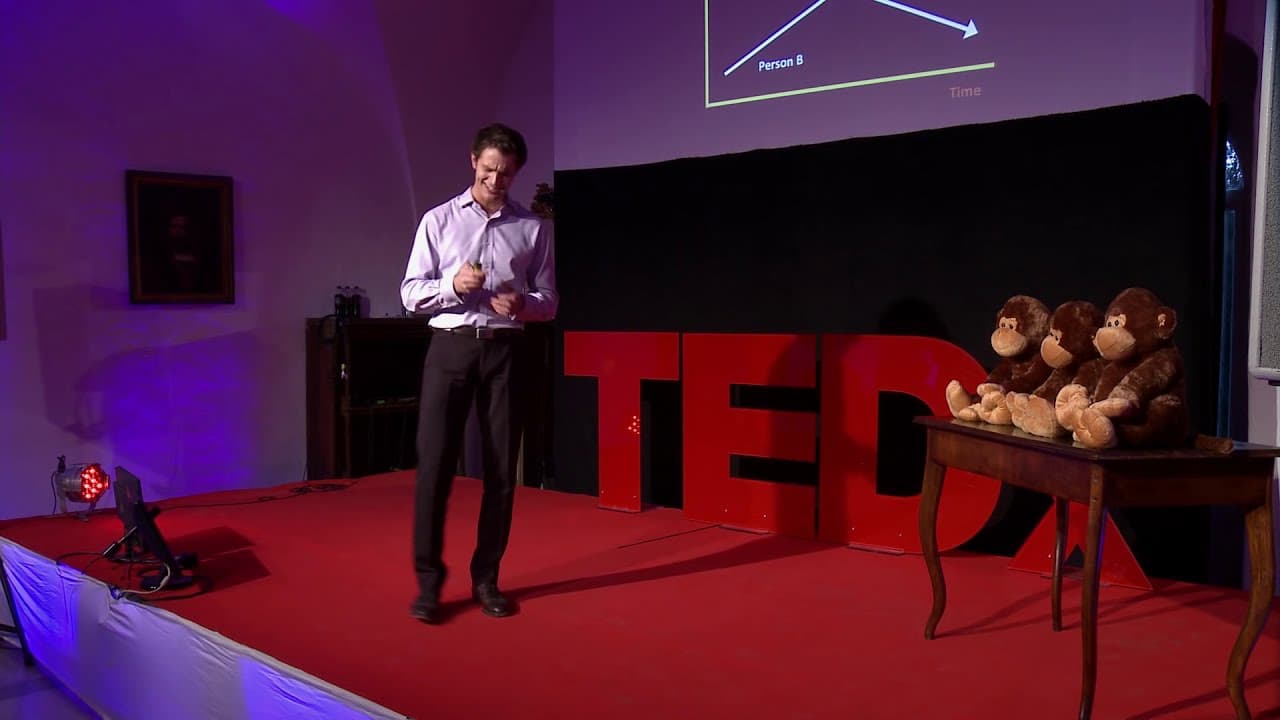
Why we're unhappy -- the expectation gap | Nat Ware | TEDxKlagenfurt
TL;DR
Happiness often eludes us due to unrealistic expectations.
Transcript
Reviewer: Peter van de Ven I remember being shocked the first few times I went to Africa. I was shocked when I met a one-legged taxi driver in Kenya. I was shocked when I met Sonia, an orphan schoolgirl in Rwanda. And I was shocked when I met a disabled subsistence farmer in Mozambique. What shocked me wasn't their poverty, but their happin... Read More
Key Insights
- Happiness is often more prevalent among those living above a basic subsistence level, regardless of economic status, highlighting the complex relationship between wealth and contentment.
- Our expectations, formed by imagination, social comparison, and past experiences, often exceed reality, leading to dissatisfaction and unhappiness.
- Technological advancements and media portrayal create unrealistic standards and expectations, distorting our perception of reality and contributing to the expectation gap.
- Social comparisons, where we judge our success relative to others, play a significant role in our happiness, often leading to feelings of inadequacy.
- Our past experiences set benchmarks for our current expectations, making us happier when we perceive improvement over time, even with the same average income.
- Raising children with realistic expectations, rather than overinflated self-beliefs, can lead to greater contentment and happiness in adulthood.
- Entrepreneurs and policymakers should prioritize happiness by considering how expectations impact contentment, rather than solely focusing on economic growth.
- Addressing the expectation gap involves aligning decision-making processes with emotional responses, ensuring that our rational choices lead to genuine happiness.
Install to Summarize YouTube Videos and Get Transcripts
Explore YouTube Video Summarizer or Get YouTube Transcript Extractor
Questions & Answers
Q: What is the main reason for unhappiness according to Nat Ware?
Nat Ware identifies the expectation gap as the primary reason for unhappiness. This gap occurs when our expectations exceed reality, leading to dissatisfaction. He explains that our expectations are shaped by imagination, social comparisons, and past experiences, which often set unrealistic benchmarks that reality cannot meet, resulting in unhappiness.
Q: How does technology contribute to the expectation gap?
Technology exacerbates the expectation gap by creating unrealistic standards through digitally enhanced images and selective content presentation. This leads us to romanticize places and experiences, setting expectations that reality cannot fulfill. The constant exposure to idealized portrayals skews our perception, making the ordinary seem inadequate and contributing to dissatisfaction.
Q: Why are social comparisons detrimental to happiness?
Social comparisons are detrimental to happiness because they make us judge our success and worth based on others. When we perceive others as more successful or wealthier, we feel inadequate, regardless of our own achievements. This relative judgment creates a zero-sum game where someone else's gain is perceived as our loss, fueling dissatisfaction.
Q: What role does past experience play in shaping expectations?
Past experiences set benchmarks for our current expectations. We tend to compare our present situation with our past, and if we perceive a decline, we feel unhappy. Conversely, if we see improvement, we feel content. This anchoring effect means that a consistent upward trajectory in life experiences leads to greater happiness, even if average conditions remain the same.
Q: How can we address the expectation gap to improve happiness?
To address the expectation gap, we must align our decision-making processes with our emotional responses. This involves setting realistic expectations, focusing on personal growth rather than social comparisons, and understanding that happiness is influenced by relative outcomes. By prioritizing contentment over consumption, individuals and policymakers can foster a more genuine sense of happiness.
Q: What is the impact of imagination on happiness?
Imagination impacts happiness by forming expectations that often exceed reality. When we imagine the best possible outcomes and choose options based on these idealized visions, reality rarely measures up, leading to disappointment. This gap between imagined and actual experiences is a significant source of unhappiness, exacerbated by media and technology's portrayal of unrealistic standards.
Q: Why does Nat Ware believe entrepreneurs should focus on happiness?
Nat Ware believes entrepreneurs should focus on happiness because it is a crucial social outcome that affects overall well-being. By understanding and addressing the expectation gap, entrepreneurs can create products and services that genuinely enhance contentment, rather than merely increasing consumption. This shift can lead to more sustainable and meaningful improvements in people's lives.
Q: What is the significance of the 'intertemporal gap' in understanding happiness?
The 'intertemporal gap' is significant in understanding happiness as it highlights how our past experiences influence current satisfaction. When our present reality is worse than past experiences, we feel unhappy. Conversely, an upward trajectory in life experiences, even with the same average conditions, leads to greater happiness. This concept underscores the importance of perceived improvement over time in determining contentment.
Summary & Key Takeaways
-
Nat Ware explores why happiness often eludes us despite increasing wealth, attributing it to the expectation gap, where our expectations exceed reality. He emphasizes the importance of understanding this gap to enhance contentment.
-
The talk highlights three primary sources of expectation gaps: imagination, social comparisons, and past experiences, each contributing to dissatisfaction when reality falls short of expectations.
-
Ware calls for a shift in focus from merely increasing consumption to genuinely improving happiness, urging entrepreneurs and policymakers to consider the psychological aspects of decision-making to foster contentment.
Read in Other Languages (beta)
Share This Summary 📚
Summarize YouTube Videos and Get Video Transcripts with 1-Click
Try YouTube Summary with ChatGPT & Claude or YouTube Transcript Generator
Explore More Summaries from TEDx Talks 📚
![The future of Employment Everything] is Social & Digital | Syed Aiyaz Uddin | TEDxVIFT thumbnail](/_next/image?url=https%3A%2F%2Fi.ytimg.com%2Fvi%2F9Ta_I24CB-M%2Fhqdefault.jpg&w=750&q=75)


Summarize YouTube Videos and Get Video Transcripts with 1-Click
Try YouTube Summary with ChatGPT & Claude or YouTube Transcript Generator