Finance and the Sustainable Blue Economy
TL;DR
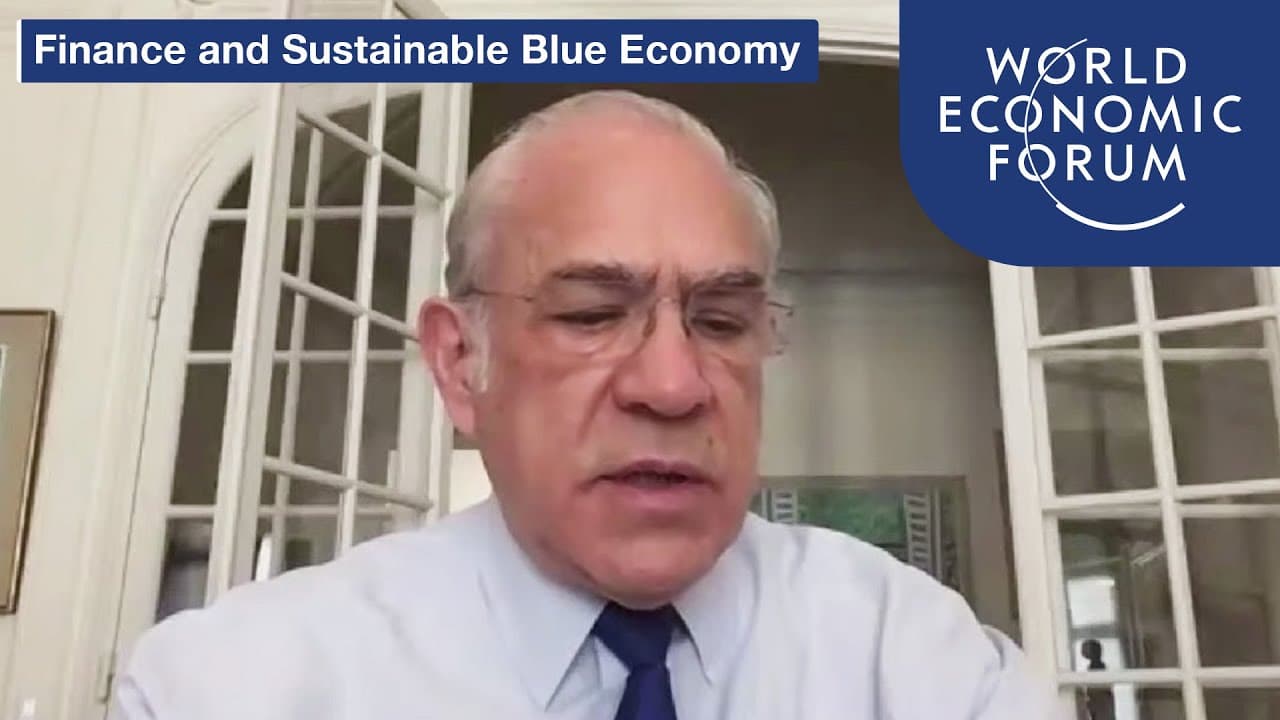
The COVID-19 pandemic presents an opportunity to refocus on the sustainable blue economy, which comprises existing sectors such as fisheries, energy, transportation, and tourism, as well as emerging sectors like blue carbon and sustainable aquaculture. Strong regulations and increased access to finance are crucial for the development of the blue economy, which can provide livelihoods for millions of people and contribute to economic recovery.
Transcript
[Laughter] [Laughter] [Laughter] [Laughter] [Laughter] [Laughter] [Laughter] you so welcome everybody to the virtual ocean dialogues hosted by the and the World Economic Forum this is the first-ever completely virtual global ocean event the dialogues of course bring together leaders from business government civil society and the scientific communit... Read More
Key Insights
- 🌊 The ocean economy has significant growth potential, but this growth must be coupled with sustainable practices to protect ocean health and biodiversity.
- 💙 Access to finance, including blended finance and innovative financial instruments, is crucial to support the sustainable development of the blue economy and leverage private sector investment.
- 🏛️ Building resilience into investments is essential to mitigate the impacts of climate change and other risks on coastal communities and industries.
- 💪 Stricter regulations and stronger enforcement are necessary to address issues such as overfishing, habitat destruction, and pollution in order to safeguard the ocean's resources.
Install to Summarize YouTube Videos and Get Transcripts
Explore YouTube Video Summarizer or Get YouTube Transcript Extractor
Questions & Answers
Q: How can finance support the growth of emerging sectors such as blue carbon and sustainable aquaculture?
Finance can support the growth of emerging sectors by providing funding for research and development, project development, and capital investment. In the case of blue carbon, financial instruments such as blue bonds and carbon offset projects can incentivize the conservation and restoration of coastal wetlands. For sustainable aquaculture, financing can be used to develop innovative farming techniques, improve infrastructure, and support aquaculture businesses, particularly small and medium enterprises.
Q: What are the challenges in redirecting finance towards sustainable ocean-based economic activities?
One of the challenges is the lack of awareness and understanding of the value and potential of the ocean economy. Many investors and financial institutions may not be familiar with the risks and opportunities associated with ocean-based industries. Additionally, the lack of data and metrics to measure the impact of investments in the ocean economy can make it difficult to attract finance. Stricter regulations and inadequate enforcement of existing regulations can also deter investors.
Q: How can the private sector contribute to financing the sustainable blue economy?
The private sector can contribute to financing the sustainable blue economy by mobilizing private capital, supporting innovative business models, and aligning investments with sustainable development goals. Impact investment firms, venture capital firms, and blended finance methods can play a crucial role in channeling private finance towards sustainable ocean-based economic activities. Collaboration between public and private sector entities is essential to create an enabling environment for sustainable investments.
Q: How can regulations be strengthened to ensure the sustainable development of the blue economy?
Regulations can be strengthened by implementing stricter environmental standards, enforcing sustainable fishing practices, protecting marine habitats, and regulating deep seabed mining. Governments can also redirect subsidies away from harmful and unsustainable activities in the ocean economy and introduce taxes or fees on activities that contribute to pollution or overfishing. International cooperation and coordination are necessary to establish consistent regulatory frameworks and ensure compliance.
Summary & Key Takeaways
-
The COVID-19 pandemic has led to the postponement of conferences and gatherings, including the UN ocean conference. However, the ocean economy is expected to grow at twice the rate of the mainstream economy by 2030, making it crucial to focus on ocean health to support economic recovery, food security, job creation, and climate change mitigation.
-
Progress has been made since the first UN ocean conference in 2017, with developments such as the issuance of sovereign blue bonds, the emergence of blended finance methods, and increased investment in the ocean sector. However, more needs to be done to promote sustainable ocean-based economic activities.
-
Financing instruments, such as grants, concessional lending, and blended finance, can play a key role in mobilizing financial resources for sustainable ocean economies. The private sector is also crucial for mobilizing investment and supporting the transition to a sustainable blue economy.
-
The COVID-19 pandemic highlights the need to build resilience in coastal communities and industries that depend on the ocean economy. Investing in resilience from the beginning can yield short- and long-term benefits, but standard investment models need to incorporate climate change and other impacts.
-
Stricter regulations and stronger enforcement are necessary to address issues such as overfishing, habitat destruction, pollution, and deep seabed mining. The pandemic provides an opportunity to drive changes in behavior and prioritize sustainable practices in order to protect the ocean and its resources.
Read in Other Languages (beta)
Share This Summary 📚
Summarize YouTube Videos and Get Video Transcripts with 1-Click
Try YouTube Summary with ChatGPT & Claude or YouTube Transcript Generator
Explore More Summaries from World Economic Forum 📚
Summarize YouTube Videos and Get Video Transcripts with 1-Click
Try YouTube Summary with ChatGPT & Claude or YouTube Transcript Generator