Investor Education: US Debt and Currency Collapse with Expert Don Hansen

TL;DR
Private investor Don Hansen shares his research on the US debt-to-GDP ratio, highlighting its alarming increase and the potential consequences for the economy. Investors should consider holding real assets, particularly gold and silver, to protect against the impending currency collapse.
Transcript
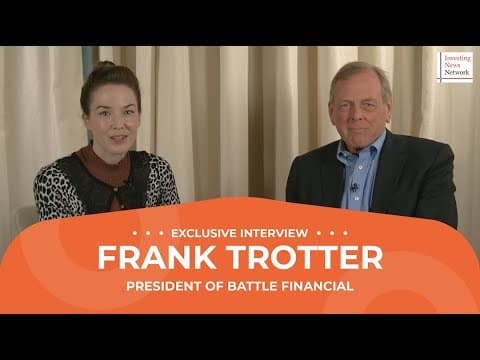
I'm Charlotte McLeod with InvestingNews.com, and here today with me is Don Hansen, a private investor who's been investing in gold and silver mining stocks for the last 21 years. Thank you so much for joining me, great to have you in person. I'm delighted to be here again. Yeah. Well with you again. In person for the first time, yeah.... Read More
Key Insights
- 🥳 US debt-to-GDP ratio has significantly increased since 1945, reaching alarming levels.
- 🤑 Loss of sound money, intervention in free markets, and expanding government control have contributed to the rise in debt.
- 🥹 The US is at risk of a currency collapse due to its lack of trade surpluses and extensive dollar holdings outside the country.
- 🏅 Investors should consider diversifying their portfolios with real assets, particularly gold and silver, to protect against potential consequences.
- 🤑 The two potential outcomes for the US are a return to capitalism with sound money, free markets, and limited government or a move towards a centralized dictatorship.
- 💄 Wisdom, rather than just intelligence, is crucial in making informed decisions about the future of the economy and society.
- 🔉 The media's efforts to censor alternative viewpoints contribute to concerns about the ability to reach a favorable outcome for the country.
Install to Summarize YouTube Videos and Get Transcripts
Explore YouTube Video Summarizer or Get YouTube Transcript Extractor
Questions & Answers
Q: What is the significance of the debt-to-GDP ratio?
The debt-to-GDP ratio reflects a country's ability to manage its debt levels in relation to its economic output. A high ratio suggests increased reliance on borrowing and raises concerns about economic stability and future growth.
Q: How do sound money, free markets, and limited government impact the debt-to-GDP ratio?
Sound money, free markets, and limited government are fundamental components of a successful capitalist economy. The loss of sound money, intervention in free markets, and expanding government control have contributed to the misallocation of resources and the increase in the debt-to-GDP ratio.
Q: What is the potential impact of the US debt crisis on the currency?
The US is vulnerable to a currency collapse due to its lack of trade surpluses and the large quantity of dollars held outside the country. Loss of confidence in the US dollar among foreign holders could lead to a significant devaluation, putting pressure on the economy.
Q: How can investors prepare for the potential consequences of the increasing debt-to-GDP ratio?
Investors should consider holding real assets, such as gold and silver, which have historically served as a store of value during times of economic instability. These assets are divisible, chemically inert, and have a good value-to-weight ratio.
Summary & Key Takeaways
-
Don Hansen collected data on the US debt-to-GDP ratio since 1945, revealing various trends and changes over the years.
-
The debt-to-GDP ratio was remarkably high in 1945 after World War II but decreased significantly by 1965 due to balanced budgets and economic growth.
-
From 1985 to 2025, the debt-to-GDP ratio has grown substantially, with projections suggesting it will reach over 150 percent by 2025.
Read in Other Languages (beta)
Share This Summary 📚
Summarize YouTube Videos and Get Video Transcripts with 1-Click
Try YouTube Summary with ChatGPT & Claude or YouTube Transcript Generator
Explore More Summaries from Investing News 📚





Summarize YouTube Videos and Get Video Transcripts with 1-Click
Try YouTube Summary with ChatGPT & Claude or YouTube Transcript Generator