Tal Golesworthy: How I repaired my own heart

TL;DR
Learn about the journey of a process engineer with Marfan syndrome who developed a revolutionary treatment for aortic dilation using engineering techniques and multidisciplinary collaboration.
Transcript
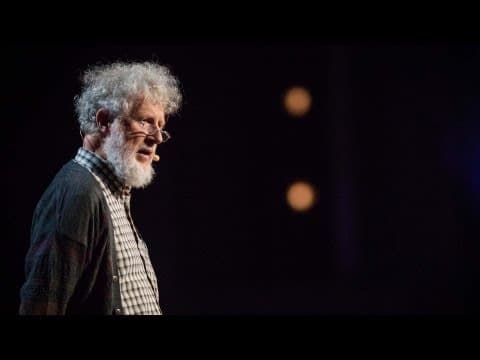
I'm a process engineer, I know all about boilers and incinerators and fabric filters, and cyclones, and things like that. But I also have Marfan syndrome. This is an inherited disorder. And in 1992, I participated in a genetic study, and found to my horror, as you can see from the slide, that my ascending aorta was not in the normal range, the gree... Read More
Key Insights
- 👤 The speaker, a process engineer, discovered that he had an ascending aorta disorder and needed surgery or a lifetime of anticoagulation therapy.
- 🏥 The speaker set out to change the treatment for aortic dilation by inventing a personalized implant to externally support the aorta, eliminating the need for surgery and anticoagulation therapy.
- 💡 Multidisciplinary research and collaboration between engineers and medical professionals was key in developing this new treatment.
- ⛑️ The new treatment only takes two hours to install compared to six hours for the existing treatment, does not require heart-lung bypass or body cooling, and does not require anticoagulation therapy.
- 💰 Funding barriers and institutional conflicts posed challenges during the development of this new treatment.
- 🔬 Jargon and disciplinary conventions hindered effective communication and understanding between the engineering and medical fields.
- 🤔 Obstructive conservatism and arrogance among some medical professionals can impede innovation and acceptance of new treatments.
- 🌟 Collaboration and cross-disciplinary perspectives can lead to innovative solutions, faster progress, and cost-effective advancements in medical technology.
Install to Summarize YouTube Videos and Get Transcripts
Explore YouTube Video Summarizer or Get YouTube Transcript Extractor
Questions & Answers
Q: What is Marfan syndrome?
Marfan syndrome is an inherited disorder that affects the body's connective tissues, resulting in a range of physical symptoms and health issues.
Q: What was the result of the genetic study the speaker participated in?
The speaker discovered through a genetic study in 1992 that their ascending aorta was dilated and not within the normal range. The aorta continued to dilate progressively over time.
Q: What was the traditional surgical treatment for aortic dilation?
The traditional surgical treatment for aortic dilation involved open chest surgery, the use of an artificial heart and lung machine, lowering the body temperature, stopping the heart, removing the aorta, and replacing it with a plastic valve and aorta. This treatment also required a lifetime of anticoagulation therapy.
Q: How did the speaker propose to change the treatment for aortic dilation?
The speaker proposed a new treatment approach which involved externally wrapping the dilated aorta with a bespoke porous textile mesh, providing external support to the aorta and eliminating the need for invasive surgery and anticoagulation therapy.
Q: How did the speaker develop the personalized implant for aortic dilation?
The speaker and their multidisciplinary team utilized medical imaging technology, such as magnetic resonance and CT scans, to create a model of the patient's aorta. This model was then used to manufacture a personalized porous textile mesh implant that perfectly fit the shape of the aorta.
Q: What were some barriers and challenges faced during the development of this new treatment?
The speaker highlighted several barriers, including jargon barriers between different disciplines (such as engineering and medicine), institutional barriers and relationship issues between medical institutions, bureaucratic challenges with research and ethics committees, obstacles associated with obtaining funding, and resistance to change and ego clashes among medical professionals.
Q: What were some of the benefits of the speaker's multidisciplinary approach to developing the new treatment?
By bringing together professionals from different disciplines, the speaker was able to leverage their diverse knowledge bases and perspectives to achieve quick progress and find novel solutions. This multidisciplinary approach allowed for rapid progress on a small budget, leading to successful implementation of the new treatment.
Q: What was the overall outcome of the speaker's new treatment for aortic dilation?
The speaker's new treatment approach resulted in successful implantation of the external support mesh, eliminating the need for traditional surgery, artificial valves, and anticoagulation therapy. The speaker and other patients who received this treatment have experienced positive outcomes and improved quality of life.
Summary & Key Takeaways
-
The speaker is a process engineer who also has Marfan syndrome, which affects the ascending aorta.
-
He set out to change the treatment for aortic dilation and developed a personalized external support that does not require surgery or anticoagulation therapy.
-
The project faced barriers such as disciplinary conventions, institutional problems, and funding difficulties, but ultimately achieved successful results at a low cost.
Read in Other Languages (beta)
Share This Summary 📚
Summarize YouTube Videos and Get Video Transcripts with 1-Click
Try YouTube Summary with ChatGPT & Claude or YouTube Transcript Generator
Explore More Summaries from TED 📚




Summarize YouTube Videos and Get Video Transcripts with 1-Click
Try YouTube Summary with ChatGPT & Claude or YouTube Transcript Generator