The Truth About Hamas and Israel - What The News Channels Won’t Report - Abhijit Iyer-Mitra
TL;DR
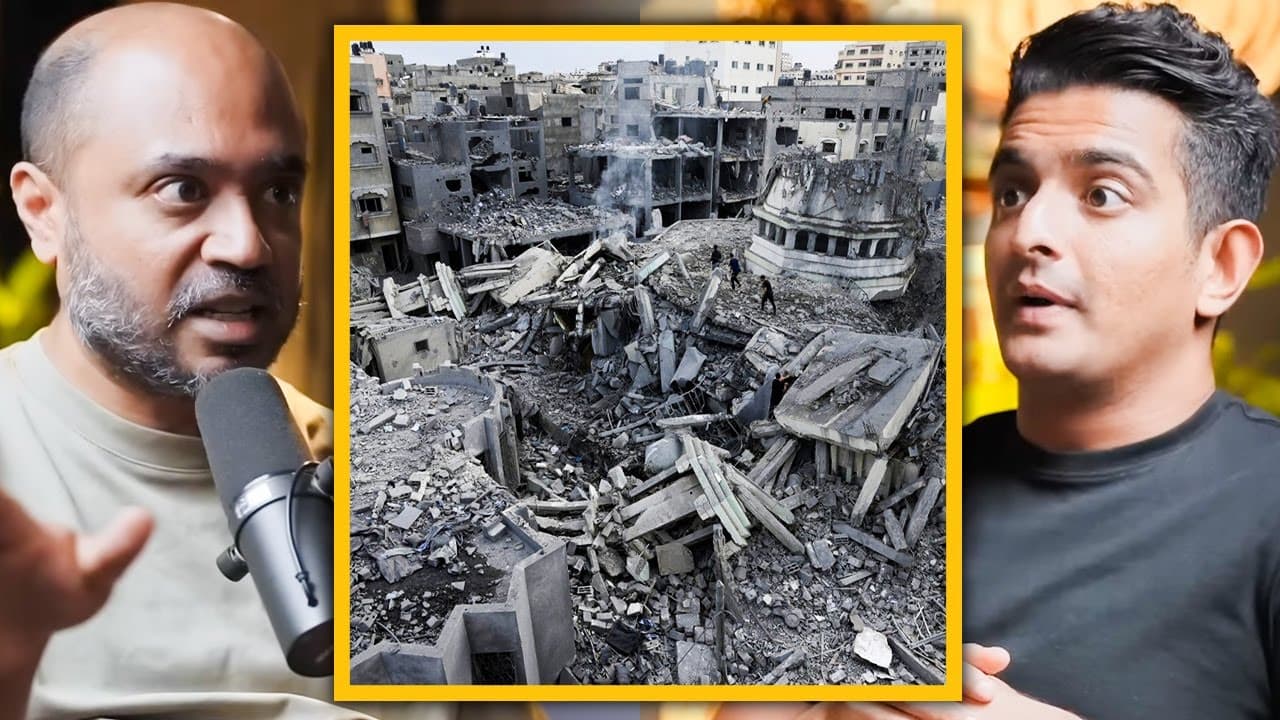
The discussion examines the complexities behind the Israel-Palestine conflict and the misperceptions surrounding Hamas.
Transcript
binge watch and learn on PRS Clips one of the arguments that Pro Palestine civilians have all over the world is that even the Hamas is made out of Palestinians who grew up in a very violent very atrocity struck land they were basically bullied by the Jews throughout the life and that's what's forced them into a into whatever they're doing right now... Read More
Key Insights
- 🇮🇱 Understanding the Israel-Palestine conflict requires deep introspection and acknowledgment of internal issues within both societies.
- ❓ Personal experiences and visits to both regions provide invaluable insights that challenge prevailing narratives.
- 🔉 Propaganda and misinformation on social media greatly influence public perceptions and understanding of the conflict.
- 🎁 Civil disobedience and nonviolent resistance are presented as potentially transformative strategies for Palestinians.
- 🎓 The role of education in shaping identity and awareness about the conflict is critically examined for both Israelis and Palestinians.
- 🗯️ Radicalization within Palestinian communities complicates their external advocacy for rights and peace.
- #️⃣ The historical narrative surrounding ethnic cleansing is nuanced, with significant numbers of Muslims coexisting within Israel.
Install to Summarize YouTube Videos and Get Transcripts
Explore YouTube Video Summarizer or Get YouTube Transcript Extractor
Questions & Answers
Q: What role does personal experience play in understanding the Israel-Palestine conflict?
Personal experiences provide unique insights into the complexities and realities on the ground that statistics and reports may overlook. The speaker's multiple visits to the region inform his perspective on the human experience among both Israelis and Palestinians, emphasizing the importance of firsthand understanding over secondhand narratives.
Q: How does the speaker view the relationship between Hamas and the Palestinian population?
The speaker asserts that Hamas does not represent the entirety of the Palestinian people. He critiques Hamas for perpetuating violence and radical ideologies, arguing that their actions hurt both their own communities and the broader peace efforts. This complicates the way Palestinians are perceived in the global dialogue.
Q: What are the implications of the speaker's view on civil disobedience for Palestinians?
The speaker believes that adopting nonviolent strategies could reshape perceptions of Palestinians, presenting them as peaceful advocates for their rights, rather than as violent extremists. He suggests that such a shift could challenge the hardline attitudes that currently dominate discussions about the conflict.
Q: How does social media influence perceptions of the conflict, according to the discussion?
The speaker notes that social media has created a polarized environment where emotions often overshadow nuanced understanding. Groups on both sides share content that reinforces their biases, leading to self-censorship and a lack of willingness to confront difficult truths about their own sides and the broader context of the conflict.
Q: What challenges do Palestinians face internally, according to the speaker?
The speaker highlights issues of radicalization, societal violence, and a lack of modern educational frameworks within Palestinian communities. He believes these internal issues can make it difficult for Palestinians to effectively address their struggles against external oppression, as they are simultaneously grappling with governance and societal problems.
Q: In what way does the speaker critique the education system among Palestinians?
The speaker implies that the Palestinian education system may foster a biased understanding of history, similar to the education system in Pakistan. He suggests that this results in a narrow worldview that does not adequately equip students to engage with diverse perspectives on their history and their conflict with Israel.
Q: What does the speaker indicate about confirmation bias in the narrative surrounding the conflict?
The speaker discusses how confirmation bias leads individuals to engage only with information that supports their existing beliefs about the conflict. This selective understanding prevents meaningful dialogue and prevents individuals from grasping the complexities inherent in both the Israeli and Palestinian narratives.
Q: How does the comparison of Palestinian and Israeli citizens contribute to the overall argument?
By highlighting that there are Muslim citizens in Israel who actively participate in government and military roles, the speaker illustrates the complexities of citizenship and identity within Israel. This counters narratives of ethnic cleansing and underscores the presence of coexistence efforts that complicate the black-and-white portrayals of the conflict.
Summary & Key Takeaways
-
The speaker argues that the narrative surrounding Hamas being solely a product of Israeli oppression is overly simplistic and ignores internal Palestinian issues and radicalization.
-
He shares his personal experiences in both Israel and Palestinian territories to illustrate the intricacies of the situation, emphasizing the need for introspection within Palestinian society.
-
The discussion highlights the importance of understanding multiple perspectives, the impact of social media, and the dangers of confirmation bias in shaping public opinion on the conflict.
Read in Other Languages (beta)
Share This Summary 📚
Summarize YouTube Videos and Get Video Transcripts with 1-Click
Try YouTube Summary with ChatGPT & Claude or YouTube Transcript Generator
Explore More Summaries from TRS Clips 📚



Summarize YouTube Videos and Get Video Transcripts with 1-Click
Try YouTube Summary with ChatGPT & Claude or YouTube Transcript Generator