How nuclear weapons work | Dennis Whyte and Lex Fridman
TL;DR
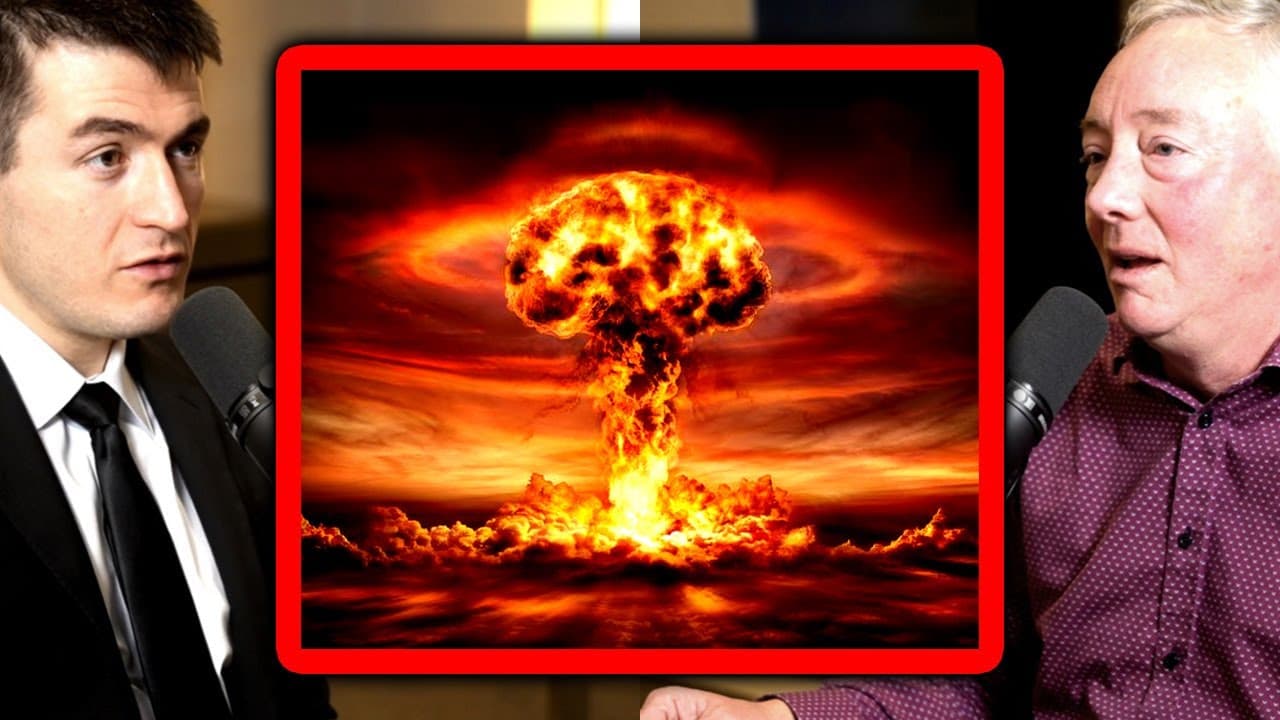
Atomic and hydrogen bombs work by harnessing the intense energy released from nuclear fission and fusion reactions, respectively, with hydrogen bombs using fusion as an intermediate catalyst to amplify energy. While it is unsettling that humans can create such powerful weapons, fusion technology offers more energy intensity without the risk of uncontrolled chain reactions.
Transcript
how does an atomic weapon work how does a hydrogen bomb work asking for a friend yeah yeah so um added sort what it had what you do is you very quickly put together enough of these materials that can undergo fission with room temperature neutrons and you put them together fast enough that what happens is that this process can essentially grow mathe... Read More
Key Insights
- 🦾 The mechanics of atomic weapons involve rapidly combining fissionable materials to trigger fission reactions, releasing immense energy.
- 🔫 Hydrogen bombs utilize fusion reactions as a catalyst to amplify the energy output of the weapon.
- 🔫 The development of powerful weapons signifies the progression of human civilization and the ability to harness more intense energy sources.
- ✋ Fusion technology offers a higher energy intensity without the risk of uncontrolled chain reactions, making it more manageable and stable.
- 🤨 The consequences of powerful weapons raise concerns about their destructive potential and the need to explore alternative solutions for conflict resolution.
- 👶 Access to new energy sources throughout history has resulted in the development of increasingly powerful technologies and weaponry.
- 🚥 Our ability to anticipate the transformative effects of fusion technology is limited, with both incredible advancements and potentially more potent weapons on the horizon.
Install to Summarize YouTube Videos and Get Transcripts
Explore YouTube Video Summarizer or Get YouTube Transcript Extractor
Questions & Answers
Q: How do atomic weapons work?
Atomic weapons work by rapidly merging fissionable materials to initiate fast-growing fission reactions. This process releases a significant amount of energy, leading to a devastating explosion.
Q: What is the role of fusion in hydrogen bombs?
In hydrogen bombs, fusion reactions are used as an intermediate catalyst to increase the weapon's energy output. While fusion contributes to the overall energy, the weapon remains primarily a fission weapon at its core.
Q: Does the development of such powerful weapons instill fear?
Rather than fear, the development of powerful weapons reflects the progress of human civilization. Throughout history, access to new energy sources has resulted in the ability to generate more intense and potent energy, including the creation of these weapons.
Q: How does fusion technology differ from fission in terms of control?
Fusion technology diverges from the trend of escalating consequences by lacking a chain reaction. Unlike fission, fusion reactions cannot exponentiate uncontrollably. The stability of stars, regulated by their temperature and heating, exemplifies this control mechanism.
Summary & Key Takeaways
-
Atomic weapons undergo fission reactions by quickly combining fissionable materials, releasing large amounts of energy.
-
Hydrogen bombs utilize fusion reactions as an intermediate catalyst to enhance the energy output of the weapon.
-
The development of powerful weapons is a testament to human progress, but also raises concerns about the consequences and the potential for future advancements in weaponry.
Read in Other Languages (beta)
Share This Summary 📚
Summarize YouTube Videos and Get Video Transcripts with 1-Click
Try YouTube Summary with ChatGPT & Claude or YouTube Transcript Generator
Explore More Summaries from Lex Clips 📚




Summarize YouTube Videos and Get Video Transcripts with 1-Click
Try YouTube Summary with ChatGPT & Claude or YouTube Transcript Generator