3 of the Biggest Experiments Ever
TL;DR
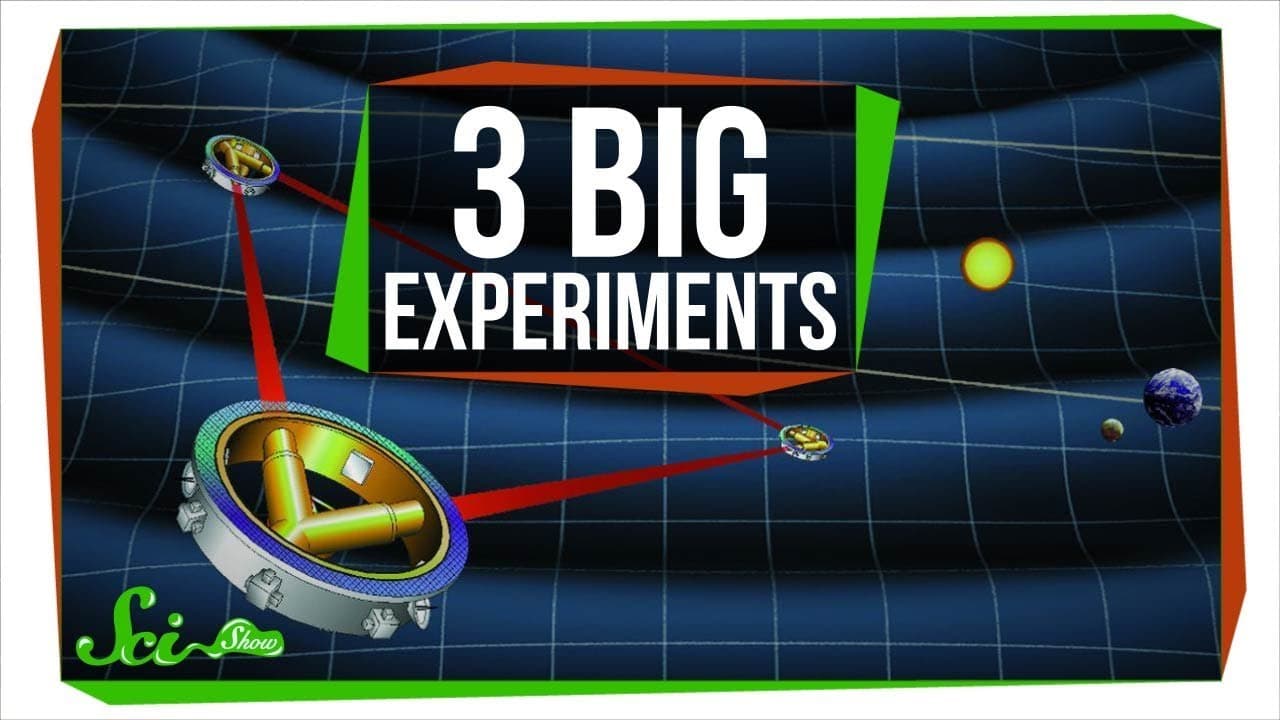
NEPTUNE is a large undersea network off the coast of British Columbia that uses fiber optic cables to transmit data about the ocean, while NIF in California is a massive indoor experiment exploring nuclear fusion. LISA, a proposal for a space experiment, aims to measure gravitational waves.
Transcript
SciShow is supported by Squarespace. Whether you need a domain, website, or online store, make it with Squarespace [♪INTRO] It’s one of those fundamental rules of the universe that we all eventually learn growing up: like, life isn’t fair, Picard was a better starship captain than Kirk, and bigger isn’t always better. Sometimes though, there are th... Read More
Key Insights
- 🇮🇴 NEPTUNE, the underwater network off the coast of British Columbia, provides valuable data about ocean ecosystems and helps build models for earthquakes.
- 😒 The NIF experiment in California uses a massive laser to explore the viability of nuclear fusion as an energy source, with hopes of producing less radioactive waste.
Install to Summarize YouTube Videos and Get Transcripts
Explore YouTube Video Summarizer or Get YouTube Transcript Extractor
Questions & Answers
Q: What is NEPTUNE and how does it function?
NEPTUNE is a large network of scientific equipment located off the coast of British Columbia. It uses fiber optic cables to connect various underwater locations and transmit data about the ocean, including the use of hydrophones to listen to marine life sounds and cameras for livestreaming undersea activity.
Q: What is the goal of the NIF experiment in California?
The NIF experiment aims to demonstrate that nuclear fusion can be a viable source of power. By using the world's largest laser, it heats hydrogen atoms inside a gold canister, triggering fusion reactions that release energy. The ultimate goal is to achieve ignition and potentially produce less radioactive waste compared to existing nuclear power plants.
Q: How does LISA aim to detect gravitational waves in space?
LISA, a proposed space experiment, plans to use three small spacecraft placed 1.6 million kilometers apart to measure gravitational waves. The spacecraft would shoot laser beams back and forth, measuring the ripples in space-time generated by massive objects like merging black holes. It aims to detect more subtle gravitational waves than previous experiments.
Q: Why is LISA considered the biggest observatory ever built?
LISA's proposed size, with three spacecraft positioned 1.6 million kilometers apart, makes it the largest observatory. It aims to measure gravitational waves that last for minutes or hours, including events involving massive black holes in the center of galaxies. Although it has not launched yet, similar technology in LISA Pathfinder has shown success in making measurements in space.
Summary & Key Takeaways
-
NEPTUNE is a large network of scientific equipment off the coast of British Columbia that uses fiber optic cables to transmit data about the ocean, including underwater microphones and cameras.
-
NIF in California is an indoor experiment that aims to demonstrate the viability of nuclear fusion as a power source, using the world's largest laser to heat hydrogen atoms and trigger fusion reactions.
-
LISA is a proposed space experiment that plans to measure gravitational waves by utilizing three spacecraft arranged 1.6 million kilometers apart, aiming to detect subtle waves generated by massive objects like merging black holes.
Read in Other Languages (beta)
Share This Summary 📚
Summarize YouTube Videos and Get Video Transcripts with 1-Click
Try YouTube Summary with ChatGPT & Claude or YouTube Transcript Generator
Explore More Summaries from SciShow 📚


Summarize YouTube Videos and Get Video Transcripts with 1-Click
Try YouTube Summary with ChatGPT & Claude or YouTube Transcript Generator