Justice: What's The Right Thing To Do? Episode 06: "MIND YOUR MOTIVE"
TL;DR
Kant's moral philosophy emphasizes acting out of duty rather than inclination, arguing that true moral worth arises when actions are performed for the sake of duty alone. He introduces the categorical imperative, a universal moral law that rational beings should follow, treating humanity as an end in itself, not merely as a means to an end.
Transcript
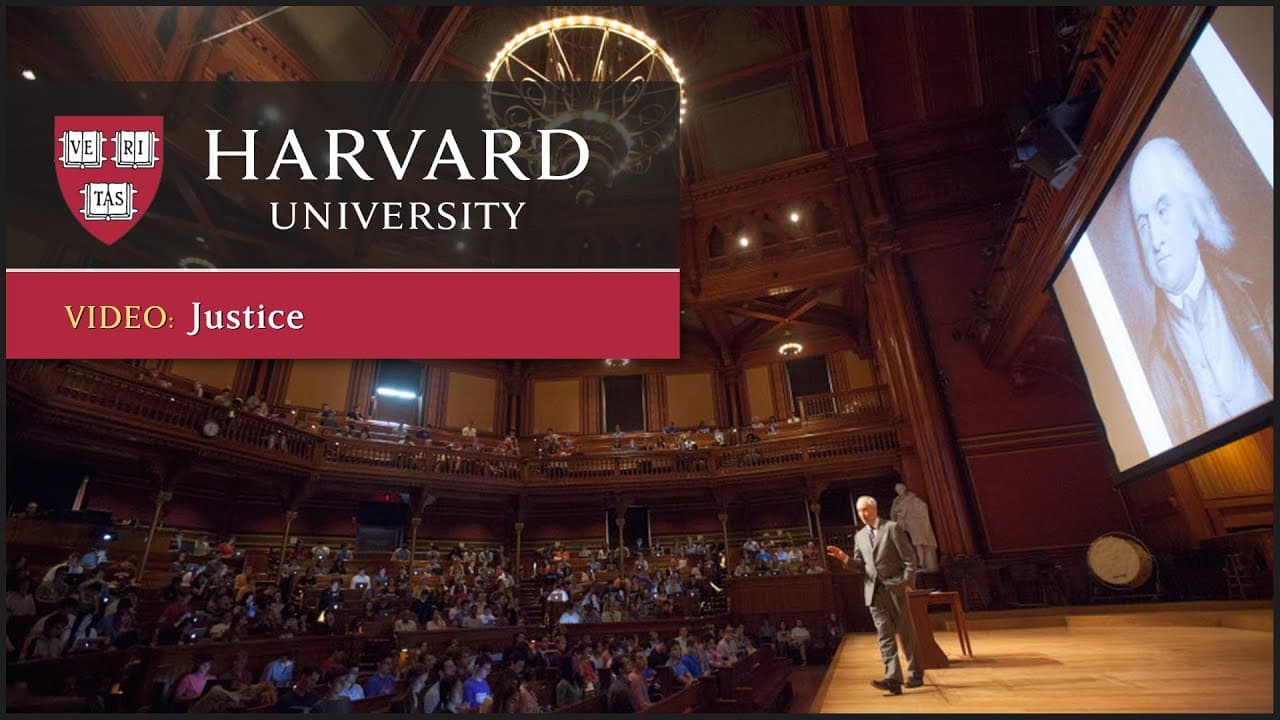
Funding for this program provided by additional funding provided by Now we turn, to the hardest philosopher that we're going to read in this course today we turn to Immanuel Kant who offers a different account of why we have a categorical duty to respect the dignity of persons and not to be use people as means merely even for good ends. Kant excell... Read More
Key Insights
- Kant rejects utilitarianism, emphasizing that morality is not about calculating consequences but about duty.
- The key to moral worth, according to Kant, is acting out of duty, not self-interest or inclination.
- Kant introduces the categorical imperative, a universal moral law applicable to all rational beings.
- The categorical imperative requires that actions be performed as if they could be universal laws.
- Kant distinguishes between actions done from duty and those done from inclination or self-interest.
- Respecting human dignity means treating people as ends in themselves, not merely as means.
- Kant argues that autonomy is acting according to laws one gives oneself, not imposed by nature.
- Kant's philosophy challenges the idea that moral actions can be based on personal or subjective motives.
Install to Summarize YouTube Videos and Get Transcripts
Explore YouTube Video Summarizer or Get YouTube Transcript Extractor
Questions & Answers
Q: What is Kant's categorical imperative?
Kant's categorical imperative is a universal moral law that commands actions to be performed as if they could be universal laws applicable to all rational beings. It emphasizes acting out of duty and treating humanity as an end in itself, not merely as a means to an end.
Q: How does Kant differ from utilitarianism?
Kant differs from utilitarianism by rejecting the idea that morality is about calculating consequences and maximizing utility. Instead, he emphasizes that moral worth arises from acting out of duty, with actions judged by their motives rather than their outcomes.
Q: Why does Kant emphasize duty in moral actions?
Kant emphasizes duty in moral actions because he believes that true moral worth arises when actions are performed for the sake of duty alone, rather than from self-interest or inclination. This focus on duty ensures that actions are guided by universal moral laws.
Q: What is the significance of autonomy in Kant's philosophy?
In Kant's philosophy, autonomy is significant because it represents the ability to act according to laws one gives oneself, rather than being governed by external influences or natural inclinations. Autonomy is central to his concept of moral freedom and dignity.
Q: How does Kant view the moral worth of actions?
Kant views the moral worth of actions as determined by their motives, specifically the motive of duty. An action has moral worth when it is performed out of respect for the moral law, rather than for personal gain or inclination.
Q: What is the formula of humanity in Kant's ethics?
The formula of humanity in Kant's ethics is a principle that requires treating humanity, whether in oneself or others, always as an end in itself and never merely as a means. This principle underscores the intrinsic value and dignity of rational beings.
Q: Why is respect for human dignity important in Kant's ethics?
Respect for human dignity is important in Kant's ethics because it acknowledges the intrinsic value of rational beings as ends in themselves. This respect ensures that individuals are not used merely as means to achieve other ends, preserving their autonomy and dignity.
Q: What role does reason play in Kant's moral philosophy?
Reason plays a central role in Kant's moral philosophy as it is the faculty that enables individuals to discern and follow the categorical imperative. It allows rational beings to act autonomously, giving themselves universal moral laws that guide their actions.
Summary
In this video, the speaker discusses Immanuel Kant's account of why we have a categorical duty to respect the dignity of persons and not to use people merely as means to an end. Kant believes that human beings have a certain dignity due to their capacity for reason and freedom, which sets them apart from animals. He argues that freedom is not simply the ability to do what we want, but rather the ability to act autonomously according to a self-given law. Kant also explains that the moral worth of an action depends on the motive behind it, with only the motive of duty conferring moral worth. He introduces the contrast between hypothetical imperatives (based on desire) and categorical imperatives (based on duty), and presents three formulations of the categorical imperative.
Questions & Answers
Q: What does Kant believe sets human beings apart from animals?
Kant believes that human beings have a certain dignity due to their capacity for reason and freedom, which sets them apart from animals. He argues that it is this capacity that makes human beings distinctive and something more than just physical creatures with appetites.
Q: How does Kant define freedom?
Kant has a more demanding notion of freedom compared to the common understanding of freedom as the absence of obstacles to getting what we want. For Kant, freedom is the ability to act autonomously according to a law that we give ourselves, not according to the physical laws of nature or our desires.
Q: What is the opposite of autonomy for Kant?
Kant uses the term "heteronomy" to describe the opposite of autonomy. When we act heteronomously, we act according to inclinations or desires that we haven't chosen for ourselves. Autonomy, on the other hand, is acting according to a law we give ourselves.
Q: What is Kant's view on using people for the sake of others' well-being?
Kant argues that it is wrong to use people for the sake of other people's well-being or happiness. Even if utilitarianism suggests that maximizing human happiness requires upholding justice and respecting the dignity of persons, Kant believes that using people for instrumental reasons still violates their dignity as ends in themselves.
Q: How does Kant determine the moral worth of an action?
According to Kant, the moral worth of an action depends on the motive behind it. Only actions done out of a sense of duty, rather than inclination or self-interest, have moral worth. Kant emphasizes that the motive must be independent of consequences or results.
Q: What is the first formulation of the categorical imperative?
The first formulation of the categorical imperative is "act only on that maxim whereby you can at the same time will that it should become a universal law." This means that an action is morally right if the maxim or principle behind it can be universally applied without contradiction.
Q: What is the second formulation of the categorical imperative?
The second formulation of the categorical imperative is "act in such a way that you always treat humanity, whether in your own person or in the person of any other, never simply as a means but always at the same time as an end." This formulation emphasizes the importance of respecting the dignity and worth of rational beings as ends in themselves.
Q: Can people be used as means without violating the categorical imperative?
Kant acknowledges that people are often used as means to achieve our own ends, such as in everyday tasks or transactions. However, as long as we treat others with respect and in a way that is consistent with their dignity as ends in themselves, using them as means is morally acceptable.
Q: How does Kant define dignity?
Kant defines dignity as the intrinsic value and worth that all rational beings, including human beings, possess. He argues that this dignity commands reverence and respect, and is the reason why it is wrong to use people as mere means.
Q: Is Kant's account of the supreme principle of morality persuasive?
The speaker asks the viewers to read Kant's work and determine for themselves whether his account of the supreme principle of morality is persuasive. It is up to each individual to engage with Kant's ideas and reflect on their own understanding and evaluation of his arguments.
Takeaways
Kant's philosophy revolves around the notions of reason, freedom, and morality. He argues that human beings have a certain dignity due to their capacity for reason and autonomy. Freedom, according to Kant, is not simply doing what we want but acting autonomously according to a self-given law. The motive of duty confers moral worth on an action, and Kant introduces the contrast between hypothetical imperatives (based on desire) and categorical imperatives (based on duty). The two formulations of the categorical imperative emphasize universalizability and respect for the dignity of rational beings. It is up to each viewer to decide whether Kant's account of the supreme principle of morality is convincing or not.
Summary & Key Takeaways
-
Kant's philosophy emphasizes duty over inclination, arguing that true moral worth arises when actions are performed for the sake of duty alone. He introduces the categorical imperative, a universal moral law that rational beings should follow, treating humanity as an end in itself, not merely as a means to an end.
-
Kant rejects utilitarianism, emphasizing that morality is not about calculating consequences but about duty. He argues that the moral worth of an action is determined by its motive, specifically the motive of duty, rather than its outcomes.
-
Kant's categorical imperative requires that actions be performed as if they could be universal laws applicable to all rational beings. This principle underscores the importance of autonomy and the respect for human dignity in moral decision-making.
Read in Other Languages (beta)
Share This Summary 📚
Summarize YouTube Videos and Get Video Transcripts with 1-Click
Try YouTube Summary with ChatGPT & Claude or YouTube Transcript Generator
Explore More Summaries from Harvard University 📚



Summarize YouTube Videos and Get Video Transcripts with 1-Click
Try YouTube Summary with ChatGPT & Claude or YouTube Transcript Generator