Fossilized Chicken | Jurassic CSI
TL;DR
Paleontologist Phil aims to recreate scientifically accurate dinosaur skin using forensic technology and demonstrates the challenges of finding fossilized skin.
Transcript
while paleontologists have been digging up dinosaur bones by the truckload they found only a handful of animals covered in fossilized skin that's it that's it now got it but Phils used to wrestling with big problems oh no no we got to swing it out and around and this time that is no different all right he wants to flesh out the bones of one of the ... Read More
Key Insights
- ☠️ Fossilized dinosaur skin is extremely rare, with most fossils consisting only of bones.
- 🦕 Recreating scientifically accurate dinosaur skin is a complex task that requires forensic technology and a deep understanding of dinosaurs.
- 🥵 The fossilization process involves intense heat and pressure, which can significantly alter the appearance of the preserved organism.
- 🦕 Determining the color and texture of dinosaur skin relies on scientific evidence and educated speculation.
- 🇵🇭 Phil's experiment provides insight into the challenges and limitations of studying fossilized skin.
- 🦕 Researching dinosaur skin contributes to our understanding of how dinosaurs looked and functioned.
- 😒 The use of flamethrowers and crushers helps simulate the extreme conditions fossils endure over millions of years.
Install to Summarize YouTube Videos and Get Transcripts
Explore YouTube Video Summarizer or Get YouTube Transcript Extractor
Questions & Answers
Q: Why do paleontologists find it challenging to find fossilized dinosaur skin?
Paleontologists find it challenging to find fossilized dinosaur skin because it is extremely rare. Most dinosaur fossils consist of bones, and only a handful of animals have been found with fossilized skin.
Q: What is the purpose of using a flamethrower in the experiment?
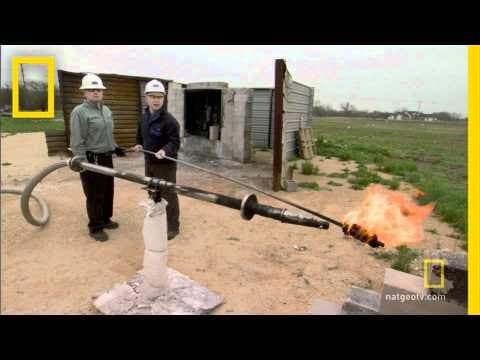
The flamethrower is used to simulate the intense heat that fossilized animals experience deep underground. It demonstrates the difficulty of preserving the delicate structures of skin in the fossilization process.
Q: How does immense pressure affect fossilization?
Immense pressure on a fossil, resulting from being buried under tons of rock, can cause the fossil to become compressed and distorted. This can make it challenging to study and recreate the original appearance of the organism.
Q: What other challenges do paleontologists face in recreating dinosaur skin?
Paleontologists face challenges such as determining the color and texture of dinosaur skin, as well as understanding how the skin would have functioned on the living animal. This requires a combination of scientific evidence and educated speculation.
Summary & Key Takeaways
-
Paleontologist Phil wants to cover a model with scientifically accurate dinosaur skin, but finding fossilized skin is extremely rare.
-
Using a flamethrower, Phil demonstrates the intense heat that fossilized animals experience deep underground.
-
The process of fossilization involves immense pressure on the fossils when buried under tons of rock.
Read in Other Languages (beta)
Share This Summary 📚
Summarize YouTube Videos and Get Video Transcripts with 1-Click
Try YouTube Summary with ChatGPT & Claude or YouTube Transcript Generator
Explore More Summaries from National Geographic 📚



Summarize YouTube Videos and Get Video Transcripts with 1-Click
Try YouTube Summary with ChatGPT & Claude or YouTube Transcript Generator