The Last Total Solar Eclipse
TL;DR
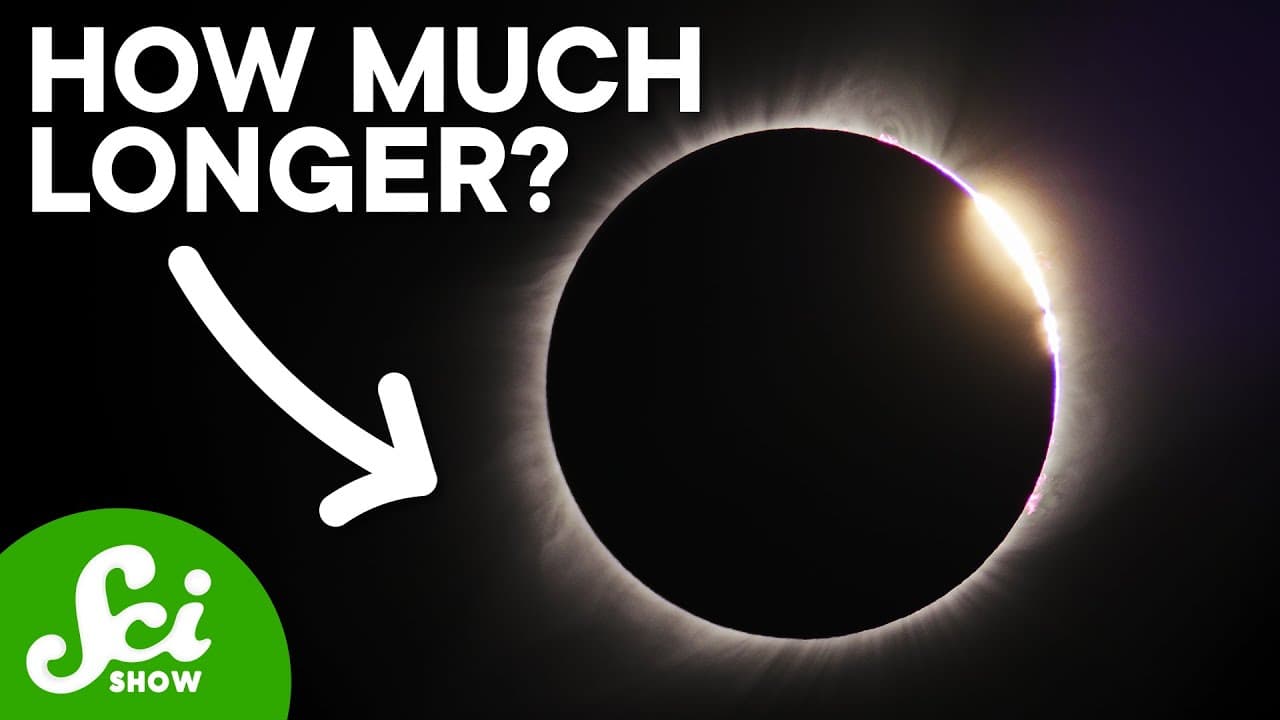
Total solar eclipses will eventually become irregular and infrequent in about 620 million years and will no longer occur in approximately 1.2 billion years.
Transcript
[♪ INTRO] As one of the most impressive astronomical events we can witness from Earth, a total solar eclipse is a jaw-dropping reminder that our planet is part of an elaborate celestial dance. But because that dance shifts ever so slightly over time, total solar eclipses won’t last forever. So it is natural to wonder: When will we see the last one?... Read More
Key Insights
- ❓ Total solar eclipses occur due to the precise alignment of the Moon, Earth, and Sun.
- ☠️ The Moon is gradually moving away from the Earth at a rate of 3.8 centimeters per year.
- ❓ Total solar eclipses will continue to occur for another 600 million years but will become more irregular and infrequent in about 620 million years.
- ❓ The very last total solar eclipse is estimated to happen in around 1.2 billion years.
- ☠️ The recession rate of the Moon is influenced by various factors such as plate tectonics and climate events.
- 🛩️ The Moon's recession will eventually make it appear too small to completely block the Sun's surface.
- ☕ In addition to the disappearance of total solar eclipses, the increasing brightness of the aging Sun will make Earth's surface too hot for life to thrive in about a billion years.
Install to Summarize YouTube Videos and Get Transcripts
Explore YouTube Video Summarizer or Get YouTube Transcript Extractor
Questions & Answers
Q: Why do total solar eclipses occur?
Total solar eclipses happen when the Moon, Earth, and Sun align perfectly, causing the Moon to completely block the Sun's surface from our view.
Q: What is causing the Moon to move away from Earth?
Gravitational interactions between the Earth and the Moon are causing the Moon to gradually move away from us at a rate of about 3.8 centimeters per year.
Q: When will we see the last total solar eclipse?
According to current calculations, the last total solar eclipse will occur in approximately 1.2 billion years.
Q: Will total solar eclipses become less frequent in the future?
Yes, total solar eclipses will become much more irregular and infrequent in about 620 million years due to various factors such as plate tectonics, climate events, and the movement of rock inside the Earth's core and mantle.
Summary & Key Takeaways
-
Total solar eclipses occur when the Earth, Moon, and Sun align perfectly, allowing the Moon to completely block the Sun's surface.
-
The Moon is gradually moving away from the Earth at a rate of approximately 3.8 centimeters per year due to gravitational interactions, which will eventually cause the Moon to appear too small to block the Sun.
-
According to current calculations, total solar eclipses will continue to happen for another 600 million years but will become much more irregular and infrequent in about 620 million years. The very last total solar eclipse is expected to occur in around 1.2 billion years.
Read in Other Languages (beta)
Share This Summary 📚
Summarize YouTube Videos and Get Video Transcripts with 1-Click
Try YouTube Summary with ChatGPT & Claude or YouTube Transcript Generator
Explore More Summaries from SciShow 📚


Summarize YouTube Videos and Get Video Transcripts with 1-Click
Try YouTube Summary with ChatGPT & Claude or YouTube Transcript Generator