Is The USA Behind Bangladesh's Political Chaos?
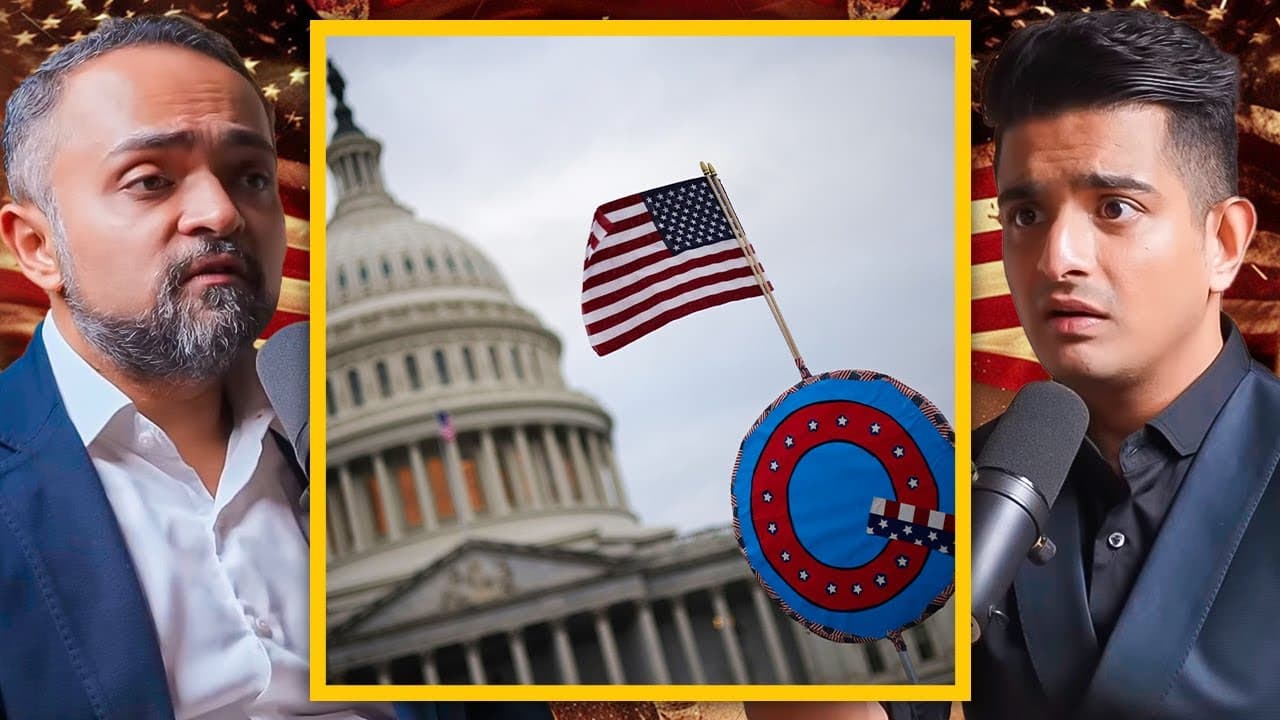
TL;DR
Social media exacerbates global polarization, influencing protests like those in Bangladesh.
Transcript
there's documentary called the social dilemma which spoke about how social media is responsible for polarizing the whole world which is a theory I'm deeply convinced about and I think that one can only break out of that sense of polarization through conscious self-effort but you can't expect that from the masses of any country be it America Banglad... Read More
Key Insights
- 💁 Social media has transformed the landscape of political engagement by facilitating rapid dissemination of information and mobilization of public sentiment.
- 🤳 The documentary "The Social Dilemma" serves as a critique of social media's role in societal fragmentation, making a case for increased individual awareness and self-regulation.
- 🌍 While conspiracy theories around foreign intervention are common, assessing their likelihood requires understanding the broader geopolitical context and specific national interests.
- 🌍 The content underscores the interplay between different nations' geopolitical strategies, particularly regarding alliances and regional stability.
- 🏈 American foreign policy is complex, often influenced by multiple competing interests rather than a singular focus on a specific country like Bangladesh.
- 🌍 Analyzing international relations demands a nuanced approach, balancing speculation with concrete evidence and historical context.
- 🌐 The opposition in Bangladesh may have different international alliances than the current government, indicating shifting alignments in global politics.
Install to Summarize YouTube Videos and Get Transcripts
Explore YouTube Video Summarizer or Get YouTube Transcript Extractor
Questions & Answers
Q: What evidence does the content provide on the impact of social media on public protests?
The content clearly outlines that social media plays a crucial role in transmitting inflammatory material quickly, which has historically triggered social upheavals in various countries, including Egypt and Ukraine. In the case of Bangladesh, public discontent amplified via social platforms contributed to widespread protests against the government, demonstrating the power of technology in mobilizing unrest.
Q: What is the perspective on conspiracy theories involving American intervention in Bangladesh?
The analysis expresses skepticism towards common conspiracy theories that suggest American involvement in destabilizing Bangladesh to remove Sheikh Hasina. It points out that, given the broader geopolitical concerns, it's unlikely that U.S. policymakers prioritize Bangladesh to the extent that they would engage in such actions, especially when other global issues demand their attention.
Q: How does this content address the importance of balanced analysis in geopolitics?
The content emphasizes the need for a balanced approach when examining geopolitical situations. It advises against black-and-white thinking, where one dismisses conspiracies outright or accepts them without evidence. Instead, it argues for an analysis that incorporates evidence while being open about the uncertainties inherent in international relations and foreign policy.
Q: What strategic interests could China have in destabilizing Bangladesh?
The discussion raises the possibility that as a significant player in the region, China might benefit from creating instability in Bangladesh, particularly if it aligns the country politically with Chinese interests. Such a shift could also hinder India's influence in the region, allowing China increased access to strategically important ports and economic opportunities in the Bay of Bengal.
Summary & Key Takeaways
-
The documentary "The Social Dilemma" discusses how social media drives polarization worldwide, with evidence from recent events in Bangladesh highlighting its influence on public sentiment and activism.
-
The conversation speculates on conspiracy theories regarding American involvement in Bangladesh's political instability, especially concerning the removal of Sheikh Hasina, but argues that such theories lack substantial evidence.
-
The geopolitical landscape indicates that American interests favor a stable Bangladesh allied with India, while China's involvement may aim to strategically weaken India through instability.
Read in Other Languages (beta)
Share This Summary 📚
Summarize YouTube Videos and Get Video Transcripts with 1-Click
Try YouTube Summary with ChatGPT & Claude or YouTube Transcript Generator
Explore More Summaries from TRS Clips 📚





Summarize YouTube Videos and Get Video Transcripts with 1-Click
Try YouTube Summary with ChatGPT & Claude or YouTube Transcript Generator