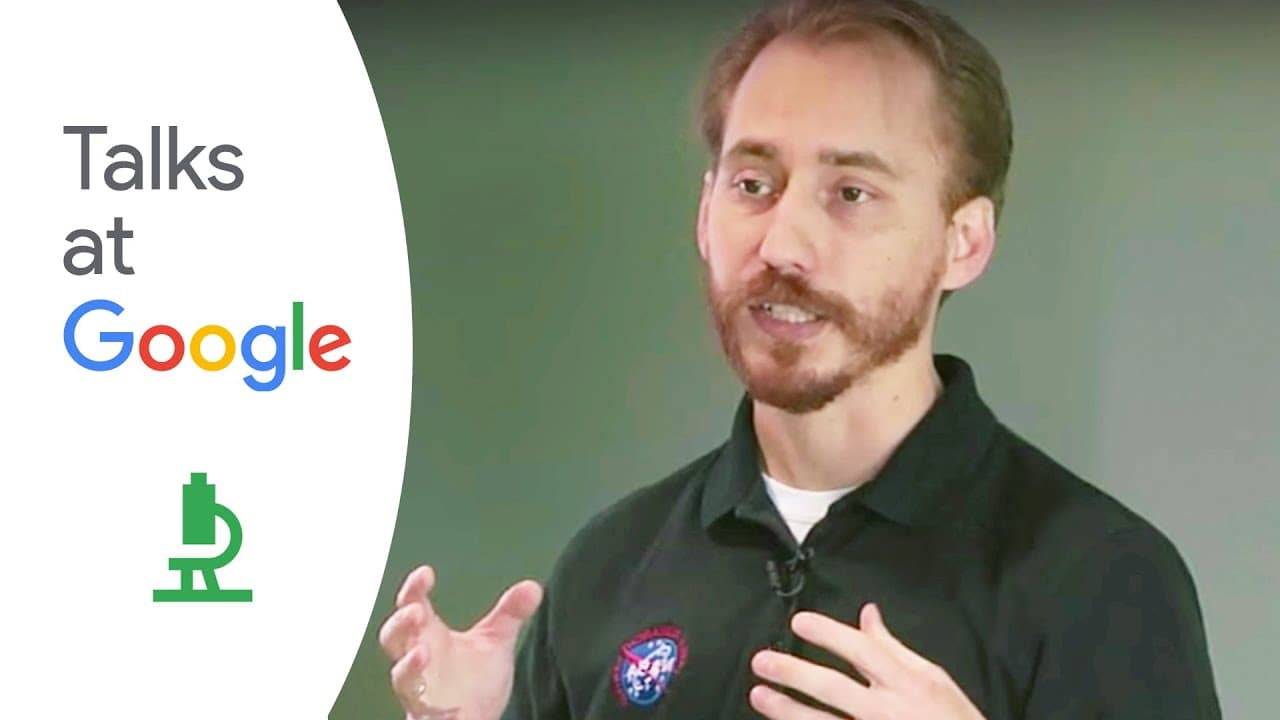
Free-Flying Space Robots | Jose Benavides | Talks at Google
TL;DR
NASA has developed and implemented free-flying space robots known as SPHERES and Astrobee, which have been used for various research and exploration activities on the International Space Station (ISS) for over 10 years.
Transcript
SPEAKER 1: Here is Jose. He is the lead of the NASA International Space Station SPHERES and Astrobee program. The SPHERES facility is one of the most used and popular ISS national labs with over 80 on board test sessions and 400 plus hours of on orbit activities to date. Jose has a bachelor's and a master's in electrical engineering from Arizona St... Read More
Key Insights
- 😘 SPHERES and Astrobee are free-flying space robot platforms that have been used for advanced research and testing on the ISS for over 10 years.
- 🤖 These robots have been instrumental in exploring various research areas such as vision-based navigation, fuel sloshing behavior, and electromagnetic formation flight.
- 😘 Astrobee, the next generation of free-flying space robots, offers even more capabilities and extensibility, and will be delivered to the ISS in early 2018.
- 👨🔬 These platforms provide opportunities for guest researchers from around the world to conduct experiments and research in microgravity environments, as well as for STEM outreach programs.
Install to Summarize YouTube Videos and Get Transcripts
Explore YouTube Video Summarizer or Get YouTube Transcript Extractor
Questions & Answers
Q: How long has SPHERES been in operation on the ISS?
SPHERES has been in operation for over 10 years on the ISS.
Q: What are some of the research areas that have been explored using SPHERES and Astrobee?
Some of the research areas include fuel sloshing behavior, electromagnetic formation flight, wireless power transfer, vision-based navigation, and 3D mapping of the environment.
Q: Can Astrobee be operated autonomously or in remote control mode?
Astrobee can be operated in both autonomous and remote control modes, depending on the requirements of the research or task.
Q: Can Astrobee be used for research outside of the ISS, such as on Mars?
Astrobee is designed for operations inside the ISS, but some of the technologies and advancements made with Astrobee can be applicable to other environments, including Mars or other deep space destinations.
Summary & Key Takeaways
-
SPHERES is a free-flying space robot platform that has been in operation on the ISS for more than 10 years, allowing for advanced research and testing in a controlled environment.
-
Astrobee is the next generation of free-flying space robots being developed by NASA Ames and will be delivered to the ISS in early 2018, offering even more capabilities and extensibility.
-
These free-flying robots provide opportunities for research in areas such as vision-based navigation, in-space construction, automated docking, and more, and can be used by guest researchers from around the world to conduct experiments and research.
Read in Other Languages (beta)
Share This Summary 📚
Summarize YouTube Videos and Get Video Transcripts with 1-Click
Try YouTube Summary with ChatGPT & Claude or YouTube Transcript Generator
Explore More Summaries from Talks at Google 📚

Summarize YouTube Videos and Get Video Transcripts with 1-Click
Try YouTube Summary with ChatGPT & Claude or YouTube Transcript Generator