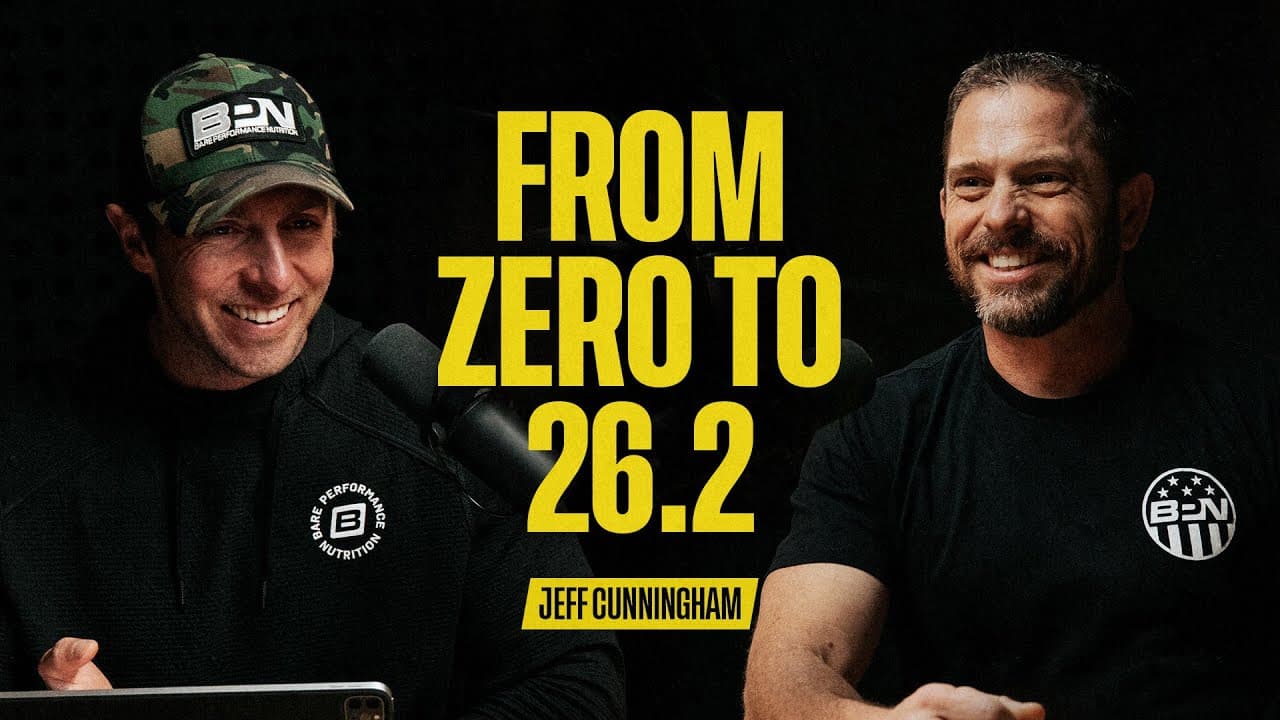
How to Train for Your First Marathon With Jeff Cunningham | The Nick Bare Podcast 110
TL;DR
Jeff Cunningham shares marathon training and nutrition insights for beginners.
Transcript
you're not going to wake up motivated every day and especially in a marathon prep as mileage increases the wear and tear on the body increases you become more tired you start questioning why am I even doing this you have to go through that mud at some point cuz when you cross the finish line of 26.2 mies it's all going to make sense why cuz the day... Read More
Key Insights
- Training for a marathon requires a balance of easy runs and speed workouts, with easy runs making up the majority to avoid fatigue.
- Proper nutrition and hydration are crucial for performance and recovery, emphasizing carbohydrates and electrolytes around training.
- The 80/20 rule suggests that 80% of training should be easy runs, while 20% should be harder, more intense workouts.
- Structured long runs with marathon-paced segments help build confidence and prepare for race day conditions.
- It's important to make a clear commitment to a marathon date to hold oneself accountable and ensure proper preparation.
- Fueling before, during, and after workouts enhances performance and helps maintain energy levels throughout training.
- New runners should focus on completing their first marathon to gather data and set a baseline for future races.
- Running is a journey that requires patience; the initial struggles often lead to a love for the sport as fitness improves.
Install to Summarize YouTube Videos and Get Transcripts
Explore YouTube Video Summarizer or Get YouTube Transcript Extractor
Questions & Answers
Q: What is the 80/20 rule in marathon training?
The 80/20 rule suggests that 80% of a runner's training should consist of easy runs, while the remaining 20% should be more intense workouts like speed training or tempo runs. This balance helps maximize adaptations, prevent fatigue, and improve overall performance by ensuring that the majority of running is done at a pace that supports aerobic development.
Q: Why is nutrition important in marathon training?
Nutrition plays a crucial role in marathon training as it fuels performance, aids recovery, and supports overall health. Carbohydrates provide the primary energy source for endurance activities, while protein supports muscle repair and growth. Proper hydration with electrolytes is essential to maintain fluid balance and prevent dehydration, which can significantly impact performance and recovery.
Q: How should a beginner structure their marathon training?
A beginner should focus on building a strong aerobic base with easy runs, gradually incorporating speed workouts and long runs. A typical week might include four to five easy runs, one speed workout, and a long run, with rest days as needed. It's important to start slowly, listen to the body, and adjust training based on individual progress and life stressors.
Q: What are the benefits of structured long run workouts?
Structured long run workouts help simulate race conditions, build endurance, and boost confidence. By incorporating marathon-paced segments into long runs, runners can practice maintaining their goal pace over extended distances, which prepares them physically and mentally for race day. These workouts also provide valuable data to assess fitness levels and adjust pacing strategies.
Q: Why is it important to make a commitment to a marathon race date?
Making a commitment to a marathon race date provides a clear goal and timeline, helping runners stay motivated and accountable. It allows for structured training and ensures that preparation is aligned with the race day objective. Sharing the commitment with others can also provide additional support and encouragement throughout the training process.
Q: What is the role of easy runs in marathon training?
Easy runs are fundamental in marathon training as they build aerobic capacity, improve running efficiency, and aid recovery. They should be done at a conversational pace, allowing the body to adapt without excessive fatigue. Easy runs make up the majority of training volume, providing a foundation for more intense workouts and reducing the risk of injury.
Q: How can new runners avoid overestimating calorie expenditure?
New runners can avoid overestimating calorie expenditure by tracking their workouts and understanding the actual caloric burn associated with their activity level. Using a heart rate monitor or fitness tracker can provide more accurate data. It's important to balance caloric intake with expenditure, focusing on nutrient-dense foods to support training without excessive weight gain.
Q: What are some common mistakes new marathon runners make?
Common mistakes include running easy miles too fast, neglecting nutrition and hydration, and failing to listen to their bodies. New runners might also underestimate the importance of rest and recovery or set unrealistic expectations for their first race. It's crucial to prioritize a balanced approach, focusing on gradual progress and building a solid foundation for future improvements.
Summary & Key Takeaways
-
In this episode, Nick Bare and Jeff Cunningham discuss essential strategies for training for a first marathon, emphasizing the importance of easy miles and the 80/20 rule for balancing training intensity. They cover how to structure training with easy runs, speed workouts, and long runs.
-
The conversation highlights the critical role of nutrition and hydration in performance and recovery. Jeff shares his philosophy on fueling properly before, during, and after workouts, using personal experiences to illustrate the benefits of structured training and proper nutrition.
-
This episode is filled with practical advice and inspiration for both novice and seasoned runners. It stresses the importance of making a commitment, embracing the training journey, and understanding the balance between training, nutrition, and recovery.
Read in Other Languages (beta)
Share This Summary 📚
Summarize YouTube Videos and Get Video Transcripts with 1-Click
Try YouTube Summary with ChatGPT & Claude or YouTube Transcript Generator
Explore More Summaries from The Nick Bare Podcast 📚
Summarize YouTube Videos and Get Video Transcripts with 1-Click
Try YouTube Summary with ChatGPT & Claude or YouTube Transcript Generator