What Happens When Food Goes Bad?
TL;DR
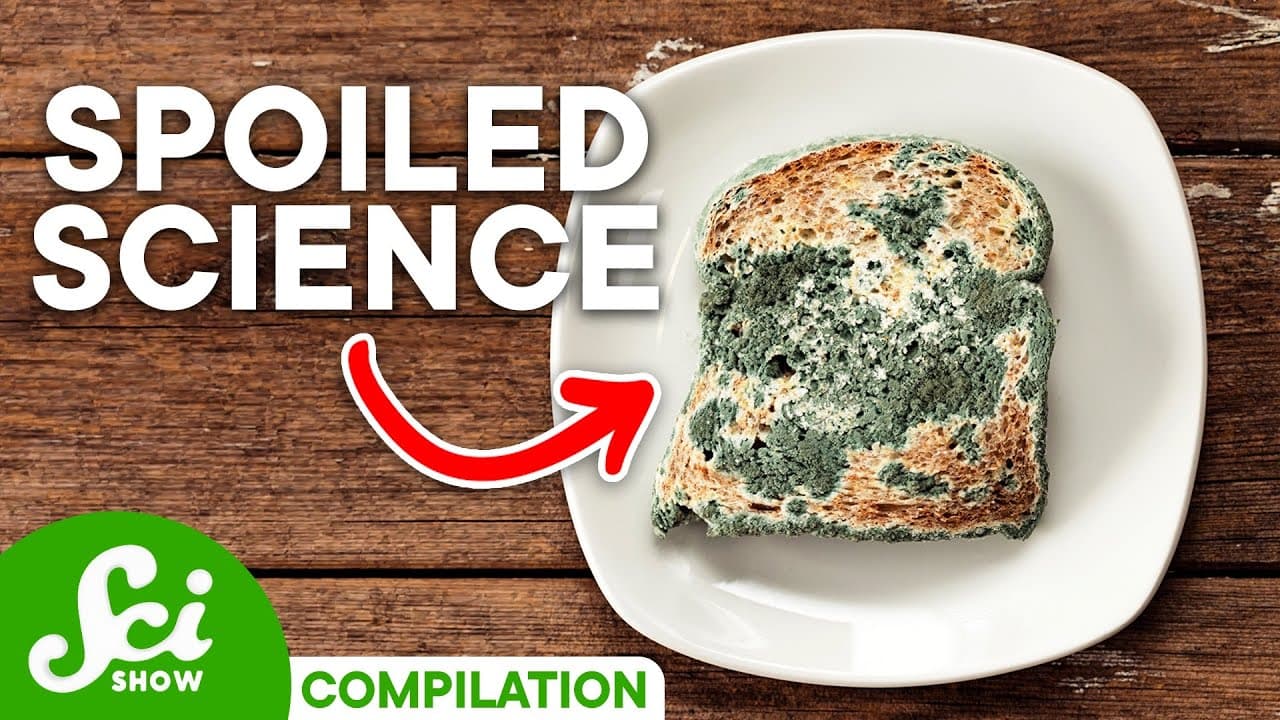
Mold and bacteria can spoil our food, leading to unpleasant odors, discoloration, and potential health risks. However, some foods can be preserved through fermentation, which promotes the growth of beneficial probiotic bacteria.
Transcript
this episode is sponsored by ground news a new website and app that lets you compare how major events are being covered head to ground.news scishow or click the link in the description to download the free app this time of year it's nice to sit around the table with loved ones but stay safe in the leftover haze that might be about to come and remem... Read More
Key Insights
- 😋 Mold can be found everywhere in the air, and when conditions are right, it can grow on our food.
- 🧑⚕️ Certain molds produce mycotoxins that can be harmful to our health, especially when found in grains and nuts.
- 🧀 Moldy cheeses, like blue cheese, are created intentionally with specific mold spores and are safe to eat.
- 😋 Food browning is a protective response by plants to slow down infection and involves the production of melanin.
- 💁 Fermentation, a form of controlled rotting, involves the conversion of sugars into lactic acid by beneficial probiotic bacteria.
- 😋 Fermented foods, such as yogurt and sauerkraut, can aid digestion and support gut health.
- 😋 Some animals, like horses and rats, have different mechanisms for dealing with potential toxins in food.
- 🦧 Turkey vultures have a highly acidic gut that helps them tolerate and digest decaying meat.
Install to Summarize YouTube Videos and Get Transcripts
Explore YouTube Video Summarizer or Get YouTube Transcript Extractor
Questions & Answers
Q: Why is it unsafe to eat moldy food?
Mold produces mycotoxins, poisonous chemicals that can contaminate food and lead to illness. Cutting away moldy parts may be safe for harder foods, but it is not recommended for soft cheeses, meats, and produce.
Q: Are all molds unsafe to eat?
No, some molds, such as those used in smelly cheeses like blue cheese, are safe and even intentional. These cheeses are created by introducing specific mold spores that break down organic molecules and impart unique flavors.
Q: How does fermentation prevent food spoilage?
Fermentation promotes the growth of beneficial probiotic bacteria, which convert sugars into lactic acid. This lowers the pH of the food, making it inhospitable for harmful bacteria and extending its shelf life.
Q: Can fermented foods aid digestion?
Yes, fermented foods contain live and active cultures of probiotic bacteria that help balance the gut microflora, improve nutrient absorption, and reduce bloating. They can support overall digestive health.
Summary & Key Takeaways
-
Mold, like all fungi, grows from microscopic spores that are present in the air. Mold prefers warm temperatures and can penetrate deep into food, making it unsafe to eat.
-
Mycotoxins, poisonous chemicals produced by certain molds, can contaminate food and survive even when the food is processed or cooked. Moldy cheeses, however, are safe to eat as they are intentionally made with specific mold spores.
-
When fruits and vegetables spoil, their cells release enzymes that interact with phenols, producing melanin and causing browning. This is a protective response by the plant to slow down infection.
-
Fermentation, a type of controlled rotting, converts sugars in food into lactic acid through the action of beneficial probiotic bacteria. Fermented foods, such as yogurt and sauerkraut, can aid digestion and support gut health.
Read in Other Languages (beta)
Share This Summary 📚
Summarize YouTube Videos and Get Video Transcripts with 1-Click
Try YouTube Summary with ChatGPT & Claude or YouTube Transcript Generator
Explore More Summaries from SciShow 📚


Summarize YouTube Videos and Get Video Transcripts with 1-Click
Try YouTube Summary with ChatGPT & Claude or YouTube Transcript Generator