Kakani Katija: Ocean Currents: Jellyfish & the Moon | Nat Geo Live
TL;DR
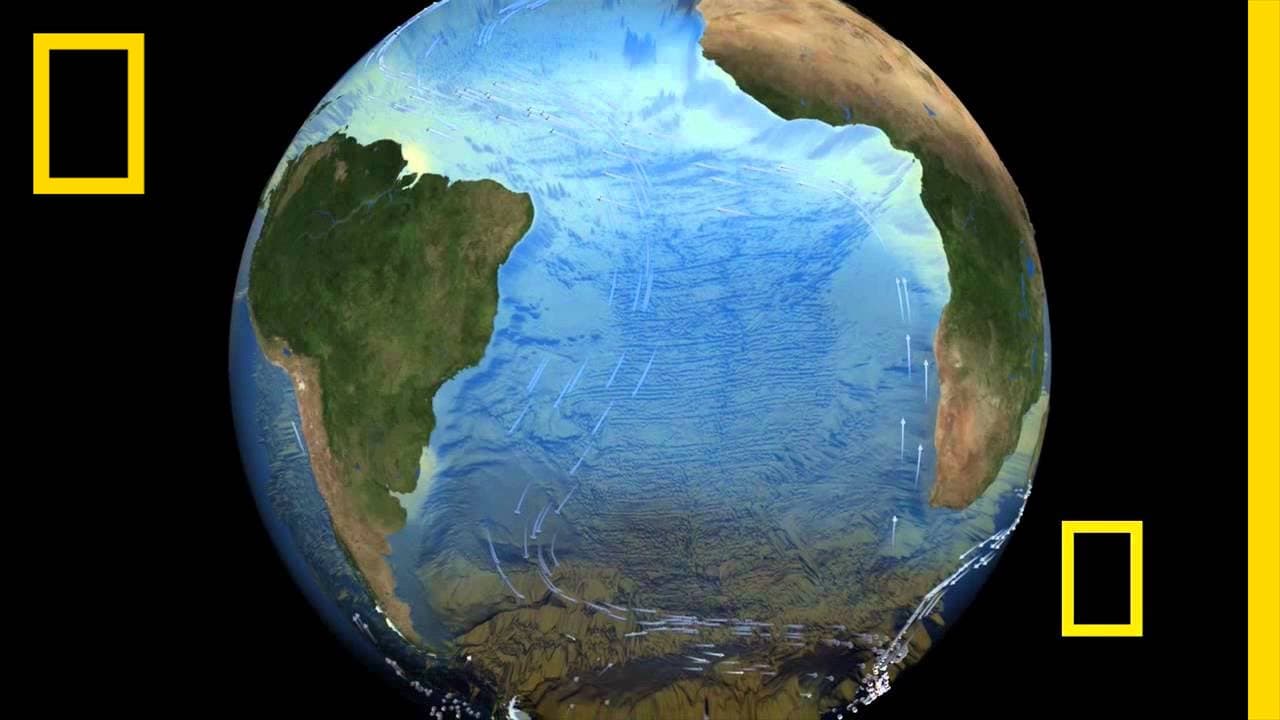
Can swimming animals contribute to mixing in the oceans, impacting the biology and physical aspects of our world? This video explores the potential influence and importance of swimming organisms.
Transcript
silia I'm not a marine scientist uh in fact I started my journey in science as an aerospace engineer and some of you might wonder uh did I get lost along the way you know um but in fact the ocean is the next Frontier um let me tell you a story about how my life had changed very quickly one day when my adviser in graduate school um John deir at Calt... Read More
Key Insights
- 🪼 The repetitive motion of jellyfish bell contractions generates forward motion and can be studied using fluid visualization techniques.
- 🚄 Laser and high-speed camera setups enable the measurement of fluid velocity and motion, providing insights into swimming efficiencies and energetic inputs.
- 👻 The self-contained underwater veloc symmetry apparatus (SCUVA) allows for portable and scalable velocity measurements in diverse underwater environments.
- 🏊 Swimming organisms, such as copepods and jellyfish, engage in daily vertical migrations that could impact ocean mixing and nutrient cycles.
- 🏊 The interaction between multiple disciplines, including biology, oceanography, ecology, and engineering, is crucial for understanding the interconnectedness of the oceans and the impact of swimming organisms.
- 🛩️ Removing apex predators or altering the migration patterns of small organisms could have significant ecological and physical consequences in marine ecosystems.
Install to Summarize YouTube Videos and Get Transcripts
Explore YouTube Video Summarizer or Get YouTube Transcript Extractor
Questions & Answers
Q: What is the significance of studying jellyfish swimming motion?
Studying the repetitive motion of jellyfish muscle contractions can provide insights into the energetic inputs, swimming efficiencies, and performance metrics that are relevant to engineered designs.
Q: How do scientists study fluid motion in the laboratory?
Scientists use techniques like dye visualization and particle tracking to measure the velocity and direction of fluid motion around swimming animals. Lasers and high-speed cameras are employed to capture and analyze consecutive images of fluid particle movements.
Q: How does the self-contained underwater veloc symmetry apparatus (SCUVA) work?
SCUVA is a consumer-based product that consists of a video camera housing, HID lights for illumination, and a laser housing. It allows a single scuba diver to swim to the target of interest and capture velocity measurements using lasers and cameras.
Q: What are the potential implications of swimming organisms on the oceans?
Swimming animals, through their mass migrations and mixing behaviors, can potentially contribute to the general circulation and energy maintenance of the oceans. Understanding their impact is vital for various fields, including oceanography, ecology, biology, and engineering.
Summary & Key Takeaways
-
The video discusses the study of jellyfish swimming and the interest in examining the motion of their bell and the contraction of their muscles.
-
A fluid mechanician develops techniques using lasers and high-speed cameras to measure the velocity of fluid due to animal swimming.
-
The video introduces the self-contained underwater veloc symmetry apparatus (SCUVA) as an innovative tool for conducting velocity measurements in the field.
Read in Other Languages (beta)
Share This Summary 📚
Summarize YouTube Videos and Get Video Transcripts with 1-Click
Try YouTube Summary with ChatGPT & Claude or YouTube Transcript Generator
Explore More Summaries from National Geographic 📚



Summarize YouTube Videos and Get Video Transcripts with 1-Click
Try YouTube Summary with ChatGPT & Claude or YouTube Transcript Generator