In Chad climate change is already a reality | Ways to Change the World
TL;DR
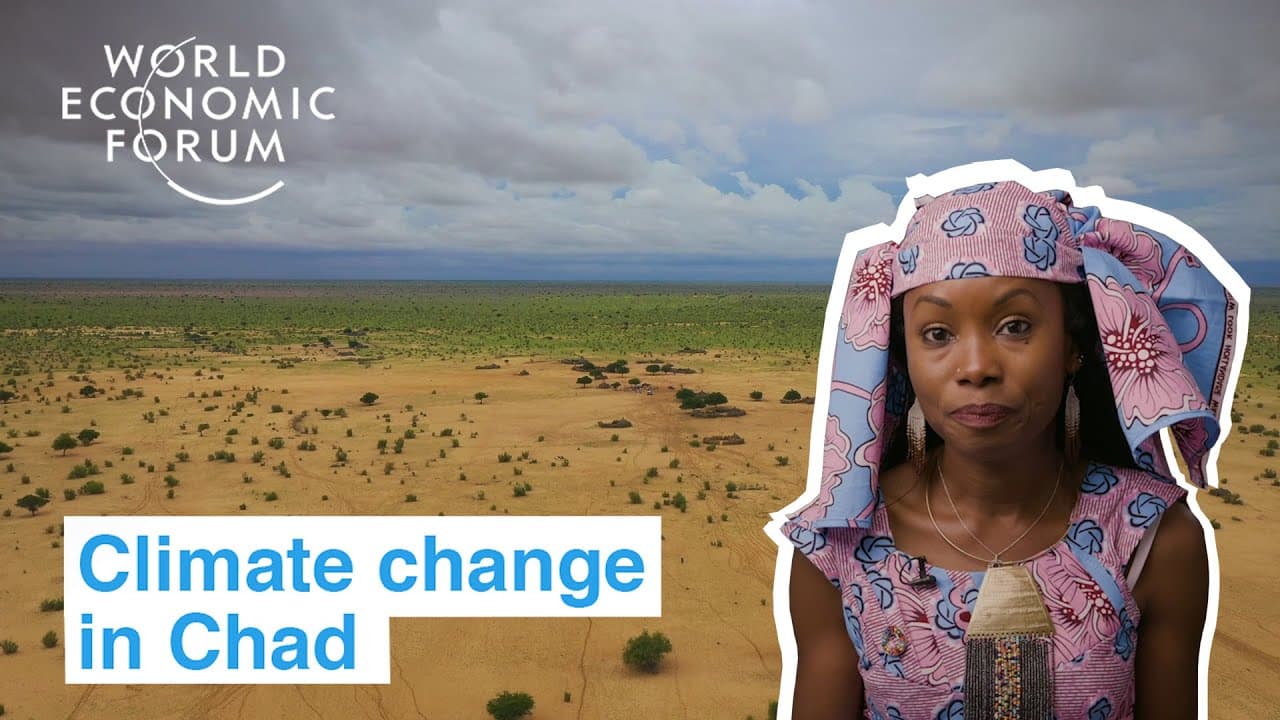
Climate change in the Sahel region is causing massive resource shrinkage, leading to conflicts, internal migration, and an unfair burden on women and children.
Transcript
I'm coming from Chad I'm a Barolo pastoralists community living in child who is in the middle of the Sahel you see exactly the climate impact by your eyes so best example ideas is the left child when I watch child the leg was about ten thousands lumetri squares and actually noun is about thousand and two hundred kilometer squares so 90% of the last... Read More
Key Insights
- 🥺 Climate change in the Sahel region has caused a severe shrinkage of resources, leading to conflicts among communities.
- 💦 Internal migration is a consequence of climate change, where people have to leave their villages to find work during the dry season.
- 😋 Women and children are burdened with taking on multiple roles to ensure survival and food security.
- ❓ Sahelian communities have become innovators, utilizing traditional knowledge and observing nature for solutions.
- ✊ The impact of climate change is an issue of survival, not just an economic or power issue.
- 🤙 Young people in Sahelian communities are also calling for action and justice to save their present lives.
- 🍂 The unfair burden of climate change falls on those who did not contribute to its creation.
Install to Summarize YouTube Videos and Get Transcripts
Explore YouTube Video Summarizer or Get YouTube Transcript Extractor
Questions & Answers
Q: How does climate change impact Sahelian communities in terms of resource availability?
Climate change has led to a drastic shrinkage of resources in the Sahel region, with 90% of grasslands disappearing. This has caused conflicts among communities struggling to access these diminishing resources.
Q: What are the effects of internal migration caused by climate change?
Internal migration has become a common phenomenon in Sahelian communities affected by climate change. During the dry season, many people have to leave their villages and seek employment in cities to support their families. If they are unable to find work, they may not return at all.
Q: Who is left behind during internal migration and how does it impact them?
Women and children are left behind during internal migration caused by climate change. They are forced to take on the roles of both men and women, ensuring food security and tending to crops. This burden on women and children has direct consequences on their wellbeing and social lives.
Q: How do Sahelian communities respond to climate change impacts?
Sahelian communities have become innovators in the face of climate change. They utilize indigenous traditional knowledge and observe solutions from nature to adapt and survive. They are actively seeking solutions to the climate crisis impacting their lives.
Summary & Key Takeaways
-
The Sahel region is experiencing significant climate impacts, with over 90% of grasslands disappearing, causing conflicts among communities for resources.
-
This has resulted in internal migration, where people have to leave their communities during the dry season to find jobs and support their families.
-
Women and children are left behind, taking on the roles of both men and women to ensure food security and survival.
Read in Other Languages (beta)
Share This Summary 📚
Summarize YouTube Videos and Get Video Transcripts with 1-Click
Try YouTube Summary with ChatGPT & Claude or YouTube Transcript Generator
Explore More Summaries from World Economic Forum 📚

Summarize YouTube Videos and Get Video Transcripts with 1-Click
Try YouTube Summary with ChatGPT & Claude or YouTube Transcript Generator