Where Does One Ocean End And Another Begin?
TL;DR
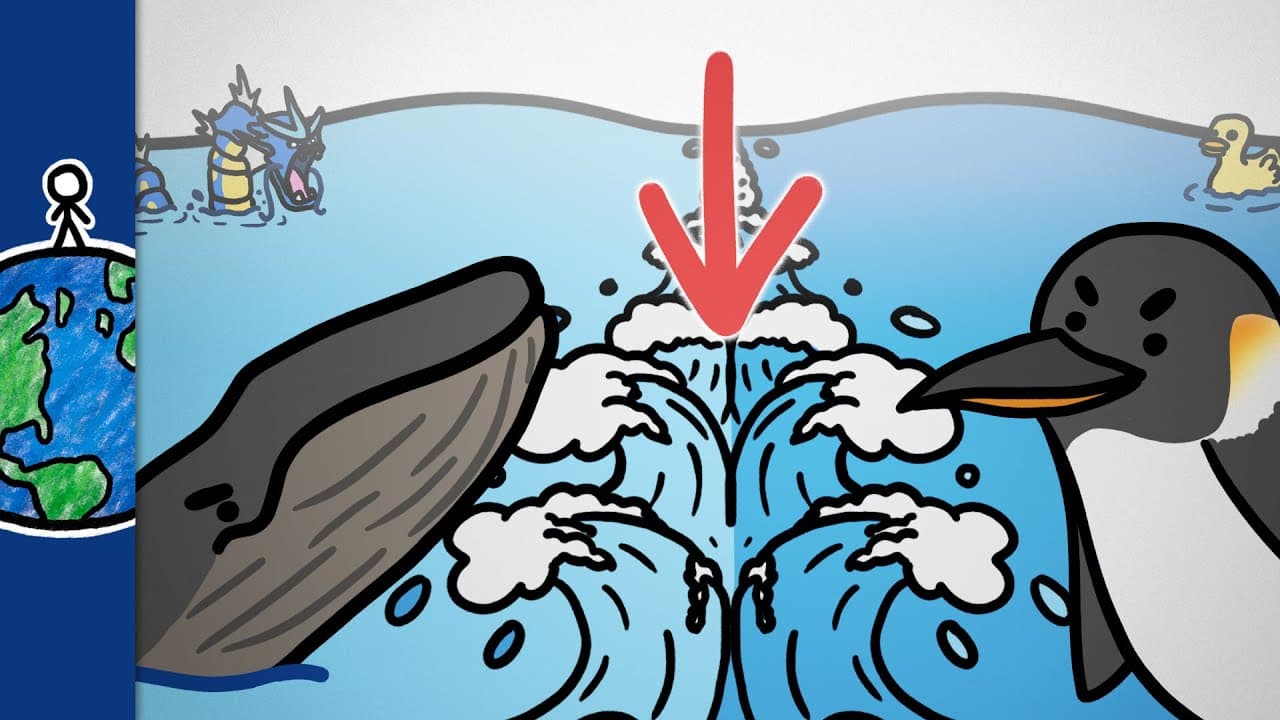
Earth's interconnected ocean water is traditionally divided into oceans based on subjective human perceptions, highlighting the need for a more scientifically accurate approach.
Transcript
Hi, this is Kate from MinuteEarth. Earth’s ocean water, all 140 million-ish square miles of it, is all interconnected - which becomes really clear when you look at the world like this. Technically our planet only has one ocean: the giant, not-so-creatively named “world ocean.” But that makes it hard to talk about different parts of the ocean on dif... Read More
Key Insights
- 🌊 Earth has one interconnected ocean, but has traditionally been divided into separate oceans using human perception and land boundaries.
- 🥳 Divisions based on land boundaries do not accurately represent the similarities and differences between different parts of the ocean.
- 💨 Scientific factors such as saltiness, currents, and geology offer more accurate ways to divide the ocean.
- ⚾ The Southern Ocean surrounding Antarctica is the only division that can be justified based on its distinct characteristics.
- 🔬 Brilliant is a problem-solving platform that offers interactive courses in science, computer science, and math.
- 🤗 Brilliant provides a hands-on approach to tackling complex problems, including a course on programming drones.
Install to Summarize YouTube Videos and Get Transcripts
Explore YouTube Video Summarizer or Get YouTube Transcript Extractor
Questions & Answers
Q: How did humans historically divide the ocean?
Humans divided the ocean based on their perceptions, such as clustering seafaring routes between certain areas, leading to the recognition of separate "oceans."
Q: Why do traditional divisions based on land boundaries not accurately reflect the ocean's nature?
The bit of water at the edge of one ocean is often similar to the bit of water in another ocean nearby, emphasizing the lack of meaningful distinctions between the oceans based on land boundaries.
Q: Are there alternative ways to divide the ocean based on scientific factors?
Yes, factors such as saltiness, currents, and geology provide more scientifically accurate ways to divide the ocean.
Q: Is there one specific area that can be justified as a separate ocean?
The water surrounding Antarctica, known as the Southern Ocean, stands out as fundamentally different from its neighboring waters, making it a justifiable separate ocean.
Summary & Key Takeaways
-
Earth's ocean water is interconnected, forming one giant ocean known as the "world ocean."
-
Historically, humans have divided the ocean based on their own perceptions, leading to the recognition of four big oceans outlined by land.
-
The traditional divisions based on land boundaries do not accurately reflect the similarities and differences between different parts of the ocean.
Read in Other Languages (beta)
Share This Summary 📚
Summarize YouTube Videos and Get Video Transcripts with 1-Click
Try YouTube Summary with ChatGPT & Claude or YouTube Transcript Generator
Explore More Summaries from MinuteEarth 📚


Summarize YouTube Videos and Get Video Transcripts with 1-Click
Try YouTube Summary with ChatGPT & Claude or YouTube Transcript Generator