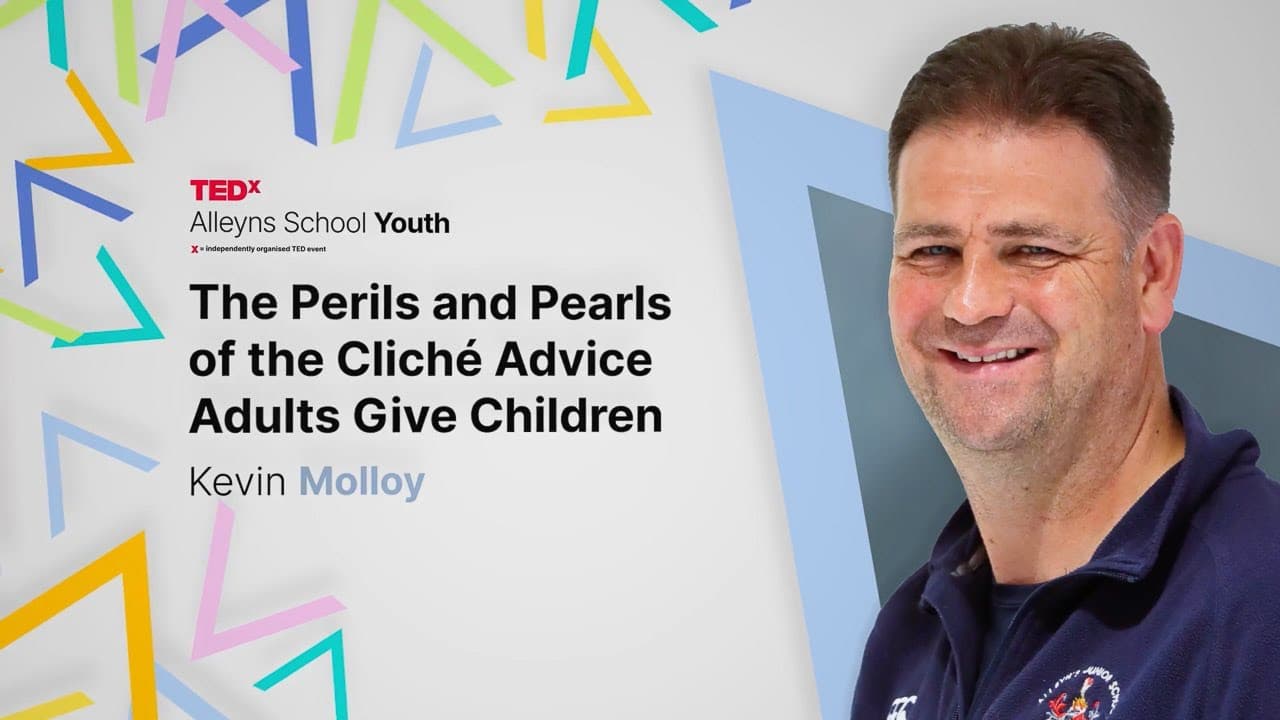
Perils and Pearls of Cliche Advice Adults Give Children | Kevin Molloy | TEDxAlleyns School Youth
TL;DR
Cliché advice can provide wisdom, but it's important to analyze and personalize it for your own circumstances.
Transcript
[Applause] good afternoon so I have worked as a director of sport in schools for over 20 years and as you can imagine in that time I have seen lots of adults giving lots of children lots of advice and dare I say quite a lot of it can be what I would term cliche advice the cliche and what I want you to think about in the next few minutes are some of... Read More
Key Insights
- ❓ Cliché advice can contain wisdom, but it's crucial to analyze its applicability and context.
- ❓ Limitations exist, and not everyone can achieve anything, but great things are still possible.
- 💱 Perseverance should be tempered with the ability to recognize when a change of direction is necessary.
- 👋 "Trying your best" should encompass giving everything you have, even if it requires sacrifices.
- 👾 While sports may be "only a game," the emotions and dedication invested can make it feel more significant.
- 🗯️ The perspective of adults is not always right, and finding a middle ground between their advice and personal interpretation is essential.
Install to Summarize YouTube Videos and Get Transcripts
Explore YouTube Video Summarizer or Get YouTube Transcript Extractor
Questions & Answers
Q: Why does the speaker question the cliché "you can achieve anything"?
The speaker explains that while one can do great things, achieving anything is not possible. He uses the example of Usain Bolt's speed, emphasizing that some limitations are insurmountable.
Q: How does the speaker challenge the cliché of "never give up"?
The speaker shares his personal experience of being cut from a football team due to his lack of speed. He emphasizes that he didn't give up, but he identified when a change of direction was necessary, illustrating the nuance of perseverance.
Q: What does the speaker believe about "you can only try your best"?
While acknowledging the truth in this cliché, the speaker expresses his disagreement with the notion that "trying your best" is limited to moderate effort. He encourages giving everything you have, even if it requires sacrifices, to truly embody your best.
Q: Why does the cliché "it's only a game" bother the speaker?
The speaker acknowledges that while it may be true that sports are "only a game," for those who have dedicated their time and effort, it can feel like much more. He encourages both young people and adults to acknowledge and respect those emotions.
Q: What is the speaker's perspective on the cliché "the adult is always right"?
The speaker observes that in youth sports, adults often shout loudly, but the truth often lies somewhere in between. He emphasizes the importance of finding a balance between the advice of others and personal interpretation.
Summary & Key Takeaways
-
The speaker reflects on the clichés often given to children, highlighting the potential wisdom behind them but also the need for critical thinking.
-
He explores five sporting clichés and delves into their limitations: "you can achieve anything," "never give up," "you can only try your best," "it's only a game," and "the adult is always right."
-
The speaker encourages listeners to find their own interpretation and understanding of the advice they receive, in order to achieve a fulfilling life.
Read in Other Languages (beta)
Share This Summary 📚
Summarize YouTube Videos and Get Video Transcripts with 1-Click
Try YouTube Summary with ChatGPT & Claude or YouTube Transcript Generator
Explore More Summaries from TEDx Talks 📚




Summarize YouTube Videos and Get Video Transcripts with 1-Click
Try YouTube Summary with ChatGPT & Claude or YouTube Transcript Generator