Intelligence requires a biological brain | Lee Cronin and Lex Fridman
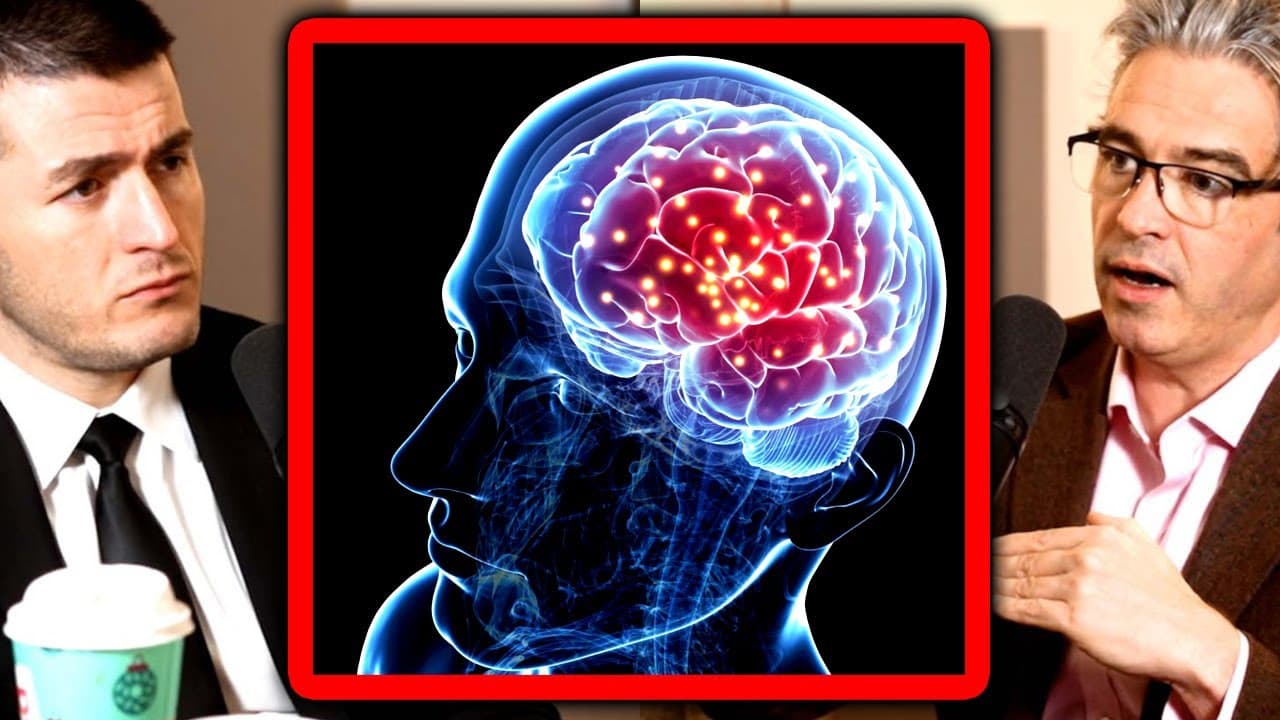
TL;DR
Chemical brains may offer a pathway to achieve conscious AI by replicating the connectivity and information processing abilities of the human brain.
Transcript
you've mentioned that uh what you call it kakina yeah yeah so you've mentioned that a a chemical brain is something you're interesting creating and uh that's a way to get conscious AI soon can you explain what a chemical brain is I want to understand the mechanism of intelligence that's gone through Evolution right cuz the way that the way that um ... Read More
Key Insights
- 🧠 Chemical brains offer a potential solution to achieving conscious AI by replicating the connectivity and information processing abilities of the human brain.
- 👻 Human intelligence allows for the synthesis of knowledge across domains, enabling true completeness and novelty.
- 🖤 Current AI systems lack the flexibility and integration abilities of human intelligence, highlighting the need for advancements in hardware architectures.
- ❓ The limitations of AI systems in generating universal explanations and true novelty demonstrate the unique capabilities of human intelligence.
- 😫 AI systems, while impressive, are still dependent on training data and struggle to produce outputs that are truly beyond their training set.
Install to Summarize YouTube Videos and Get Transcripts
Explore YouTube Video Summarizer or Get YouTube Transcript Extractor
Questions & Answers
Q: What is a chemical brain and how does it relate to the mechanism of intelligence?
A chemical brain refers to replicating the connectivity and information processing abilities of the human brain in a gel-like substance. It aims to understand and replicate the mechanism through which intelligence evolved.
Q: What is the main difference between human intelligence and AI systems?
Human intelligence has the ability to integrate information across domains, synthesize knowledge, and generate true novelty. AI systems, while impressive, currently lack universal explanations and have limitations in producing truly novel insights.
Q: Can current AI systems produce novel outputs?
Current AI systems can produce outputs that are in a shallow sense novel, but they are ultimately constrained by their training data. True novelty, as achieved by human intelligence, is still beyond the capabilities of AI systems.
Q: How can chemical brains contribute to the development of AI?
Chemical brains have the potential to process vast amounts of information and train models more efficiently, utilizing cross-domain knowledge. They may provide insights into the fundamental nature of time and the ability to generate true novelty.
Summary & Key Takeaways
-
Chemical brains, referring to the replication of the human brain's abilities in a wet gel-like substance, are a potential avenue for creating conscious AI.
-
Current AI technologies, while advanced, lack the domain flexibility and integration abilities of human intelligence.
-
Human intelligence allows for the synthesis of knowledge across domains, generating novelty and true completeness, which current AI systems struggle to achieve.
Read in Other Languages (beta)
Share This Summary 📚
Summarize YouTube Videos and Get Video Transcripts with 1-Click
Try YouTube Summary with ChatGPT & Claude or YouTube Transcript Generator
Explore More Summaries from Lex Clips 📚




Summarize YouTube Videos and Get Video Transcripts with 1-Click
Try YouTube Summary with ChatGPT & Claude or YouTube Transcript Generator