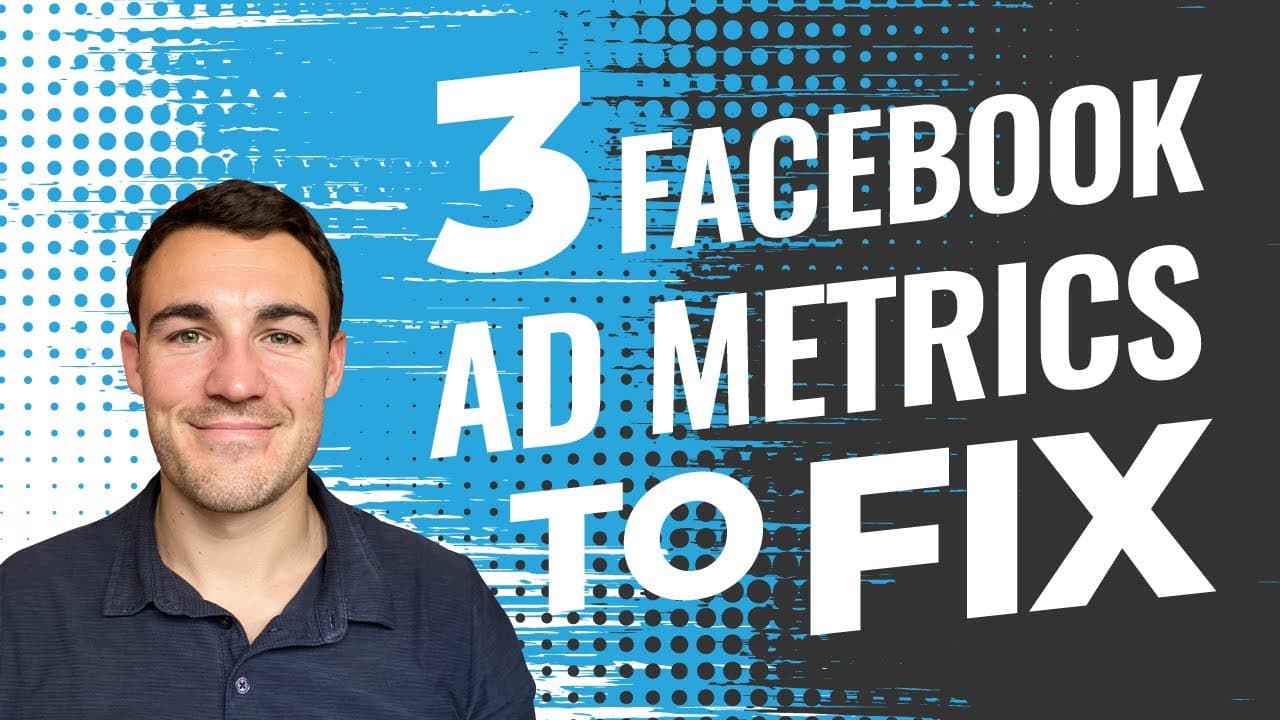
3 Facebook Ad Metrics To FIX If Your Ads Are Failing!
TL;DR
Identify and fix key metrics to improve Facebook ads.
Transcript
hi guys it's ben heath from lead guru and in this video i'm going to talk about three metrics that you need to fix if your facebook ad campaigns are failing to show you in this video how to diagnose where the issue may be in your facebook ad campaigns and how to go about fixing that issue once you've found it before i get into the next one i really... Read More
Key Insights
- CPM (Cost Per Thousand Impressions) is a crucial metric to analyze when Facebook ads are underperforming. High CPMs might indicate targeting an expensive audience, and adjusting the audience size or location can help reduce costs.
- Cost Per Click (CPC) is another vital metric. A high CPC might suggest issues with the ad creative or offer. Revising the ad content, format, or offer can potentially lower CPC and improve engagement.
- A low conversion rate from clicks to leads or purchases indicates potential issues with the landing page or website. Enhancing the landing page's design, speed, and clarity can significantly boost conversion rates.
- Benchmarking against industry standards for CPM and CPC is essential. Different industries have varying average costs, and understanding these can guide better campaign adjustments.
- Larger audience sizes generally lead to lower CPMs. Expanding targeting criteria, such as age ranges or geographic locations, can help achieve this.
- The offer's appeal is critical in determining the ad's success. Testing different offers can reveal what resonates best with the audience and drives more conversions.
- Analyzing link click-through rates (CTR) provides insights into ad effectiveness. A low CTR suggests the need for more engaging creatives or clearer messaging.
- Regularly reviewing and adjusting Facebook ad strategies based on these metrics can lead to improved performance and better return on investment.
Install to Summarize YouTube Videos and Get Transcripts
Explore YouTube Video Summarizer or Get YouTube Transcript Extractor
Questions & Answers
Q: What is the first metric to check if Facebook ads are failing?
The first metric to check is CPM (Cost Per Thousand Impressions). It helps determine how expensive it is to reach your audience. High CPMs could indicate targeting an expensive audience, and adjusting audience size or location can help in reducing costs and improving ad performance.
Q: How can a high CPC affect Facebook ad performance?
A high CPC (Cost Per Click) can indicate that the ad is not engaging enough or the offer is not appealing. This results in fewer clicks and higher costs. To address this, advertisers should revise ad creatives, improve messaging, or test different offers to make the ad more compelling and attract more clicks at a lower cost.
Q: What role does conversion rate play in Facebook ad success?
Conversion rate measures how many clicks convert into leads or purchases. A low conversion rate suggests potential issues with the landing page or website, such as design flaws or slow loading times. By enhancing the landing page's clarity and functionality, advertisers can significantly improve conversion rates and overall ad success.
Q: How can advertisers lower their CPM?
Advertisers can lower their CPM by expanding their audience size. This can be done by broadening targeting criteria, such as including more age ranges, geographic locations, or interests. Larger audiences generally lead to lower CPMs as they reduce competition and make it cheaper to reach more people.
Q: Why is benchmarking against industry standards important?
Benchmarking against industry standards is important because it provides a reference point for evaluating ad performance. Different industries have varying average costs for CPM and CPC. Understanding these benchmarks helps advertisers set realistic goals, identify areas for improvement, and make informed adjustments to their campaigns.
Q: What impact does the offer have on Facebook ad performance?
The offer is critical in determining an ad's success. An appealing offer can significantly increase engagement and conversions. Testing different offers helps advertisers understand what resonates best with their audience, allowing them to refine their strategy and improve overall ad performance.
Q: What does a low CTR indicate in Facebook ads?
A low CTR (Click-Through Rate) indicates that the ad is not engaging enough for the audience. This could be due to unappealing creatives or unclear messaging. To improve CTR, advertisers should focus on creating more engaging and visually appealing ads with clear and compelling calls to action.
Q: How often should Facebook ad strategies be reviewed?
Facebook ad strategies should be reviewed regularly to ensure optimal performance. Analyzing key metrics like CPM, CPC, and conversion rates allows advertisers to identify issues and make necessary adjustments. Regular reviews help maintain effective campaigns and achieve better returns on investment by adapting to changing market conditions and audience behavior.
Summary & Key Takeaways
-
The video discusses three crucial Facebook ad metrics to focus on when campaigns are not performing well: CPM, CPC, and conversion rates. By analyzing these metrics, advertisers can diagnose issues and make targeted adjustments to improve ad performance.
-
CPM measures the cost of reaching a thousand impressions and can vary significantly by industry and audience. High CPMs might necessitate targeting adjustments to reduce costs and improve ad efficiency.
-
CPC indicates the cost of each click on an ad. A high CPC suggests potential issues with ad creatives or offers, necessitating revisions to enhance engagement and lower costs.
Read in Other Languages (beta)
Share This Summary 📚
Summarize YouTube Videos and Get Video Transcripts with 1-Click
Try YouTube Summary with ChatGPT & Claude or YouTube Transcript Generator
Explore More Summaries from Ben Heath 📚
Summarize YouTube Videos and Get Video Transcripts with 1-Click
Try YouTube Summary with ChatGPT & Claude or YouTube Transcript Generator