The SEVEN Ahrof & the TEN Qira'aat of Quran - EXPLAINED! - Arabic101
TL;DR
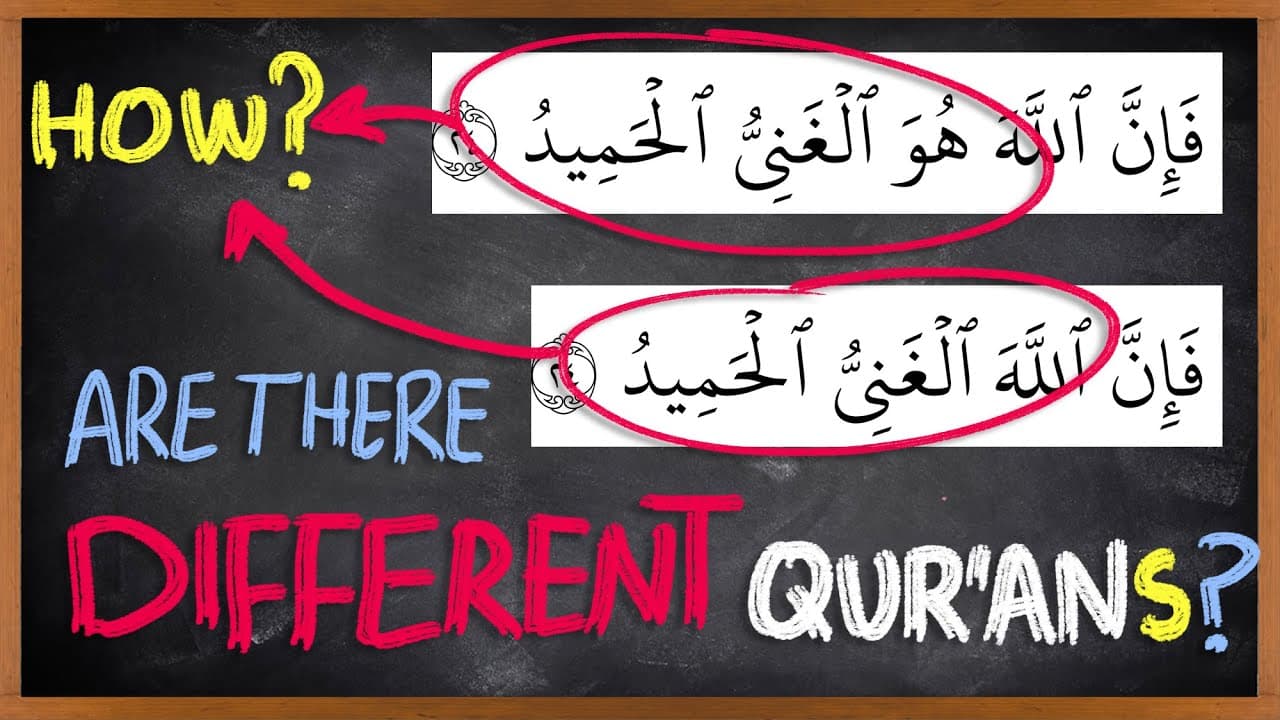
The Holy Quran was revealed in seven variations to accommodate different Arabic dialects and provide enriched meanings.
Transcript
do you write color like this or like that do you say privacy or privacy garage or garage obviously this is all correct English and these are but variations with the exact same meaning English is naturally not the only language that contains variations like these Arabic as well has different variations depending on where the language which is spoken... Read More
Key Insights
- 🕖 The Quran's seven variations facilitate its recitation across different Arabic dialects, making it accessible to diverse audiences.
- ❓ Each variation contributes a unique dimension to the text, offering enriched meanings and deepening comprehension without contradictions.
- 🛟 The ahruf demonstrate the dynamic nature of language, showcasing how minor changes in pronunciation can affect understanding while preserving the original message.
- 🔄 Knowledge of the Quran's variations is essential for countering misconceptions about its authenticity and integrity.
- 💨 The established rules of recitation are rooted in tradition, emphasizing the importance of adhering to the ways laid out by Prophet Muhammad.
- 😀 Resources for Quranic study are abundant, with websites and apps available to explore different recitation techniques and their meanings.
- 🆘 Understanding the significance of variations helps in appreciating the Quran's divine message and responding to criticism regarding textual consistency.
Install to Summarize YouTube Videos and Get Transcripts
Explore YouTube Video Summarizer or Get YouTube Transcript Extractor
Questions & Answers
Q: What are "ahruf" in the context of the Holy Quran?
"Ahruf" refers to the seven variations in the recitation of the Holy Quran. These variations arose due to the diverse dialects spoken at the time of the Quran's revelation. Each variation corresponds to distinct dialectical pronunciations and grammatical structures, ensuring that the message of the Quran is accessible to a wider audience.
Q: Why do the variations in the Quran exist?
Variations exist primarily for three reasons: to make it easier for people from different dialect backgrounds to recite the Quran, to add a deeper meaning to the text without contradiction, and to present a consistent challenge to non-believers. These variations highlight the richness of the Arabic language while maintaining the integrity of the Quran's message.
Q: How do the variations in the Quran enrich its meaning?
Variations can introduce slight differences in meaning that enhance the overall message. For example, a word might be understood as "killed" in one variation and as "fought" in another, both enriching the context of martyrdom in Islam. This layered meaning showcases the Quran's depth without altering its core message.
Q: Can modern dialects of Arabic be used when reading the Quran?
No, contemporary dialects should not be used to read the Quran. Although modern variations may change pronunciation significantly, they could lead to misunderstandings and shifts in meaning, which is unacceptable. The Quran must be recited in the established forms to preserve its divine message and integrity.
Q: What resources are available for learning about Quranic variations?
Several resources can help in learning about Quranic variations, such as the website nan.com, which allows users to compare different recitations, and Quran flash.com, providing access to various mushafs and their variations. There's also a mobile app named Bridges translation that offers insights into biblical variations.
Q: Should beginners learn about the variations in the Quran?
Yes and no. Beginners should understand that the Quran was revealed in various forms and that these variations play a vital role in its interpretation. However, it's advisable for them to focus on mastering one mode at first before exploring the more intricate aspects of the variations.
Summary & Key Takeaways
-
The Quran contains seven variations, known as "ahruf," which accommodate different Arabic dialects to facilitate understanding and recitation.
-
Variations in the Quran can clarify meanings, enrich the text, and provide consistent challenges to readers, reinforcing its miraculous nature.
-
Understanding these variations is essential for appreciating the Quran's integrity and addressing misconceptions about its textual consistency.
Read in Other Languages (beta)
Share This Summary 📚
Summarize YouTube Videos and Get Video Transcripts with 1-Click
Try YouTube Summary with ChatGPT & Claude or YouTube Transcript Generator
Explore More Summaries from Arabic 101 📚

Summarize YouTube Videos and Get Video Transcripts with 1-Click
Try YouTube Summary with ChatGPT & Claude or YouTube Transcript Generator