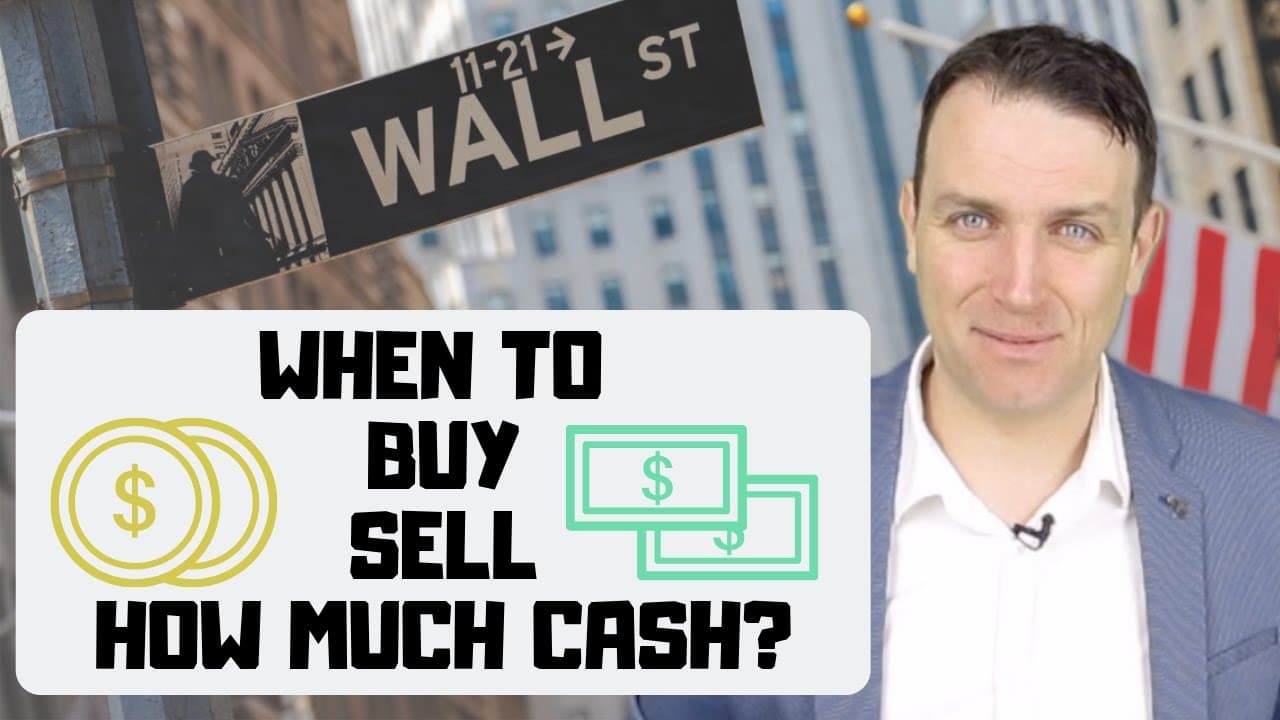
When To Buy A Stock - How Much Cash - When To Sell A Stock
TL;DR
Learn the key principles of value investing, including buying at a low-risk high-reward "sweet spot," holding cash for opportunities, and evaluating risk and reward when deciding to sell.
Transcript
good day fellow investors we continue with our value investing schools and today we will discuss the questions that plague all investors when to buy a stock how much to buy of that stock how much cash to have what is the best cash portfolio exposure on what that depends and then when to sell a stock so when to buy how much cash to have and when to ... Read More
Key Insights
- ❓ Value investing requires patience and the ability to say no to most investment opportunities.
- ✋ The "sweet spot" for buying stocks is when they are undervalued and offer high potential returns.
- 🥹 Holding cash allows investors to seize opportunities that meet their investment criteria.
- 🥹 The amount of cash to hold depends on the investor's risk tolerance and market conditions.
- ✳️ Evaluating risk and reward helps determine when to sell an investment.
- 😘 Value investors aim for steady, sustainable, low-risk returns, rather than short-term gains.
- 🤩 Seth Klarman's margin of safety principle is key in value investing.
Install to Summarize YouTube Videos and Get Transcripts
Explore YouTube Video Summarizer or Get YouTube Transcript Extractor
Questions & Answers
Q: What does it mean to buy a stock at a "sweet spot" for a value investor?
The "sweet spot" refers to a low-risk high-reward investment opportunity where the stock is undervalued and has the potential for significant returns. It requires patience and research to identify such opportunities.
Q: How much cash should investors hold and why?
The amount of cash to hold depends on the opportunities available. If suitable investments cannot be found, it is better to hold cash and wait for better opportunities rather than settling for lower returns.
Q: How does evaluating risk and reward influence the decision to sell?
When the risk of an investment increases or the potential returns diminish, it may be wise to sell. Comparing the risk and reward of the investment to other opportunities helps determine if it is still a favorable investment.
Q: How can individual investors apply value investing principles to their own portfolios?
Individual investors can focus on finding stocks with a margin of safety and a suitable risk-reward ratio. By being patient, conducting thorough research, and comparing investment options, they can make informed decisions on when to buy and sell.
Summary & Key Takeaways
-
Value investing involves waiting for the right opportunity to buy stocks, focusing on low-risk high-reward investments.
-
Purchasing stocks below their intrinsic value provides a margin of safety and increases potential upside.
-
Holding cash and patiently waiting for opportunities is essential, with the amount of cash dependent on market conditions.
-
When deciding to sell, consider the risk and reward of the investment while comparing it to other opportunities.
Read in Other Languages (beta)
Share This Summary 📚
Summarize YouTube Videos and Get Video Transcripts with 1-Click
Try YouTube Summary with ChatGPT & Claude or YouTube Transcript Generator
Explore More Summaries from Value Investing with Sven Carlin, Ph.D. 📚





Summarize YouTube Videos and Get Video Transcripts with 1-Click
Try YouTube Summary with ChatGPT & Claude or YouTube Transcript Generator