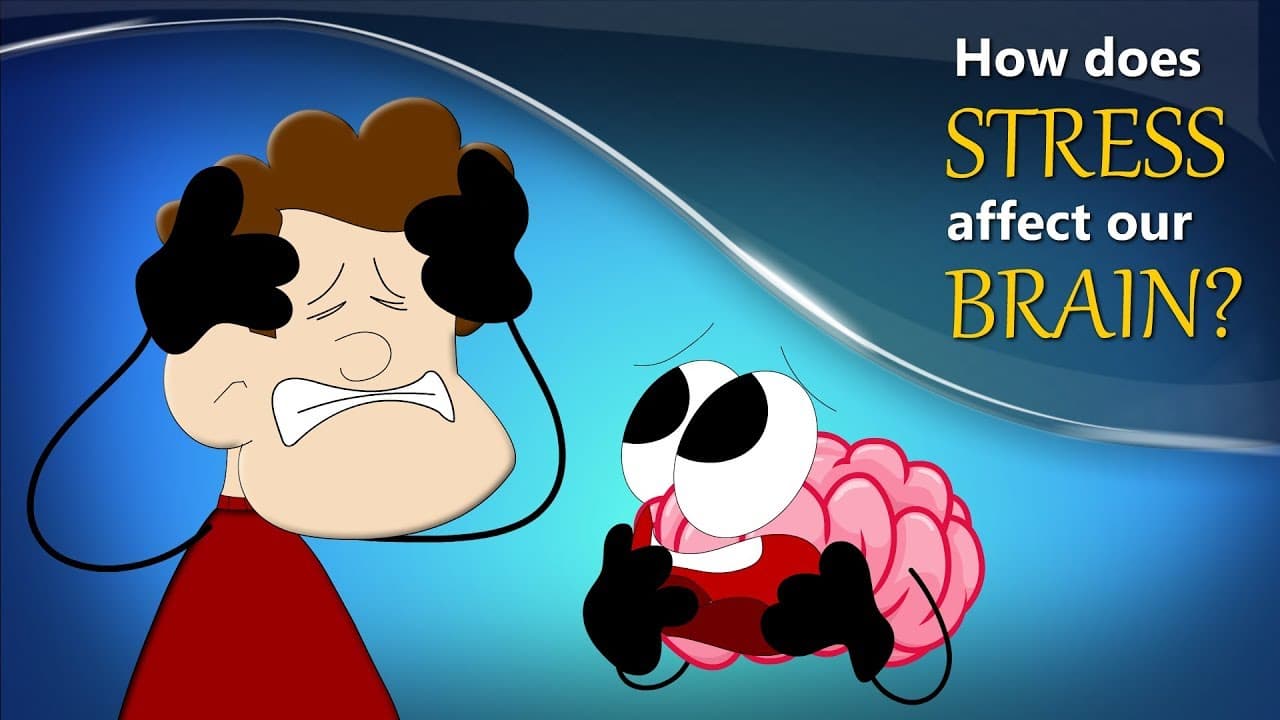
How does Stress affect our Brain? + more videos | #aumsum #kids #science #education #children
TL;DR
Stress can have both positive and negative effects on the brain, with short-term stress activating the body's stress response system, while chronic stress can lead to a loss of synapses, shrinkage of the prefrontal cortex, and decreased neuronal growth in the hippocampus.
Transcript
It's AumSum Time. How does Stress affect our Brain? Just like lollipops affect my tongue. Ohh listen. It turns out that short-term stress is actually a good thing. When we get stressed, the fear center of our brain called amygdala. Activates the Hypothalamus Pituitary Adrenal Axis. This is our central stress system. Which releases hormones and prep... Read More
Key Insights
- 🍉 Short-term stress activates the body's natural stress response, preparing it for emergency situations.
- 💁 Chronic stress can result in a gradual loss of synapses, hindering information processing and recall.
- 🥺 Excessive cortisol levels can lead to the shrinkage of the prefrontal cortex, impacting social behavior and decision-making abilities.
- ❓ Chronic stress may inhibit neuronal growth in the hippocampus, impairing learning and memory.
- 😨 Managing chronic stress through self-care and social support can help mitigate its negative effects on the brain.
- 🧠 Taking breaks and engaging in stress-reducing activities can be beneficial for brain health.
- 🧠 The brain's ability to adapt is known as neuroplasticity, which can be affected by chronic stress.
Install to Summarize YouTube Videos and Get Transcripts
Explore YouTube Video Summarizer or Get YouTube Transcript Extractor
Questions & Answers
Q: How does short-term stress affect our brain?
Short-term stress activates the amygdala, which triggers the release of hormones through the Hypothalamus Pituitary Adrenal Axis. This prepares our body for a fight-or-flight response, enhancing alertness and focus.
Q: What are the negative effects of chronic stress on the brain?
Chronic stress can lead to a gradual loss of synapses, impairing information processing and recall. It can also shrink the prefrontal cortex, reducing social interaction and decision-making abilities. Additionally, chronic stress may inhibit the growth of neurons in the hippocampus, impacting learning and memory.
Q: How does cortisol contribute to the negative effects of stress?
Cortisol, a stress hormone, is believed to be responsible for the loss of synapses in the brain. High levels of cortisol can contribute to a gradual decline in the brain's ability to process and recollect information effectively.
Q: Can chronic stress permanently damage the brain?
While chronic stress can have detrimental effects on the brain, it is not necessarily irreversible. Practices such as stress management, self-care, and seeking social support can aid in reducing the negative impact of chronic stress on the brain.
Summary & Key Takeaways
-
Short-term stress activates the brain's fear center, releasing hormones that prepare the body for fight or flight.
-
Chronic stress can lead to a gradual loss of synapses, which are important for processing and recalling information.
-
Excessive cortisol, a stress hormone, can shrink the prefrontal cortex and hinder social behavior and decision-making.
-
Chronic stress may also inhibit the growth of neurons in the hippocampus, impairing learning and memory.
Read in Other Languages (beta)
Share This Summary 📚
Summarize YouTube Videos and Get Video Transcripts with 1-Click
Try YouTube Summary with ChatGPT & Claude or YouTube Transcript Generator
Explore More Summaries from It's AumSum Time 📚






Summarize YouTube Videos and Get Video Transcripts with 1-Click
Try YouTube Summary with ChatGPT & Claude or YouTube Transcript Generator