What Are Whole Numbers, Integers, and the Number Line?
TL;DR
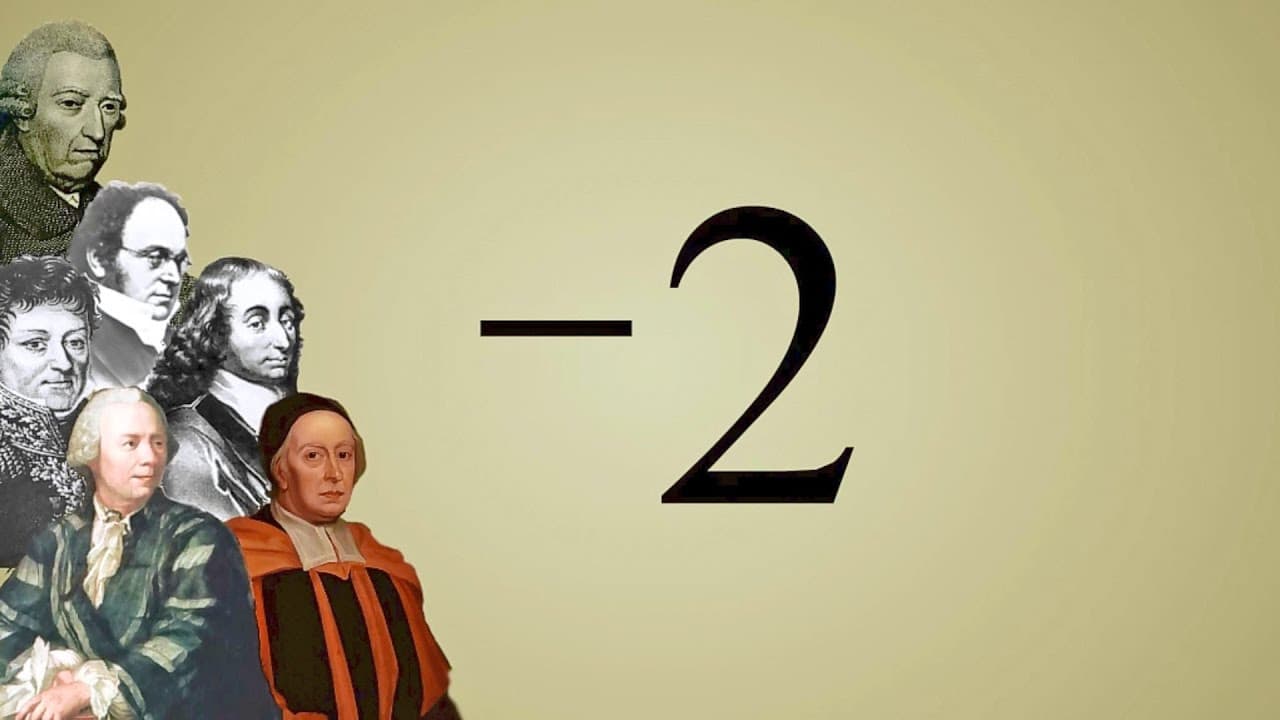
Whole numbers include zero and positive counting numbers, while integers expand this to include negative numbers. Whole numbers are closed under addition but not subtraction, meaning subtracting a larger whole number from a smaller one results in no whole number. Understanding these concepts is essential for visualizing numbers as distances on a number line.
Transcript
Hello. I’m Professor Von Schmohawk and welcome to Why U. For tens of thousands of years, people invented different ways of counting things. Things such as gazelles or coconuts or people or days. In mathematics, the counting numbers are called “natural numbers”. Natural numbers start with one. There is no limit to the largest natural number. Natural... Read More
Key Insights
- #️⃣ Natural numbers are counting numbers starting from one, while whole numbers include zero.
- #️⃣ The inclusion of zero in the number system became necessary when positional notation was invented.
- 🪜 Zero is the additive identity, and adding it to any number does not change its value.
- #️⃣ Integers include negative numbers and can be represented on a number line to indicate both distance and direction.
- #️⃣ Whole numbers are closed under addition but not subtraction unless negative numbers are included.
- 🤢 Negative numbers can represent real-world scenarios such as debt or below sea level altitudes.
- 😚 Integers are closed under both addition and subtraction, allowing representation of the result of any addition or subtraction operation.
Install to Summarize YouTube Videos and Get Transcripts
Explore YouTube Video Summarizer or Get YouTube Transcript Extractor
Questions & Answers
Q: Why was it originally unnecessary to include zero in counting numbers?
Zero was not originally included in counting numbers because it seemed pointless to invent a number for "no things". However, it became necessary as a placeholder when positional notation was invented.
Q: What is the unique property of zero in mathematical operations?
Zero is the additive identity, meaning that when you add zero to any number, the value of that number remains unchanged.
Q: How are whole numbers represented on a number line?
Whole numbers can be represented as points on a number line, with zero at the origin and every whole number corresponding to a multiple of the unit distance.
Q: Are the whole numbers closed under subtraction?
No, the whole numbers are not closed under subtraction because when subtracting a larger whole number from a smaller whole number, a negative number would be needed to represent the result, which is not included in the whole numbers.
Summary & Key Takeaways
-
Natural numbers are used for counting and do not include zero, while whole numbers include zero.
-
Zero was needed as a placeholder in positional notation, leading to its inclusion in the number system.
-
Integers, which include negative numbers, represent distance and direction on a number line.
Read in Other Languages (beta)
Share This Summary 📚
Summarize YouTube Videos and Get Video Transcripts with 1-Click
Try YouTube Summary with ChatGPT & Claude or YouTube Transcript Generator
Explore More Summaries from MyWhyU 📚


Summarize YouTube Videos and Get Video Transcripts with 1-Click
Try YouTube Summary with ChatGPT & Claude or YouTube Transcript Generator