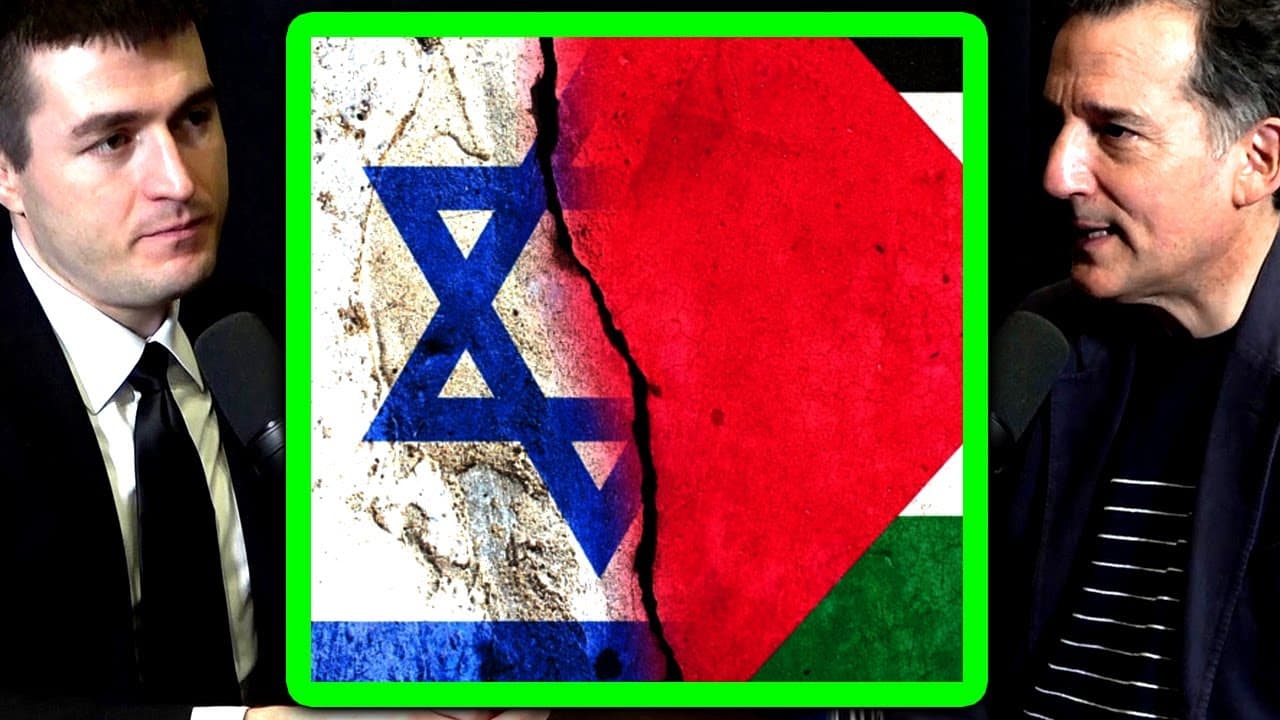
Israel-Palestine: Will we ever see peace in the Middle East? | David Wolpe and Lex Fridman
TL;DR
Despite the complexities surrounding the Israel-Palestine conflict, there is optimism that economic interests can override ideology and pave the way for peace and collaboration in the Middle East.
Transcript
what do you think about The long-running Saga of Israel and Palestine will we ever see peace in that part of the Middle East well since I'm an optimist about human um look I I mean I have many many thoughts about I'm a very very strong supporter of Israel uh and uh and I also feel really for the plight of the Palestinians I think that they're you k... Read More
Key Insights
- ✌️ Israel's peace agreements with Egypt, Jordan, and other Arab nations show a willingness to seek peaceful resolutions.
- 🔇 The speaker believes the Israel-Palestine conflict stems from a clash of legitimate narratives that cannot be easily resolved.
- ✌️ Economics overriding ideology has been a catalyst for peace in the Middle East.
- ✊ The speaker's visit to Dubai highlights the transformative power of human achievements and the potential for progress despite ideological differences.
- 🥺 Higher quality of life and improved social conditions lead to a greater desire for peace and stability.
- ❓ Conducting respectful and meaningful conversations online can contribute to better understanding and healing.
- 🔉 The speaker appreciates the capacity of social media to connect people and create positive interactions.
Install to Summarize YouTube Videos and Get Transcripts
Explore YouTube Video Summarizer or Get YouTube Transcript Extractor
Questions & Answers
Q: What are the main obstacles to achieving peace between Israel and Palestine?
The conflict has deep roots in politics, religion, and historical narratives. Overcoming these deeply ingrained differences and grievances is a significant challenge.
Q: What role did economics play in the Abraham Accords?
Economics played a crucial role in fostering the recent peace agreements, as mutual economic interests sometimes override ideological differences.
Q: Does the speaker believe interfaith dialogue or geopolitics holds the key to peace?
While the speaker is unsure of one definitive answer, they emphasize the importance of putting aside ideological animosities and fostering a different kind of Middle East together for a better quality of life.
Q: How can technology and innovation contribute to peace in the region?
Technological advancements and innovation can improve living standards, enabling people to be more empathetic and less willing to engage in conflicts. Countries with more to lose are often less inclined to go to war.
Summary & Key Takeaways
-
The speaker recognizes the legitimacy and struggles of both Israel and Palestine, acknowledging that finding a balance is challenging.
-
They believe that Israel is willing to make peace, as evidenced by past agreements with Egypt, Jordan, and other Arab nations.
-
The speaker envisions a future where Israelis and Palestinians come together, leading to remarkable progress and achievements.
Read in Other Languages (beta)
Share This Summary 📚
Summarize YouTube Videos and Get Video Transcripts with 1-Click
Try YouTube Summary with ChatGPT & Claude or YouTube Transcript Generator
Explore More Summaries from Lex Clips 📚






Summarize YouTube Videos and Get Video Transcripts with 1-Click
Try YouTube Summary with ChatGPT & Claude or YouTube Transcript Generator