What Is Fake News and Its Impact on Society?
TL;DR
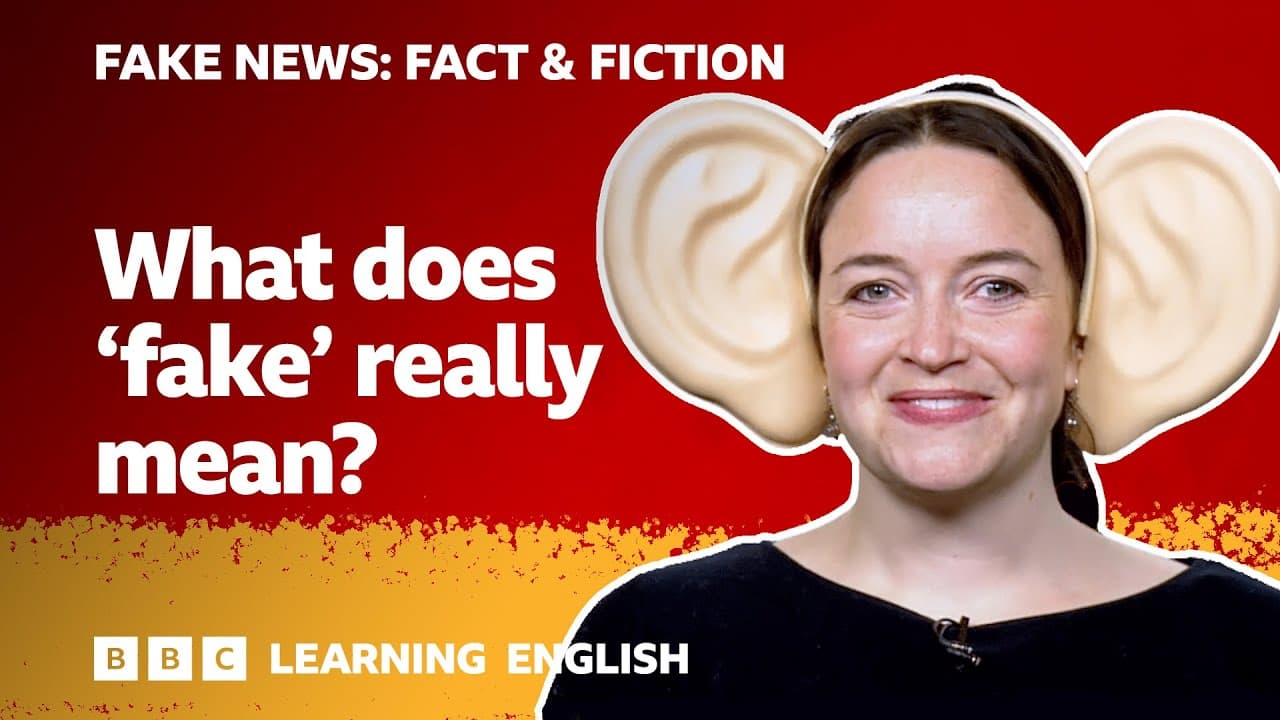
Fake news refers to misinformation designed to mislead, often for financial gain, particularly prominent since the 2016 US election. Its spread has been accelerated by social media, making it crucial for individuals to develop critical thinking skills to discern real from fake information.
Transcript
Hello, I'm Hugo. And I'm Sam. Welcome to Fake News: Fact and Fiction from BBC Learning English. In this series we're looking at a topic that's on the tip of everyone's tongues: fake news. Yes fake news - we'll find out what it is and what it isn't. We'll look at where it comes from and how it can be dangerous and we'll also show you how you can bec... Read More
Key Insights
- The term 'fake' originated in the 18th century as slang among criminals in London, referring to things that are not genuine.
- Fake items range from art and concert tickets to documents and qualifications, often referred to as counterfeit goods.
- Fake news became widely recognized during the 2016 US election, popularized by Donald Trump, though initially used by Hillary Clinton.
- Fake news is often created for financial gain, exploiting social media to drive traffic and generate advertising revenue.
- The digital age has accelerated the spread of misinformation, posing challenges for media and social media platforms to discern truth from fiction.
- The term 'viral' is used to describe how quickly fake news can spread online, likened to the rapid spread of a virus.
- Fake can be used as a noun, verb, or adjective, describing anything from a smile to counterfeit goods.
- Distinguishing between real and fake information requires critical thinking and awareness of potential misinformation sources.
Install to Summarize YouTube Videos and Get Transcripts
Explore YouTube Video Summarizer or Get YouTube Transcript Extractor
Questions & Answers
Q: What is the origin of the word 'fake'?
The word 'fake' originated in the late 18th century as slang used by criminals in London. It referred to items or actions that were not genuine but designed to appear real. Over time, its usage expanded to describe various counterfeit goods and behaviors, becoming a common part of everyday language.
Q: How did fake news become a prominent term?
Fake news gained prominence during the 2016 US election when Donald Trump frequently used it to dismiss unfavorable information. However, it was Hillary Clinton who first used the term to describe fabricated stories spreading on social media. These stories, often created for financial gain, highlighted the role of social media in disseminating misinformation.
Q: What are some examples of fake items mentioned in the content?
The content mentions several examples of fake items, including fake works of art, concert tickets, documents, and qualifications. These are often referred to as counterfeit goods. Additionally, it discusses fake behaviors like fake smiles or confidence, illustrating the diverse contexts in which the term 'fake' is applied.
Q: Why is distinguishing between real and fake information challenging in the digital age?
The digital age, characterized by the rapid spread of information through social media, makes distinguishing between real and fake information challenging. Misinformation can spread quickly, reaching a wide audience before it is verified. This poses significant challenges for media organizations and individuals trying to discern truth from fiction in an era of information overload.
Q: What role does social media play in the spread of fake news?
Social media plays a crucial role in the spread of fake news by providing a platform for rapid dissemination. Fake news can go viral quickly, reaching millions of users worldwide. This is often driven by sensationalized content designed to attract clicks and generate advertising revenue, highlighting the need for critical evaluation of online information.
Q: How can individuals protect themselves from fake news?
Individuals can protect themselves from fake news by developing critical thinking skills and being vigilant about the sources of their information. This includes verifying the credibility of news outlets, cross-checking facts with multiple sources, and being aware of the potential for misinformation, especially on social media platforms.
Q: What is the significance of the term 'viral' in the context of fake news?
In the context of fake news, 'viral' describes how quickly misinformation can spread online, similar to the rapid spread of a virus. This highlights the power of social media in amplifying false information and underscores the importance of understanding the mechanisms that drive the viral spread of content.
Q: What are some linguistic aspects of the word 'fake' discussed in the content?
The content discusses the linguistic versatility of the word 'fake,' which can function as a noun, verb, or adjective. Examples include 'fake smile' (verb), 'a fake' (noun), and 'fake tickets' (adjective). It also distinguishes between 'fake' and 'counterfeit,' the latter being used for tangible items like documents or money.
Summary & Key Takeaways
-
The episode explores the concept of 'fake,' its origins, and its application in various contexts, including fake news. It highlights how fake news became prominent during the 2016 US election and the role of social media in spreading misinformation.
-
The discussion covers different forms of fakes, such as counterfeit goods and fake behaviors, emphasizing the importance of distinguishing between real and fake information in the digital age.
-
The episode concludes with a focus on critical thinking skills needed to identify fake news, encouraging viewers to be vigilant about the information they consume online.
Read in Other Languages (beta)
Share This Summary 📚
Summarize YouTube Videos and Get Video Transcripts with 1-Click
Try YouTube Summary with ChatGPT & Claude or YouTube Transcript Generator
Explore More Summaries from BBC Learning English 📚
Summarize YouTube Videos and Get Video Transcripts with 1-Click
Try YouTube Summary with ChatGPT & Claude or YouTube Transcript Generator