Insect Vector-Borne Diseases
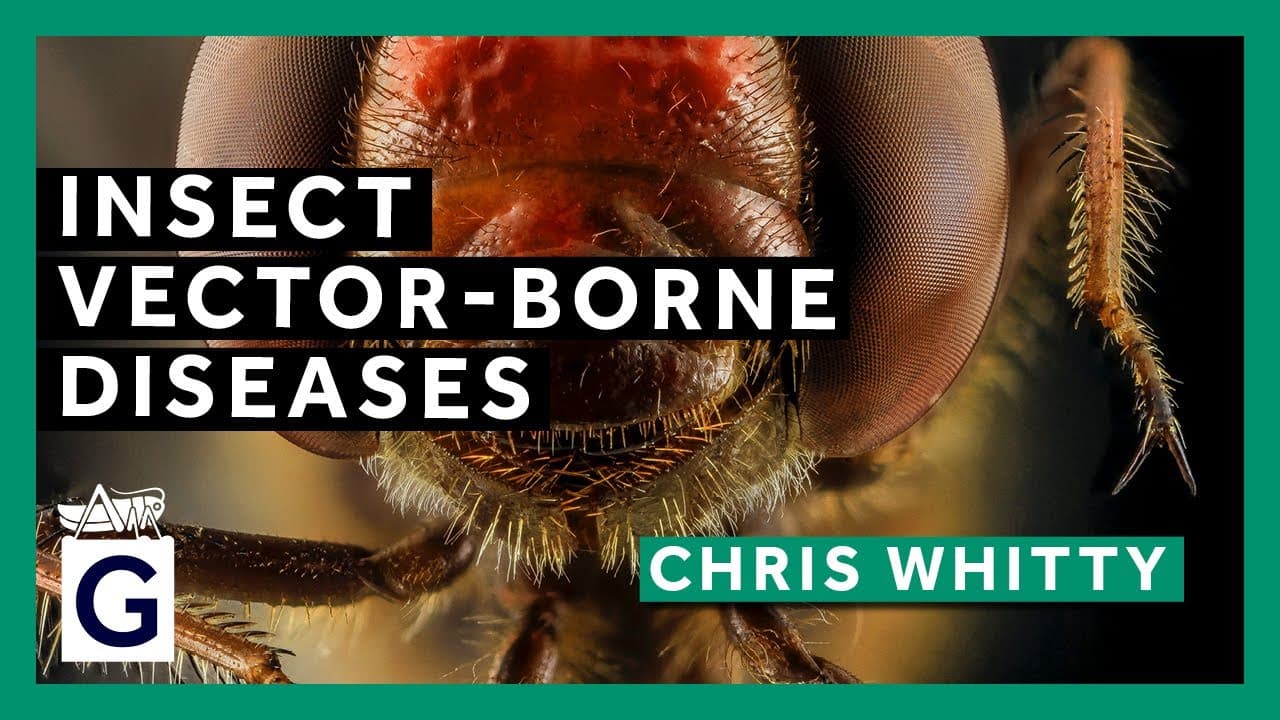
TL;DR
Vector-borne diseases, transmitted by insects and arachnids, pose significant challenges for public health initiatives and require a multi-faceted approach including vector control, treatment, and vaccination.
Transcript
- The point of this series is to talk about the routes of transmission by which infections can be passed on around the world, and there are broadly five, and every infectious disease has got a dominant route by which it's passed on, and it may have a secondary route as well, but it doesn't change, that route, or those routes, they remain the same, ... Read More
Key Insights
- 🧑⚕️ Vector-borne diseases, transmitted by insects and arachnids, pose significant health risks globally.
- 🎮 Control of these diseases requires a multi-faceted approach, including vector control, treatment, and vaccination.
- ☠️ Geography plays a crucial role in the transmission of vector-borne diseases, with specific regions experiencing higher transmission rates.
- 🧡 Climate change can impact the range and prevalence of vector-borne diseases, potentially expanding their reach.
Install to Summarize YouTube Videos and Get Transcripts
Explore YouTube Video Summarizer or Get YouTube Transcript Extractor
Questions & Answers
Q: How effective is the malaria vaccine in eradicating the disease?
While the malaria vaccine is a significant breakthrough and provides a level of protection against severe malaria, it is not powerful enough to lead to the eradication of the disease. It is most effective when combined with other interventions, such as vector control and drug treatment.
Q: Are insect-borne diseases more difficult to tackle with public health initiatives than true insect-borne diseases like malaria?
Insect-borne diseases, such as dengue fever and Zika, present unique challenges due to the adaptability of the vectors and their ability to thrive in urban environments. Control measures for these diseases often require a combination of strategies, including vector control, treatment, and vaccination.
Q: How will climate change impact the spread of vector-borne diseases?
Climate change is likely to increase the range and prevalence of vector-borne diseases, particularly in areas where warmer temperatures and increased rainfall create more favorable conditions for vectors. However, the impact may vary depending on the specific disease and geographic region.
Q: Are vector-borne diseases the most significant global health concern?
The significance of vector-borne diseases depends on the geographic location. In areas with high transmission rates, such as malaria-endemic regions, vector-borne diseases are a major concern. However, in areas without vectors or effective control measures, other health issues may take precedence. It is important to consider the local context when assessing the significance of vector-borne diseases.
Summary & Key Takeaways
-
Vector-borne diseases, such as malaria, dengue fever, Lyme disease, and sleeping sickness, are transmitted by insects (mosquitoes, ticks) and arachnids (flies).
-
Control of these diseases involves three main approaches: attacking the vectors through insecticide use, killing the infection in humans through treatment, and vaccinating susceptible populations.
-
The geography of vector-borne diseases is highly concentrated, with specific areas of high transmission.
-
Climate change may impact the range and spread of vector-borne diseases, potentially increasing their reach and prevalence in new areas.
Read in Other Languages (beta)
Share This Summary 📚
Summarize YouTube Videos and Get Video Transcripts with 1-Click
Try YouTube Summary with ChatGPT & Claude or YouTube Transcript Generator
Explore More Summaries from Gresham College 📚
Summarize YouTube Videos and Get Video Transcripts with 1-Click
Try YouTube Summary with ChatGPT & Claude or YouTube Transcript Generator