Every Bias Explained in 8 Minutes
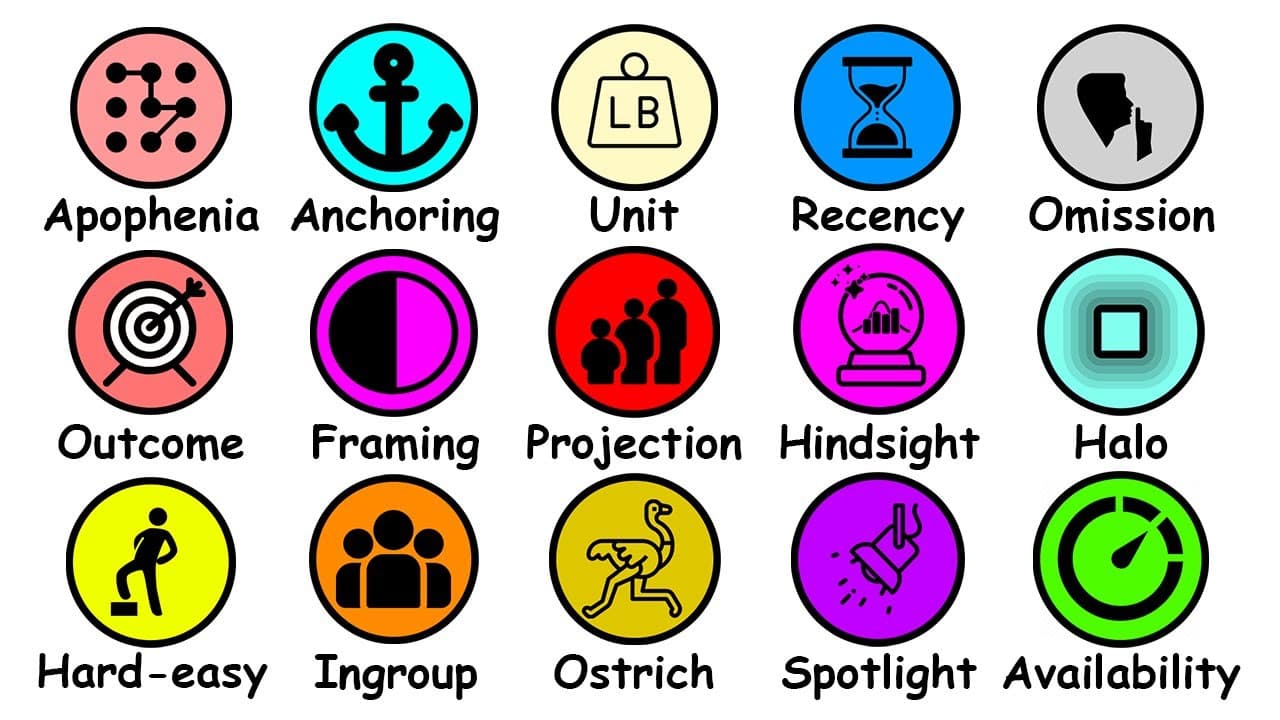
TL;DR
This content explores various cognitive biases and psychological phenomena that affect our decision-making and perception.
Transcript
bias blind spot the tendency to think that oneself is less affected by cognitive biases compared to others gamblers fallacy gamblers fallacy happens when there's a tendency to think that future probabilities are altered by past events when in reality they are unchanged Omission bias it's the tendency to judge harmful actions as worse or less moral ... Read More
Key Insights
- 🧠 Bias blind spot: Tendency to think one is less affected by cognitive biases than others.
- 🎲 Gambler's fallacy: Belief that future probabilities are influenced by past events.
- ❌ Omission bias: Judging harmful actions as worse than equally harmful inactions.
- ⚖️ Proportionality bias: Assuming big events have big causes and accepting conspiracy theories.
- 🌱 Moral credential effect: Doing something good allows for less goodness in the future.
- 👤 Actor-Observer Bias: Overemphasizing personality in explaining others' actions, and situation in explaining our own.
- 🖼️ Picture superiority effect: Concepts learned through pictures are more easily recalled than those learned through words.
- 👍 Mere exposure effect: Familiarity with something leads to liking or disliking it.
Install to Summarize YouTube Videos and Get Transcripts
Explore YouTube Video Summarizer or Get YouTube Transcript Extractor
Questions & Answers
Q: What is the bias blind spot, and how does it affect our perception of cognitive biases?
The bias blind spot refers to the tendency for individuals to believe that they are less affected by cognitive biases compared to others. This bias can lead people to overlook their own biases and overestimate their rationality and objectivity.
Q: What is the framing effect, and how can it influence decision-making?
The framing effect occurs when different conclusions are drawn from the same information depending on how that information is presented. For example, people may be more likely to choose an option if it is framed positively, even if it has the same objective outcome as a negatively framed option.
Q: How does the overconfidence effect impact decision-making and certainty of answers?
The overconfidence effect refers to the tendency for individuals to have excessive confidence in their own answers or beliefs. This bias can lead people to make faulty decisions based on overestimating their own abilities or the certainty of their answers.
Q: How does the availability heuristic affect our perception of likelihood?
The availability heuristic is the tendency to overestimate the likelihood of events that easily come to mind. This bias can be influenced by recent, unusual, or emotionally charged memories. For example, if a person hears about a plane crash, they may perceive air travel as more dangerous than it actually is.
Q: What is the Dunning-Kruger effect, and how does it impact individuals' self-perception and expertise?
The Dunning-Kruger effect is the tendency for unskilled individuals to overestimate their own ability, while experts tend to underestimate theirs. This bias can lead to individuals having a misguided perception of their competence, potentially resulting in poor decision-making or performance.
Summary & Key Takeaways
-
This content provides a comprehensive list of common cognitive biases and psychological phenomena.
-
It explains each bias/phenomenon and how it affects our thinking, decision-making, and behavior.
-
The content highlights the importance of understanding these biases and their impact on our daily lives.
Read in Other Languages (beta)
Share This Summary 📚
Summarize YouTube Videos and Get Video Transcripts with 1-Click
Try YouTube Summary with ChatGPT & Claude or YouTube Transcript Generator
Explore More Summaries from The Paint Explainer 📚






Summarize YouTube Videos and Get Video Transcripts with 1-Click
Try YouTube Summary with ChatGPT & Claude or YouTube Transcript Generator